
FAFSA's Tumultuous Journey: From Legislative Triumph to Near Collapse, and Back Again
The path to college funding for millions of students was once a labyrinth of confusing questions and bureaucratic hurdles. The Free Application for Federal Student Aid, or FAFSA, a form essential for accessing federal grants, loans, and work-study, along with state and institutional aid, was a notorious bottleneck. Each year, approximately 17 million students and their families grappled with this critical gateway to higher education, with at least 6 million relying on it to finance their college dreams.
A Senator's Crusade for Clarity
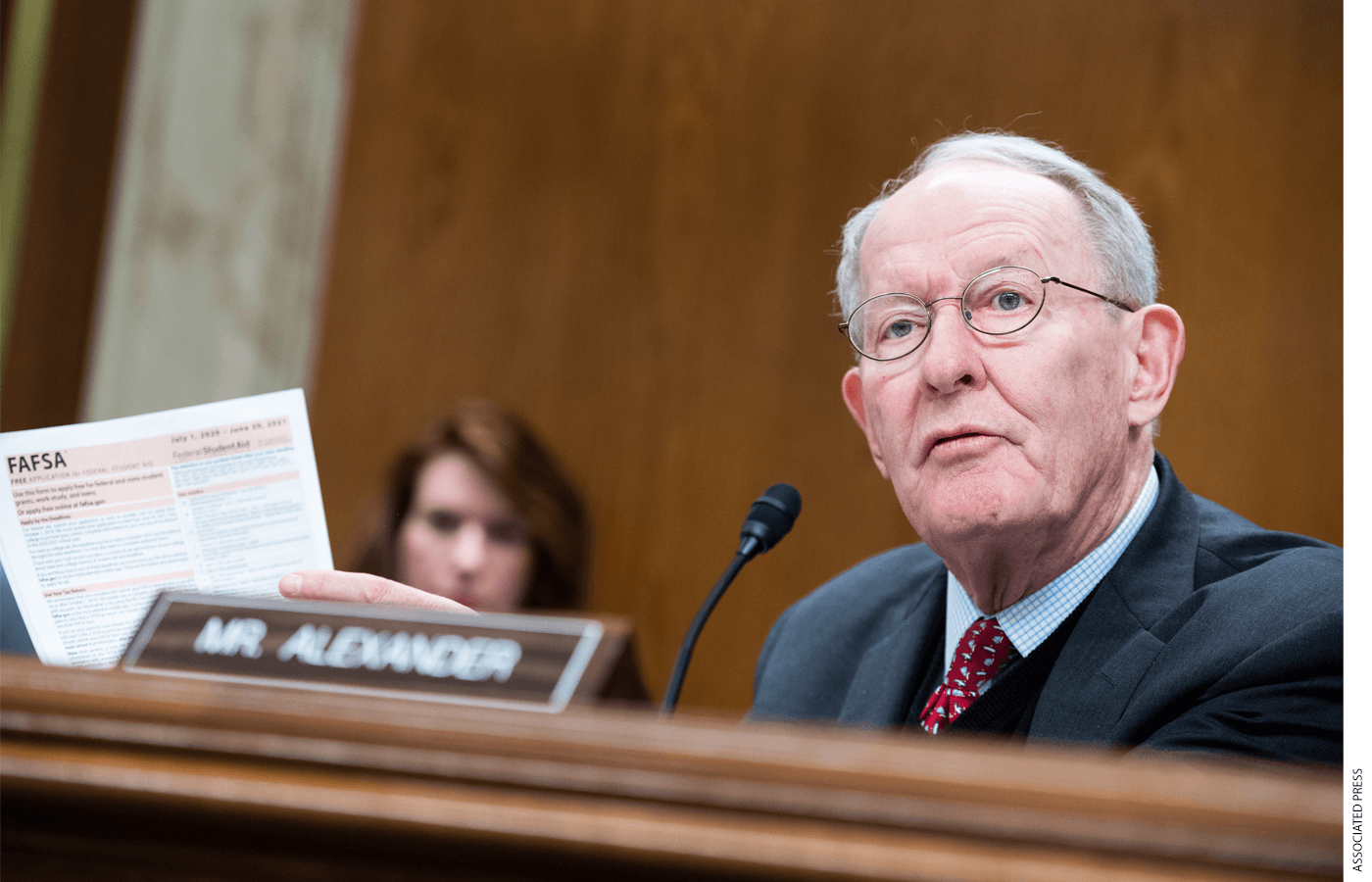
Recognizing the immense burden the FAFSA placed on families, particularly those most in need, former U.S. Senator Lamar Alexander of Tennessee championed a bold reform effort. Alexander, who had a deep understanding of the education landscape, having served as governor and U.S. Secretary of Education, made simplifying the FAFSA a cornerstone of his legislative agenda.
The Seven-Foot Prop and a Powerful Message
Alexander famously used a seven-foot-long paper replica of the FAFSA form to dramatize its overwhelming complexity. This visual aid powerfully underscored the disconnect between the government's stated goal of promoting college access and the daunting application process it mandated. He questioned why families should be forced to re-enter information the government already possessed or navigate a form that discouraged the very students who needed financial assistance the most.
In 2019, Alexander, alongside Democratic Senator Doug Jones of Alabama, introduced bipartisan legislation aimed at drastically reducing the FAFSA's complexity. The proposal sought to cut the number of questions from 108 to a mere 18, streamline verification processes, and improve aid estimation for students. This simplification was envisioned as a significant part of Alexander's legislative legacy before his retirement from the Senate in 2020.
Congress ultimately passed FAFSA simplification as part of the Consolidated Appropriations Act of 2021, signed into law in late 2020. The reform was designed to be implemented in stages, with the most substantial changes impacting students applying for the 2024-25 academic year.
When Good Intentions Met a Systemic Meltdown
However, the rollout of these long-awaited reforms quickly devolved into what many described as a "debacle." The Department of Education's implementation of the redesigned web form was plagued by technical failures and delays. The system crashed, pushing the launch date back to December 30, 2023, months later than the typical October opening.
A Cascade of Errors and Unanswered Calls
The consequences were severe and far-reaching. Students whose parents lacked Social Security numbers faced months of being unable to submit their applications. Colleges struggled to receive student aid information in a timely manner, disrupting their financial aid award processes. Hundreds of thousands of applications were marred by calculation errors, necessitating reprocessing.
During the initial five months of the rollout, an alarming 74 percent of calls to the federal student aid call center went unanswered. A subsequent report from the Government Accountability Office highlighted critical failures in the department's oversight of vendors, adherence to its own procedures, and communication with students and educational institutions.
Senator Alexander himself acknowledged the severity of the situation, calling it "a big mess." This was more than a mere technical glitch; it represented a significant breakdown in government assistance, with tangible human consequences for students and families striving to access higher education.
The Long Road to Recovery and Redemption
The initial chaos shifted the focus from defending the reform's theoretical merits to stabilizing its practical execution. In June 2024, the Department of Education took a crucial step by appointing Jeremy Singer, president of the College Board, as the FAFSA executive advisor for the upcoming 2025-26 cycle. The department also bolstered its leadership team, expanded call center capacity, and initiated rigorous testing for the subsequent year's form.
Listening, Learning, and Rebuilding Trust
Between June and August 2024, the department engaged in extensive outreach, holding 46 listening sessions with 293 organizations. While these efforts could not erase the initial failure, they marked the beginning of a concerted recovery, characterized by stronger management, improved communication, enhanced testing, and a greater emphasis on external feedback.
Singer himself offered a candid assessment of the challenges, describing the FAFSA as the department's most ambitious software project to date, yet one that lacked adequate technical leadership, vendor management, and operational discipline. His memorable quip, "Two moms can't produce a baby in four and a half months," encapsulated the disconnect between the ambitious reform and the flawed delivery system.
These intensive repair efforts demonstrated the department's recognition of the gravity of the situation and the underlying soundness of the reform itself. The 2026-27 FAFSA form was released on September 24, 2025, achieving the earliest launch in its history. By the end of October, an impressive 96 percent of users reported satisfaction with the process.
A Smarter System for a Brighter Future
The Department of Education announced in March 2026 that over 10 million FAFSA forms had already been completed and processed. The system is also becoming more sophisticated, with real-time identity screening introduced in April 2026 to detect and flag suspicious applications as they are submitted. This fraud-risk screening aims to prevent billions in federal student aid fraud, a measure that has already prevented over $1 billion since January 2025.
This evolution signifies competent administration, characterized by faster processing for legitimate applicants and enhanced scrutiny for fraudulent ones. The journey of FAFSA reform, from its legislative inception to its near-collapse and subsequent recovery, offers profound lessons for the future of government initiatives.
Lessons Learned from the FAFSA Fiasco
The FAFSA saga serves as a powerful reminder that good reform can be undermined by poor execution. The initial rollout highlighted the critical distinction between legislative intent and the tangible reality of a functional system for the public. For families, policy is not about good intentions; it's about a working website, met deadlines, and timely aid packages.
The reform's emphasis on simplification proved especially vital for low-income and first-generation college applicants. What might seem like minor administrative friction to an agency can represent an insurmountable barrier for families with limited resources and support systems. Administrative simplification is not merely cosmetic; it is substantive and essential for equitable access to education.
Furthermore, the FAFSA experience underscored the government's need for robust technical capacity, extending beyond good intentions. The failures were rooted in software development, project management, communication, and accountability, demonstrating that modern government requires these capacities to function effectively.
Despite the implementation challenges, the core premise of FAFSA simplification, a bipartisan effort addressing a genuine barrier to college access, remains sound. The evidence suggests that the shorter, simpler process is indeed helping more students secure financial aid, a testament to the enduring value of bipartisan policymaking when it tackles real-world obstacles.
In retrospect, the FAFSA story is not a cautionary tale against reform, but rather a stark warning against confusing reform with delivery. While Congress correctly diagnosed the problem, the executive branch faltered in its initial implementation. The positive outcome lies in the system's eventual correction and its emerging ability to fulfill its promise, solidifying the legacy of Senator Alexander's vision for a more accessible college funding process.






 Explore AI Teaching Tools
Comments (0)
Please login to comment
No comments yet
Be the first to comment on this article