
Unlocking Reading Success: A Comprehensive Guide to Early Literacy Screenings for Every Student
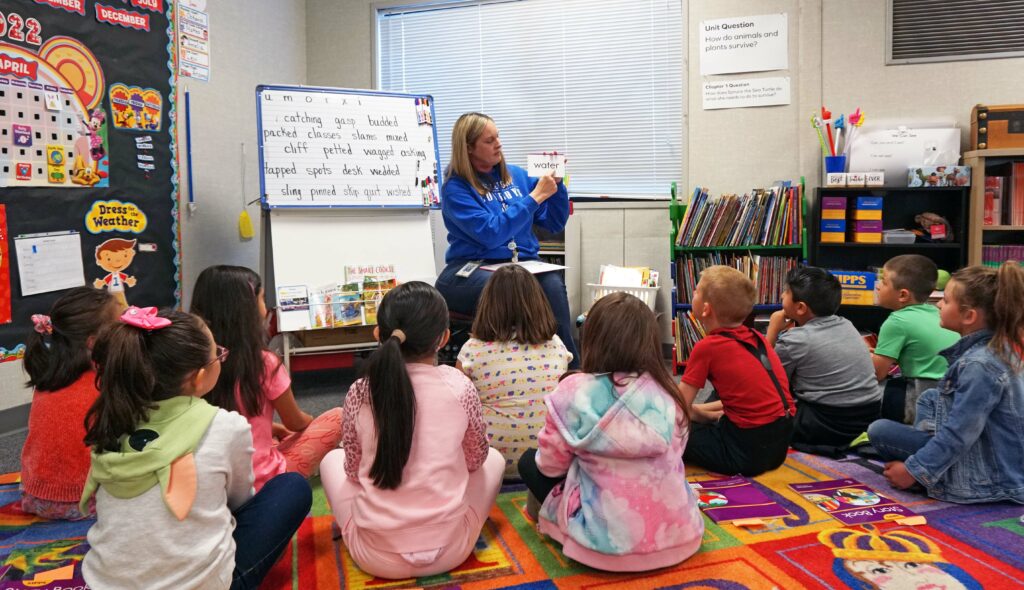
Embarking on the journey of literacy is a pivotal moment for young learners.
Recognizing the foundational importance of reading, educational systems worldwide are increasingly focusing on early identification of potential challenges.
This guide delves into the critical aspects of reading screenings, offering valuable insights for educators, parents, and students alike.
Understanding these processes empowers us to foster a supportive learning environment where every child can thrive and develop essential reading skills from the outset of their school experience.
The Imperative of Early Reading assessment
The ability to read proficiently is the cornerstone of academic achievement and lifelong learning.
Research consistently shows that early identification and intervention for reading difficulties can significantly alter a student's educational trajectory.
Without timely support, students who struggle with foundational reading skills may fall behind their peers, impacting their confidence and overall engagement with school.
This is why a proactive approach, involving comprehensive reading screenings, is becoming a global standard in educational practices.
These screenings are not about labeling students but about understanding their unique learning profiles.
They provide educators with crucial data to tailor instruction and offer targeted support.
For parents, they offer a clear picture of their child's progress and actionable steps they can take at home.
The goal is to ensure that by the time students reach higher grades, they possess the robust reading skills necessary to access a broader curriculum and succeed in an increasingly complex world.
The focus is on early intervention, ensuring that potential hurdles are addressed before they become significant barriers.
Understanding the Scope of Reading Screenings
A significant shift in educational policy has underscored the importance of universal reading assessments for young students.
Laws and mandates in various regions now require comprehensive evaluations for children in their initial years of formal schooling.
These initiatives are designed to catch potential reading challenges, including indicators of conditions like dyslexia, at the earliest possible stage.
The mandate typically covers students in kindergarten, first, and second grade.
The aim is to conduct these screenings annually to monitor progress and identify any emerging needs.
This consistent assessment ensures that support can be adjusted as a child develops.
It's a commitment to providing every student with the opportunity to build a strong foundation in reading, regardless of their background or initial learning pace.
Who Benefits from These Screenings?
The primary beneficiaries of these early reading screenings are all students enrolled in the specified grade levels.
The intention is to cast a wide net, ensuring no child is overlooked.
This universal approach helps to normalize the process, making it a standard part of the educational journey rather than an exceptional measure.
However, there are specific circumstances where a student might be exempt from the standard screening process.
These exemptions are carefully considered to avoid unnecessary testing and to respect parental rights and existing diagnoses.
They typically include:
- Parental Opt-Out: Parents or legal guardians have the right to choose not to have their child participate in the screening.
This decision is respected, though it's important for parents to understand the potential benefits of the screening.
- Existing Diagnoses: Students who have already received a formal diagnosis of a reading difficulty, disorder, or other learning disability are generally exempt.
This is because they are likely already receiving specialized support tailored to their needs.
- Special Education Services: Children already receiving special education services, with the agreement of their parents or guardians, may also be exempt.
Their needs are typically being addressed through an individualized education program (IEP).
- Language Proficiency: Students who are not yet proficient in the language of instruction (typically English or Spanish, depending on the region) should not be subjected to the standard screening.
Instead, they should undergo a different type of evaluation that accurately assesses their literacy development in a way that accounts for their language acquisition journey.
This ensures that their reading skills are assessed fairly, considering their English language learner status.
The Purpose: Identifying Risk and Guiding Support
The fundamental objective of these reading screenings is to identify students who are at risk of developing reading difficulties.
This risk assessment is crucial because it allows educators to intervene *before* a child experiences significant academic setbacks.
It's about early detection, not diagnosis.
If a student is identified as "at risk," it signals a need for closer monitoring and potentially targeted support.
These screenings serve as a valuable diagnostic tool for teachers.
They help educators understand the specific areas where a student might be struggling.
This granular insight allows for the development of more effective classroom strategies and personalized learning plans.
When teachers understand the precise nature of a student's reading challenges, they can provide instruction that directly addresses those needs.
Similarly, parents receive information that empowers them to support their child's learning at home, creating a consistent and reinforcing learning environment.
The Tools of Assessment: What Screeners Measure
To achieve the goal of early identification, educational institutions utilize a variety of standardized reading screeners.
These tools are carefully selected to assess a broad range of foundational literacy skills that are predictive of reading success.
School districts typically have a selection of approved screeners to choose from, ensuring flexibility and adherence to best practices.
These screeners are designed to measure several key components of reading development.
Understanding what they assess provides clarity on how a student's reading abilities are being evaluated:
- Oral Language Skills: This refers to a student's ability to understand and use spoken language.
A strong oral language foundation is essential for comprehending written text.
- Letter Name Knowledge: The ability to recognize and name the letters of the alphabet is a fundamental pre-reading skill.
- Phonological and Phonemic Awareness: This is the ability to recognize and manipulate the sounds in spoken language.
Phonological awareness involves larger sound units (like syllables), while phonemic awareness focuses on individual sounds (phonemes) within words.
- Decoding Skills: This is the ability to sound out words by matching letters or letter combinations to their corresponding sounds.
It's a critical step in learning to read unfamiliar words.
- Rapid Automatized Naming (RAN): This measures how quickly and accurately a student can name familiar objects, letters, or numbers when presented in a rapid sequence.
Efficient RAN is linked to reading fluency.
- Visual Attention: The ability to focus and sustain attention on visual information, which is important for tasks like tracking text.
- Reading Fluency: The ability to read text smoothly, accurately, and with appropriate expression.
Fluent readers can focus on comprehension rather than struggling with word recognition.
- Vocabulary: A student's understanding of the meaning of words.
A rich vocabulary is essential for comprehending what is read.
- Language Comprehension: The ability to understand the meaning of spoken or written language, including inferring meaning, understanding relationships between ideas, and following complex narratives.
Communicating Results: The Parent-School Partnership
Effective communication between schools and parents is vital for the success of any early intervention program.
Schools are legally obligated to share the results of reading screenings with parents or guardians in a timely and understandable manner.
This typically involves providing detailed reports within a specified timeframe after the screening is administered, often no more than 45 days.
These reports should not just present raw scores but also offer clear explanations of what the results mean.
Crucially, the school should outline the specific support and interventions that will be provided to the student based on the screening outcomes.
This ensures that parents are fully informed about the school's plan to address any identified needs and can actively participate in their child's learning journey.
Clarifying "At Risk" vs. "Diagnosed"
It is essential to differentiate between a student being identified as "at risk" and having a formal diagnosis of a reading disability like dyslexia.
A student flagged as "at risk" simply means they exhibit characteristics that suggest they *may* encounter difficulties with reading if they do not receive appropriate support.
This is a signal for proactive intervention, not a definitive diagnosis.
For instance, a student might need more explicit instruction in phonics, the relationship between letters and sounds, or might benefit from an expanded vocabulary.
The initial screening identifies these areas of potential need.
Only after a student has received targeted instruction tailored to their specific challenges, and despite these efforts, continues to struggle, might a school consider a more comprehensive assessment by a specialist to determine if a disability such as dyslexia is present.
The screening is the first step in a supportive process, not the final word.
Timing is Everything: When Should Screenings Occur?
The timing of reading screenings is a critical factor in ensuring their accuracy and effectiveness.
While laws may grant flexibility in when screenings can be administered throughout the school year, educational best practices suggest a more nuanced approach.
Researchers and educators often recommend specific windows to maximize the validity of the results.
It is generally advised that students should have received a sufficient amount of foundational reading instruction before being screened.
For example, students in kindergarten might benefit from being screened after they have had at least six to eight weeks of dedicated literacy instruction.
Similarly, first and second graders are often best assessed after they are four to six weeks into the academic year.
This ensures that the screening reflects their current learning progress rather than their initial unfamiliarity with school-based reading activities.
For students who enroll mid-year, after initial screenings have already taken place, the law typically mandates that schools have a grace period, usually around 45 days, to administer the screening.
This ensures that all students, regardless of their enrollment date, are assessed in a timely manner.
Supporting Multilingual Learners in Reading Assessments
The educational landscape is increasingly diverse, with many students learning in a language that is not their first.
Addressing the needs of multilingual learners within the reading screening process requires careful consideration and specialized approaches.
Schools must ensure that assessments are fair and accurately reflect a student's literacy development, taking into account their language acquisition journey.
Before administering an English-language screener, schools are required to assess a student's proficiency in English.
If a student's English skills are not yet sufficient for an accurate assessment using an English screener, they should be evaluated in their primary language, if a suitable screener is available.
Currently, many regions offer screeners in English and Spanish.
For students who speak Spanish at home and are learning English, experts often recommend screening in both languages.
This approach can provide a more comprehensive understanding of their literacy skills, as they may possess strengths in both languages.
If a student's primary language is neither English nor Spanish, schools are expected to conduct an evaluation that considers their developmental history, educational background, and literacy progress, while also accounting for their developing English proficiency.
This ensures a holistic and equitable assessment for all students.
Actionable Steps: What Schools Should Do with Screening Results
When a student is identified as being at risk for reading difficulties, the school has a clear responsibility to act.
The screening results are not an endpoint but a starting point for providing targeted support and services.
These interventions should be directly linked to the specific challenges identified by the screener.
Potential supports and services may include:
- Evidence-Based Literacy Instruction: Providing instruction that is scientifically proven to be effective in teaching reading, focusing on the specific areas where the student needs improvement.
- Progress Monitoring: Regularly assessing the student's progress to ensure that the interventions are working and to make adjustments as needed.
- Early Intervention Programs: Integrating support within the general education program to provide extra help without segregating the student.
- tutoring: Offering one-on-one or small group tutoring sessions to provide intensive, individualized support.
- Further Evaluation: If a student continues to struggle despite interventions, a more in-depth evaluation by educational specialists may be necessary to identify any underlying learning disabilities.
It is crucial to note that the results of these screenings are intended for instructional purposes only.
They should not be used to determine if a student requires special education services, to retain a child in a grade, to skip a grade, to reclassify English learners as proficient, or to evaluate the performance of teachers.
The sole focus is on supporting the student's reading development.
Conclusion
The implementation of comprehensive reading screenings for young students marks a significant advancement in our commitment to fostering literacy for all.
By proactively identifying students at risk of reading difficulties and providing timely, targeted support, we empower them to build a strong foundation for academic success.
These screenings, when conducted with care and communicated effectively, serve as a vital bridge between educators, parents, and students, creating a collaborative environment focused on unlocking each child's full reading potential.
At Mentofy, we champion these evidence-based approaches, believing that every student deserves the opportunity to become a confident and capable reader.






 Explore AI Teaching Tools
Comments (0)
Please login to comment
No comments yet
Be the first to comment on this article