
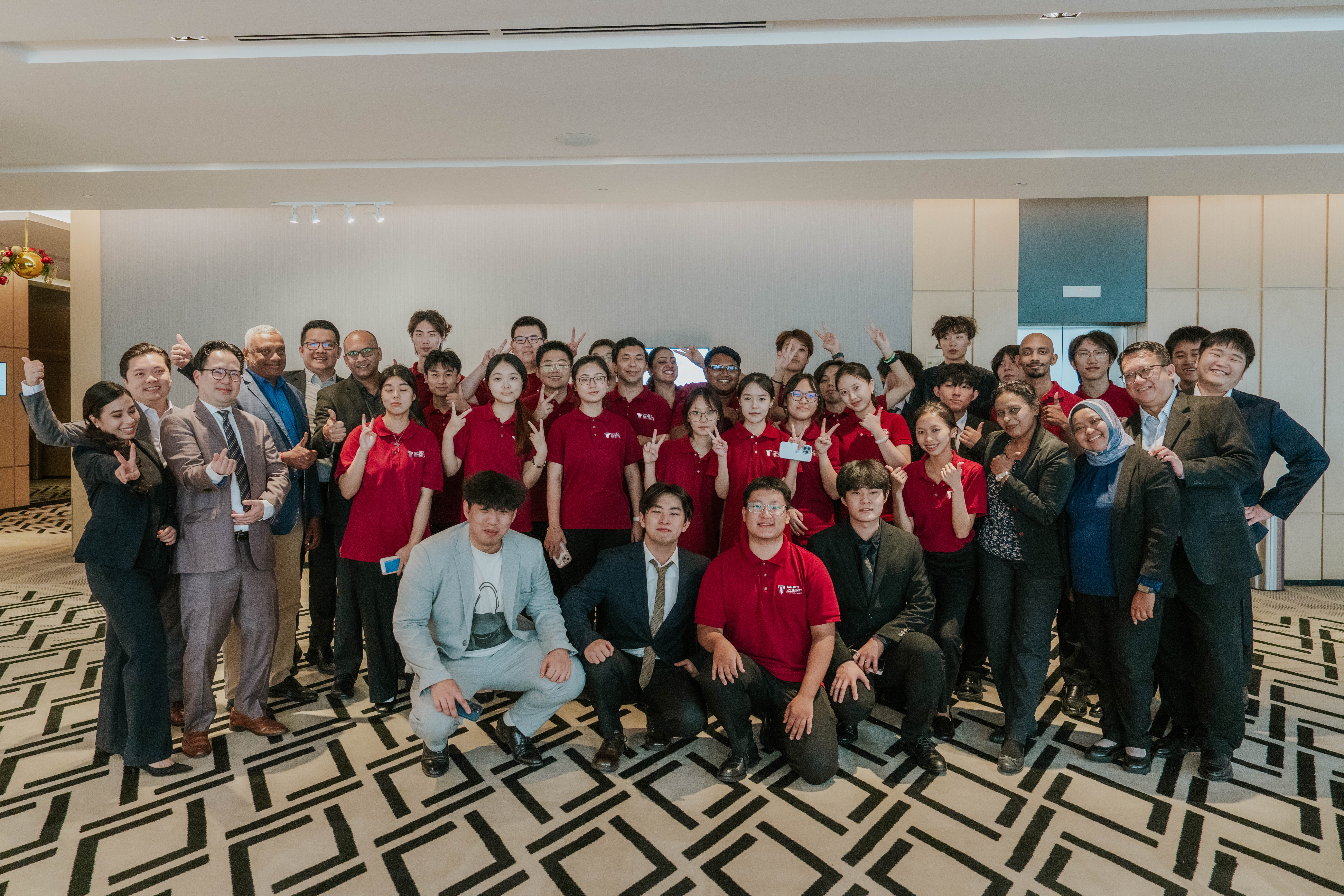
From Security Guard Dreams to Hotel Manager: Student's Unlikely Rise in Industry Takeover
Imagine stepping into a leadership role, overseeing a team of over twenty professionals, all while still navigating your college years and being thousands of miles from home. For Bhuiyan Md Sadman Rahman, a Bachelor of International Hospitality Management student, this wasn't a hypothetical scenario but a two-week immersion that reshaped his entire career trajectory.
When his university launched its ambitious Hotel Takeover Project, Sadman, hailing from Bangladesh, never envisioned himself at the helm. In fact, his initial aspirations were far more grounded, even humble.
“It’s a bit of a funny story,” Sadman admits with a chuckle. “Honestly, I thought I’d end up in the lowest-paid position. I wanted to be a security guard because I had such low expectations for myself.”
Yet, his instructors and mentors saw a spark of potential, particularly after his performance during the initial interviews. They recognized a leadership quality that Sadman himself had yet to discover, a quality that would be put to the ultimate test during the intense two-week hotel takeover.
Beyond Textbooks: The Crucible of Real-World Hospitality
The intensive two-week training period leading up to the takeover proved to be a profound learning experience for Sadman. He contrasts the theoretical knowledge gained in the classroom with the visceral reality of the hotel environment.
“Classroom learning provides information, but the hotel offered something entirely different: experience,” he explains. “Textbook scenarios and real-life situations are worlds apart. You can’t truly grasp the heat of the moment until you’re standing right in the middle of it.”
During this period, Sadman was tasked with resolving a myriad of live operational challenges. From managing guest check-in queues to ensuring robust security protocols, each issue demanded his direct involvement and coordination with relevant department heads.
One particular incident highlighted the complexities he faced. A couple from Australia experienced a significant delay, waiting nearly forty minutes to check into their room. The hotel’s actual manager assigned Sadman the critical task of identifying the root cause of this disruption.
His initial instinct led him to investigate the housekeeping department. While the room was indeed cleaned on schedule, a series of unforeseen maintenance issues had created a bottleneck. An engineer had been called to address cracked walls, a malfunctioning remote control, and damaged paintwork – a trifecta of problems that collectively consumed valuable time and disrupted the guest experience.
Despite the unfolding crisis, Sadman maintained his composure, meticulously working through the problem to find a resolution.
Navigating the Dynamics of Peer Leadership
Leading a team of twenty-two fellow hospitality management students across various departments presented a unique leadership challenge. It’s a different dynamic than managing a pre-established staff, especially when those individuals are also your classmates and friends.
Adding another layer of complexity, Sadman’s team was a vibrant tapestry of cultures, including students from China, Pakistan, Indonesia, and the Maldives, among others. This diversity, however, became a source of strength rather than an obstacle.
Sadman, having experienced life in a different country and culture himself, was well-equipped to bridge these differences. “Every culture brings its own unique perspectives,” he notes. “There were some initial hurdles, but communication was never a problem. If someone needed help, I was there. If I needed assistance, they were ready to lend a hand. It truly felt like a brotherhood, with everyone supporting each other.”
The interdepartmental nature of his role also profoundly shifted his understanding of how a hotel operates as a cohesive unit. “If check-in was delayed, I had to liaise with housekeeping. Security concerns required me to engage with the security team. If revenue targets were missed, I needed to consult with the revenue manager,” he explains. “Everything is interconnected. Any disruption or issue in one department inevitably impacts the entire operation.”
The Interconnectedness of Hotel Operations
Sadman’s experience underscored the critical interdependence of hotel departments. He learned that effective management requires a holistic view, understanding how each function contributes to the overall guest experience and business success.
- Front Desk: The initial point of contact, setting the tone for the guest's stay.
- Housekeeping: Crucial for guest comfort and satisfaction, directly impacting room availability.
- Maintenance: Essential for ensuring a seamless and functional environment for guests and staff.
- Revenue Management: Driving profitability and strategic pricing decisions.
- Security: Paramount for guest and staff safety and peace of mind.
This project, he realized, was not just about managing a hotel; it was about orchestrating a complex system where every cog plays a vital role.
Bridging the Gap: Academia Meets Industry Readiness
The Hotel Takeover Project is an integral component of a broader strategy at the university aimed at closing the divide between academic learning and practical industry preparedness. This initiative is designed to equip students with the skills and confidence needed to thrive in the demanding hospitality sector.
Dr. Kandappan Balasubramanian, Head of the School of Hospitality, Tourism, and Events, emphasizes that future leaders in hospitality are forged through a combination of rigorous academic study and hands-on experience. The project embodies this philosophy, offering a platform for experiential learning that textbooks alone cannot replicate.
David Leung, General Manager of Hyatt Place Kuala Lumpur Bukit Jalil, and an alumnus of the university, views this partnership as a direct investment in the future of the hospitality industry. He highlights that the takeover project rigorously assesses not only students' knowledge but also their leadership capabilities and problem-solving acumen under pressure.
Sadman is acutely aware of the invaluable asset this experience has become. “Entering this industry without any practical experience is like being thrown into a deep ocean without knowing how to swim,” he states. “It’s akin to being plunged into a swimming pool when you’ve never learned to swim.”
As a student entering his final semester, Sadman is now poised to embark on his internship. Armed with the confidence and practical insights gained from his role as hotel manager, he feels well-prepared and enthusiastic about the next steps in his career, whatever challenges they may bring.
“I can now approach people with a smile, even when things get tough,” he says with conviction. “There will be challenges, there will be 'fires' to put out. But I’ll be there, smiling, and managing the entire situation.”







 Explore AI Teaching Tools
Comments (0)
Please login to comment
No comments yet
Be the first to comment on this article