
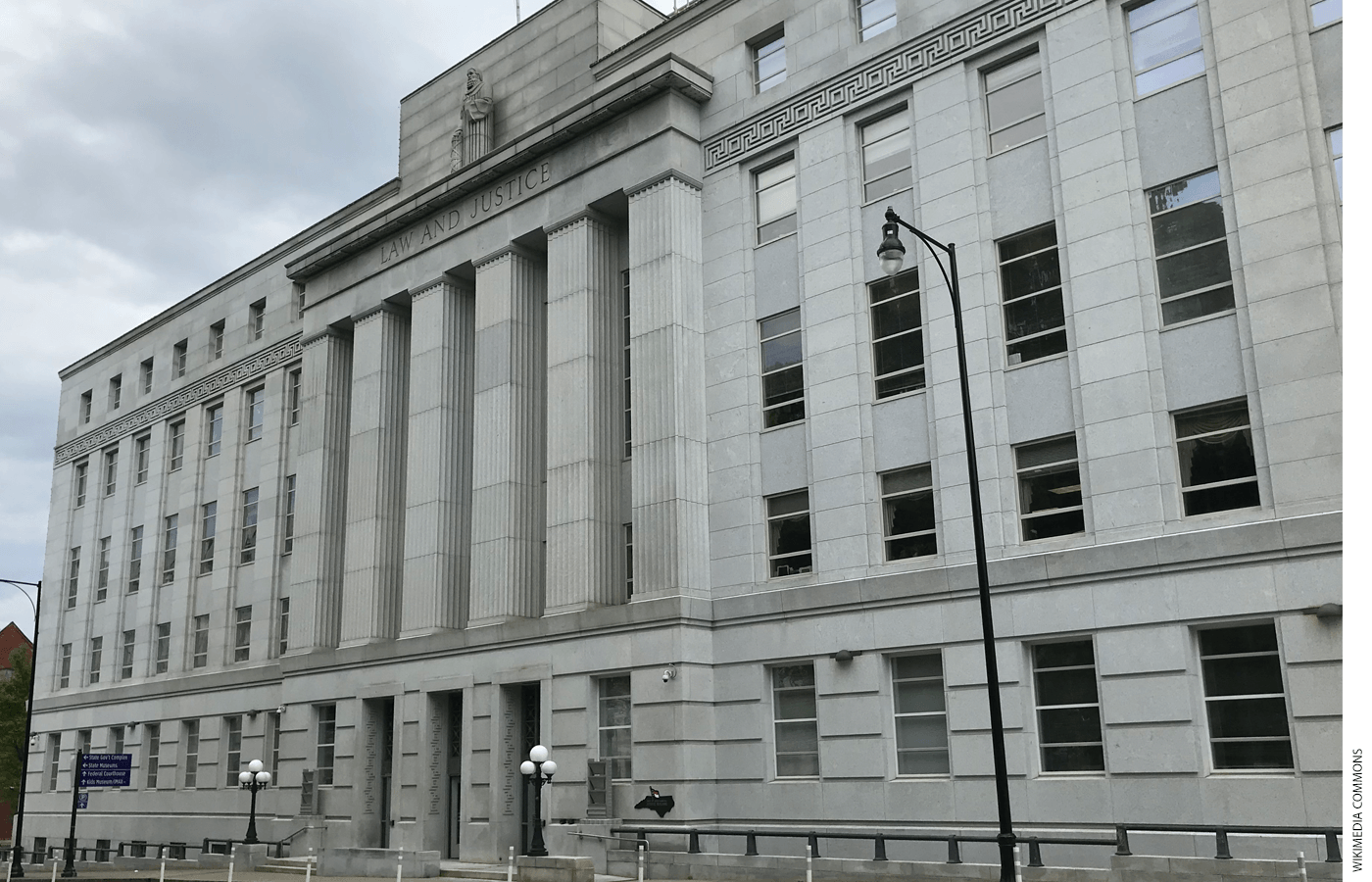
State Courts: The Unsung Architects of American Education Policy
While the nation's attention often fixates on landmark rulings from the U.S. Supreme Court, a seismic shift in the landscape of American education is quietly unfolding within the hallowed halls of state courts. These judicial bodies are increasingly becoming the arbiters of fundamental questions about school funding, student rights, and the very structure of public education, often with profound implications that ripple across the nation.
The Funding Frontier: Where Equity Meets the Courtroom
For decades, the quest for equitable public school funding has been a persistent battleground, with state supreme courts frequently stepping into the fray. These courts are tasked with interpreting state constitutional mandates that promise a quality education for all children, a promise that often clashes with the realities of disparate local wealth and legislative appropriations.
New Hampshire's Persistent Plea for Adequacy
In New Hampshire, a recent ruling by the state's supreme court underscored the ongoing struggle to ensure a constitutionally adequate level of school funding. The court found the state's current funding model to be insufficient, reigniting a debate that has spanned generations. Such decisions highlight the delicate balance courts must strike: mandating legislative action without overstepping their judicial authority.
North Carolina's Judicial Pivot on School Spending
Perhaps one of the most closely watched developments emerged from North Carolina, where the state supreme court dramatically reversed a lower court's unprecedented order. A trial court, frustrated by years of legislative inaction on a school funding decree, had directed the state treasurer to transfer nearly $2 billion in surplus funds to public education. This bold move, a remedy rarely, if ever, attempted in school finance litigation, was ultimately deemed an overreach by the state's highest court.
This North Carolina decision carries significant weight for future education funding disputes nationwide. It signals a potential recalibration of how state courts approach remedies when legislatures fail to meet their constitutional obligations. While the specifics of the case were nuanced, the broader message is clear: courts are grappling with the limits of their power when it comes to compelling fiscal action from elected officials.
Lessons from the Southeast and Beyond
The North Carolina ruling, in particular, offers a stark contrast to earlier victories for plaintiffs in states like South Carolina, where courts have been more proactive in addressing funding inadequacies. The shift in North Carolina, a state that had previously issued some of the country's most impactful school funding decisions, raises questions about the influence of judicial politics and the evolving independence of state courts.
The election of judges, a feature in North Carolina since 2016, has coincided with a more cautious approach to challenging legislative funding decisions. This trend suggests that the composition and electoral dynamics of state supreme courts can significantly shape their willingness to assert institutional power in education policy matters.
The Evolving Battleground of School Choice
The landscape of school choice has been dramatically reshaped in recent years, with the proliferation of education savings accounts and voucher programs. State courts are now central to determining the legality and scope of these initiatives, often turning to state constitutional provisions to guide their decisions.
Kentucky's Charter School Conundrum
In Kentucky, the state supreme court recently delivered a blow to charter schools, ruling that the state's charter law violated the constitution. The court reasoned that charter schools diverted funds from the "common school fund," a protected resource designated for traditional public schools. This interpretation provides a potent legal argument for opponents of charter school expansion.
Idaho's Tax Credit Victory
Conversely, the Idaho Supreme Court offered a win for school choice advocates by upholding a private school tax-credit program. The court distinguished this program from direct funding mechanisms, concluding that tax credits did not directly impinge upon public school finances. This decision broke a recent trend of adverse rulings for voucher proponents in states like South Carolina and Kentucky.
The legal battles over school choice are far from over. Lower court rulings in states like Utah, Wyoming, and Ohio are currently under review by their respective state supreme courts, promising further clarification on the constitutional boundaries of educational choice programs.
Decoding "Common School" Language
The Kentucky ruling's reliance on the "common school fund" language raises an important question: why haven't charter opponents in other states leveraged similar constitutional provisions more aggressively? The interpretation of this phrase has varied significantly among state courts.
In California, the state supreme court once interpreted "common school" broadly to encompass all public schools, thus allowing charters to access these funds. However, the Washington Supreme Court took a more textual approach, defining "common school" historically and concluding that charters, not being traditional common schools, could not draw from those funds. The Kentucky decision aligns with this more restrictive interpretation, suggesting that the specific wording and historical context of state constitutions are critical.
Navigating the Federal Tax-Credit Scholarship Maze
The emergence of federal tax-credit scholarship programs presents a new frontier for state courts. While these programs differ from direct state appropriations, their interaction with state constitutional prohibitions on vouchers remains an open question.
South Carolina's experience offers a cautionary tale. The state supreme court struck down a voucher program funded by federal COVID-19 relief money, deeming the funds to be "public funds" under the state constitution due to the requirement for legislative authorization. While federal tax credits are distinct from direct appropriations, state courts may still scrutinize whether the opt-in nature of such programs triggers state constitutional limitations.
Guardians of Governance: Protecting Educational Autonomy
Beyond funding and choice, state courts are increasingly called upon to safeguard the structural integrity of public education governance. This involves protecting the constitutional autonomy of state education agencies from legislative encroachment.
West Virginia's Constitutional Stand
An emerging issue before the West Virginia Supreme Court concerns the extent to which legislatures can override the authority of constitutionally established education officials. Many states, including West Virginia, have unique governance structures that grant state superintendents or boards of education independent authority, derived directly from the state constitution, to manage public schools.
This separation of powers was intended to insulate educational decision-making from partisan politics. In an era of escalating inter-branch conflict, these constitutional guardrails are crucial for preserving the professional judgment that underpins effective education policy and shielding schools from the broader political turbulence affecting government.
The founders envisioned public education as a cornerstone of a functioning republic, embedding its principles within state constitutions. These foundational documents established mechanisms to protect and preserve public schools, from funding and management to overall governance. While some of these structures may appear archaic in the face of modern political pressures, they often embody enduring wisdom, reflecting a deep understanding of the importance of stable, well-governed educational systems for the health of the state.







 Explore AI Teaching Tools
Comments (0)
Please login to comment
No comments yet
Be the first to comment on this article