
Unlocking English Proficiency: A Comprehensive Guide for California's Learners
Embarking on the journey to English proficiency is a significant step for many students, especially in a diverse state like California.Millions of young learners navigate their educational paths while developing their English language skills, aiming to become fully proficient and unlock their academic potential.
This guide delves into the world of English learners in California, exploring their unique experiences, the pathways to proficiency, and how the educational system supports their growth.
For students and educators alike, understanding this landscape is crucial for fostering a supportive and effective learning environment.
The Landscape of English Learners in California schools
California's educational system is a vibrant tapestry of cultures and languages.A substantial portion of its K-12 student population begins their academic careers speaking a language other than English at home.
These students, often referred to as English learners (ELs), represent a significant demographic within the state's schools.
The journey for these learners is marked by dedicated support systems and assessments designed to gauge their progress and celebrate their achievements as they move towards English fluency.
When a student first enters the California school system, families are asked to provide information about the languages spoken at home.
This initial step is vital in identifying students who may require specialized language support.
If a child speaks a language other than English, even if they also speak English, the school is mandated to assess their English language proficiency.
This assessment determines whether the student is classified as an English learner, setting them on a path of targeted instruction and support.
The designation of an English learner is a starting point, not an endpoint.
The goal is to guide these students towards becoming "fluent English proficient." This transition is a testament to their hard work and the effectiveness of the educational programs designed to assist them.
Understanding the metrics and pathways involved helps demystify the process for learners, parents, and educators.
Navigating the Path to English Proficiency
The process of becoming an English learner and subsequently achieving English proficiency is a structured one, designed to provide consistent support and track progress effectively.For students entering school for the first time, a comprehensive assessment is administered.
This evaluation is crucial for understanding their current English language skills across various domains.
The ELPAC Assessment: A Gateway to Support
The primary tool used for this evaluation is the English Language Proficiency Assessments for California (ELPAC).This assessment meticulously examines a student's ability in reading, writing, speaking, and listening in English.
The results of the ELPAC are instrumental in determining a student's initial classification.
- Initially Fluent English Proficient: If the ELPAC indicates that a student is already proficient in all assessed areas of English, they are designated as "Initially Fluent English Proficient." This means they have met the language requirements and will not need to undergo further English proficiency testing.
- English Learner Designation: Conversely, if the ELPAC reveals that a student is not yet proficient in English, they are designated as an English learner.
This classification triggers the provision of specialized English language development (ELD) instruction and support services.
The ELPAC is not a one-time assessment for those designated as English learners.
Instead, it serves as a benchmark that is revisited annually.
Each spring, English learners retake the ELPAC.
This recurring assessment allows educators and students to monitor progress, identify areas of strength, and pinpoint areas where additional support might be beneficial.
The consistent evaluation ensures that learners are receiving the appropriate level of assistance as they advance through their academic careers.
Reclassification: The Milestone of Proficiency
The ultimate goal for English learners is to reach a level of English proficiency that allows them to fully participate in all academic activities without language being a barrier.This milestone is known as reclassification.
The process of reclassification is multifaceted, involving more than just a single test score.
To be reclassified as "fluent English proficient," students must demonstrate proficiency on the ELPAC.
However, this is often complemented by their performance on academic assessments, particularly in English Language Arts.
Furthermore, the perspectives of parents and teachers play a significant role in the reclassification decision.
This holistic approach ensures that students are not only proficient in English but also academically successful and integrated into the school community.
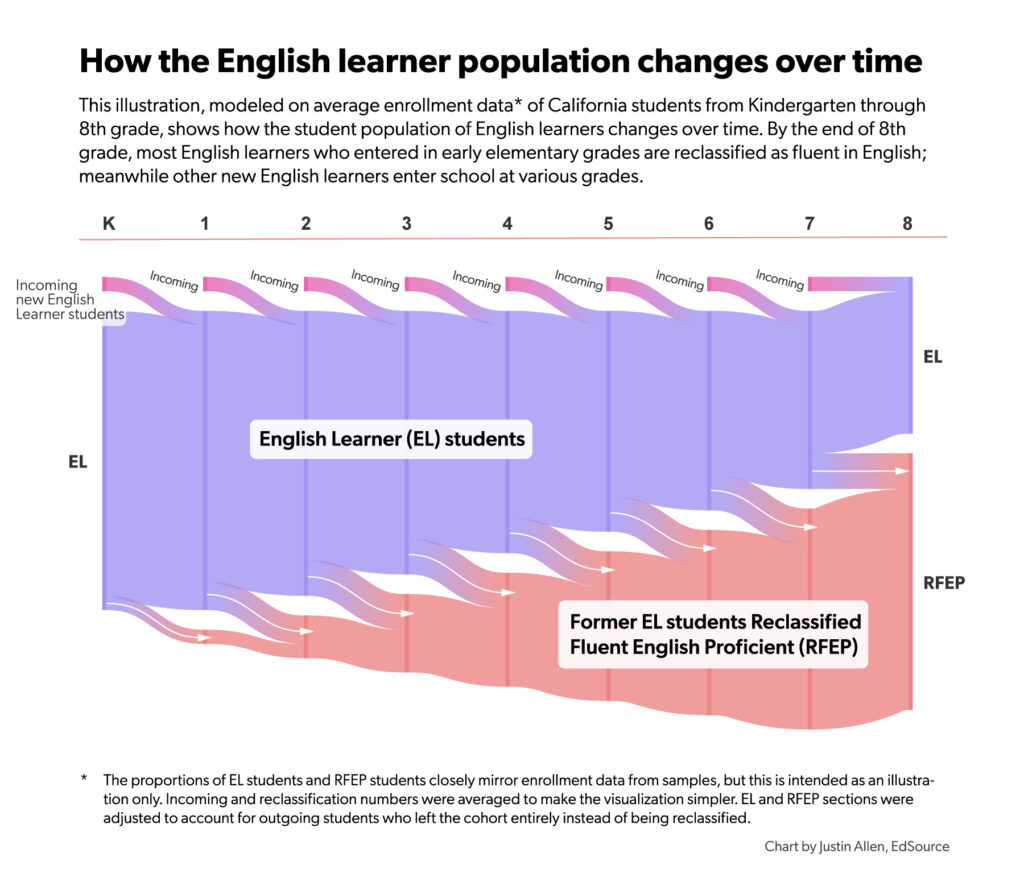
The journey from English learner to fluent English proficient is a dynamic one.
As students progress through elementary, middle, and high school, a significant number achieve this reclassification each year.
This continuous flow of students moving into the proficient category is a positive indicator of the effectiveness of ELD programs and the dedication of the learners themselves.
Simultaneously, new students entering the California school system contribute to the ongoing population of English learners, ensuring that support systems remain robust and responsive to evolving needs.
Understanding the Demographics of English Learners
The population of English learners in California is diverse, reflecting the state's rich cultural heritage.While many learners are born in the United States, a notable portion are recent immigrants, each bringing unique experiences and linguistic backgrounds to the classroom.
U.S.-Born vs.
Immigrant Learners Research indicates that a substantial majority of students who speak English "less than very well" were born in the U.S.
This highlights that English language development is a critical educational focus for a significant number of native-born students as well.
- U.S.-Born Students: A large percentage of students identified as needing English language support were born and raised within the United States.
This underscores the importance of early language intervention and ongoing support for these learners within their home communities.
- Immigrant Students: A higher proportion of English learners in the upper grades (6-12) were born outside the country compared to those in the elementary grades (K-5).
This often means these students have had less exposure to English prior to entering the U.S. school system.
The distinction between U.S.-born and immigrant learners is important for tailoring educational strategies.
While both groups require support to achieve English proficiency, their prior educational experiences and exposure to English can differ significantly, influencing the types of interventions that are most effective.
Recent Immigrant Students
California actively supports recent immigrants who are new to the U.S. educational system.These students, defined as those not born in the U.S. and attending school for less than three full academic years, receive targeted assistance to help them acclimate and succeed academically.
The number of such students reflects the ongoing influx of new families to the state, necessitating a continuous commitment to language support services.
The Rich Tapestry of Languages Spoken
California's English learners represent a remarkable linguistic diversity, speaking over 100 different languages other than English.This linguistic richness is a hallmark of the state and presents both opportunities and challenges for educators.
Dominant Languages and Their Prevalence
While the variety of languages is vast, certain languages are more commonly represented among English learners.Understanding these dominant languages helps in allocating resources and developing culturally relevant educational materials.
- Spanish: By far the most prevalent language spoken by current and former English learners in California is Spanish.
This reflects the significant Spanish-speaking population within the state.
- Mandarin: Following Spanish, Mandarin is the next most common language, indicating a notable Chinese-speaking community among learners.
- Vietnamese: Vietnamese is the third most frequently spoken language, highlighting the presence of a Vietnamese-American population.
Beyond these top three, other significant languages include Cantonese, Arabic, Russian, Korean, and various Philippine languages.
This linguistic mosaic underscores the need for multilingual resources and educators who are sensitive to the diverse linguistic backgrounds of their students.
The ability to leverage students' home languages as a bridge to English proficiency is a key pedagogical approach.
The Timeline of English Language Acquisition
The process of acquiring academic English proficiency is a journey that typically unfolds over several years.Research indicates that it often takes between four and seven years for students to become fully proficient in academic English.
This timeframe is crucial for setting realistic expectations for learners, educators, and families.
Progress Through Grade Levels
The data consistently shows that as students advance through their schooling, the percentage of those reclassified as "fluent English proficient" increases.This trend is a positive reflection of sustained learning and effective support.
- Early Grades: In the initial years of schooling, a smaller percentage of students who start as English learners achieve reclassification.
For example, only a small fraction of first graders who begin as ELs are reclassified within their first year.
- Middle and High School: As students progress, their English language skills mature.
By the time they reach middle and high school, a significantly higher proportion have met the criteria for reclassification.
For instance, a substantial majority of twelfth graders who started as English learners have been reclassified by their graduation year.
It is important to acknowledge that the total number of English learners also includes students who enroll in later grades.
These students may have had less time in the U.S. school system, and their progress towards proficiency might be reflected differently in these statistics.
The consistent increase in reclassification rates across grade levels, however, is a strong indicator of successful language development.
Geographical Distribution and School Support
English learners are present in virtually every school district across California, reflecting the state's diverse population distribution.However, the concentration of English learners can vary significantly from one district to another, influencing the specific needs and resources required at the local level.
Variations in English Learner Populations
Some school districts, particularly those in border regions or areas with high immigrant populations, may have a very high percentage of students who began their education as English learners.In contrast, other districts might have a much smaller proportion.
This variation means that while the state provides a framework for supporting English learners, the implementation and intensity of these programs can differ based on local demographics.
Schools in areas with a high density of ELs often develop specialized programs and dedicate significant resources to language development.
Assessing School Effectiveness in Serving English Learners
Evaluating how well schools are supporting their English learners is crucial for continuous improvement.Several key indicators help measure progress and identify areas for enhancement.
Measuring English Learner Progress
The state of California employs various metrics to assess the effectiveness of its English learner programs.These measures provide valuable insights into student growth and program impact.
- English Language Progress Indicator: This indicator tracks how many English learners advance at least one proficiency level on the ELPAC, maintain their current level, or experience a decrease in their proficiency level.
This provides a granular view of individual student progress.
- Reclassification Rate: The rate at which English learners are reclassified as fluent English proficient is a significant measure of program success.
A higher reclassification rate generally indicates that students are achieving English proficiency within a reasonable timeframe.
While the reclassification rate has historically been a key metric, its recent availability has been limited.
This highlights the ongoing need for comprehensive data collection and reporting to ensure accountability and transparency in serving English learners.
Identifying Long-Term English Learners
A critical concern in English learner education is the identification and support of "long-term English learners" (LTELs) and those "at risk of becoming long-term English learners." These students require specific interventions to ensure they do not fall behind academically due to persistent language barriers.- Long-Term English Learners (LTELs): LTELs are defined as students in grades 6-12 who have been enrolled in a U.S. school for at least six years and have remained at the same English language proficiency level on the ELPAC for two or more consecutive years, or have regressed.
These students often require intensive, targeted support.
- At Risk of Becoming LTELs: Students in grades 3-12 who have been enrolled in U.S. schools for four to five years and are scoring at an intermediate or lower level on the ELPAC are considered at risk of becoming LTELs.
Early intervention for this group is vital to prevent them from entering the LTEL category.
Addressing the needs of LTELs and those at risk is paramount to ensuring that all students have the opportunity to achieve academic success and graduate prepared for college and careers.
academic performance and English Learner Success
The relationship between academic test scores and English learner performance is often misunderstood.By definition, students designated as English learners are still developing their academic English skills, which can naturally impact their performance on standardized tests designed for native English speakers.
It is important to recognize that many districts require strong performance on academic tests, in addition to English proficiency assessments, for a student to be reclassified as fluent.
Once students achieve proficiency and are reclassified, their academic performance on these same tests often improves, and they tend to perform as well as or better than their peers who speak only English at home.
This demonstrates that the initial challenges are a phase of language acquisition, not an indicator of inherent academic limitations.
Beyond Language: Broader Academic Outcomes
While English proficiency is a critical goal, it is also important to consider broader academic outcomes for English learners, such as graduation rates and college preparedness.Studies indicate that graduation rates and college and career preparation measures, like completing A-G courses required for University of California and California State University systems, can be lower for current English learners in high school.
However, it is crucial to note that these statistics are typically reported only for students who are *currently* designated as English learners.
The data often does not include students who were once English learners but have since been reclassified and are now successfully navigating higher education pathways.
The journey of an English learner is one of dedication, resilience, and significant achievement.
By understanding the pathways, the support systems, and the diverse linguistic backgrounds of these students, educators and communities can better foster an environment where every learner can thrive and reach their full potential.
Mentofy is committed to providing the resources and learning opportunities that empower all students, including English learners, to succeed in their educational endeavors.
Conclusion: Empowering Every English Learner
California's commitment to supporting its English learners is evident in the structured pathways and dedicated resources available.From initial assessments like the ELPAC to the multi-faceted reclassification process, the educational system aims to guide students toward full English proficiency.
The diverse linguistic backgrounds of learners, with Spanish being the most common home language, highlight the need for culturally responsive and multilingual educational approaches.
While the journey to academic English proficiency typically spans several years, the increasing rates of reclassification across grade levels demonstrate the effectiveness of these support systems.
By focusing on progress, identifying students at risk of long-term language challenges, and recognizing that academic performance often improves significantly after reclassification, California's schools are working to ensure that every student, regardless of their starting language, has the opportunity to achieve academic success and a bright future.







 Explore AI Teaching Tools
Comments (0)
Please login to comment
No comments yet
Be the first to comment on this article