Navigating the Shifting Sands: Why Leadership's Core Competencies Are Non-Negotiable for Generation Alpha's Future
The urgent siren of the next immediate crisis often drowns out the quiet hum of strategic foresight for education leaders. While the daily demands of keeping a system afloat are real, the accelerating pace of change necessitates a fundamental shift from reactive problem-solving to proactive, visionary leadership. The world Generation Alpha is inheriting is a stark departure from the one our current educational structures were designed for, demanding a new blueprint for how we lead and learn.
The Six Seismic Shifts Reshaping the Educational Landscape
The educational system is not merely evolving; it's undergoing a profound metamorphosis driven by powerful, interconnected forces. Understanding these shifts is the first step for any leader aiming to build a future-ready learning environment for the students in your care.
Technology: From Consumers to Creators
Over the past three decades, technology's role in learning has transformed dramatically. We've moved from the initial awe of accessing information online to the era of global connection through social media. Now, we stand at the precipice of a generative AI explosion, where the next generation will not just use technology but actively build it.
This shift means students will interact with AI as collaborators and companions. Without intentional design, this could lead to a concerning reliance, potentially hindering the development of critical cognitive skills. Your vision must account for this new paradigm of technological co-creation.
The Future of Work: Competency Over Content
In an age where knowledge is instantly accessible, the traditional educational value chain has been fundamentally reordered. The emphasis has shifted from memorizing facts to cultivating durable skills like curiosity, critical judgment, and the ability to curate information effectively.
Demonstrating competency through the application of knowledge is now paramount. Leaders must build a system that prioritizes these transferable skills, ensuring your students are prepared for a workforce that values adaptability and problem-solving above rote memorization.
Enrollment: The Demographic Reckoning
Education is confronting a significant demographic challenge, fueled by declining birth rates, shifting immigration patterns, and the proliferation of school choice options. Many public systems are witnessing a substantial drop in student enrollment, even as the number of schools may increase.
This reality, coupled with the winding down of temporary funding boosts, forces districts to critically re-evaluate their operational footprints. Rethinking staffing levels and physical infrastructure is no longer optional; it's a necessity for building a sustainable system.
Market Forces: The Decentralization of Choice
A growing number of states are empowering families with greater control over educational funding, effectively allowing public dollars to follow students to their chosen learning environments. This has spurred the growth of a diverse ecosystem of micro-schools, homeschool co-ops, and flexible learning providers.
These market pressures, alongside existing open enrollment policies, are reshaping the competitive landscape for traditional public schools. Your leadership vision must address how to thrive and innovate within this increasingly decentralized educational marketplace.
Learning: A Tug-of-War Between Narrow and Broad
Established value networks within public education often push pedagogy and curriculum towards narrowly defined metrics like test scores and attendance rates. This creates a tension with the growing demand from employers and communities for real-world learning experiences, civic engagement, and skills-based credentialing.
Schools are caught between meeting state mandates and preparing students for the multifaceted demands of citizenship and future careers. Building a learning model that bridges this gap requires a clear vision and courageous leadership.
Staffing: The Talent Imperative
The well-being and retention of educators are critical to the success of any educational system. Data consistently shows that teachers experience higher levels of stress and burnout compared to the general workforce, exacerbated by a declining number of individuals entering the profession.
Addressing these challenges is essential for attracting and keeping the talented professionals who are the bedrock of effective learning. Your leadership must prioritize creating supportive environments that foster educator growth and well-being.
Cultivating Competencies for the Modern Leader
To navigate this complex and rapidly changing environment, education leaders must collectively foster resilient and adaptive organizations. This requires a deliberate focus on developing specific leadership competencies that empower teams to meet the evolving needs of students and communities.
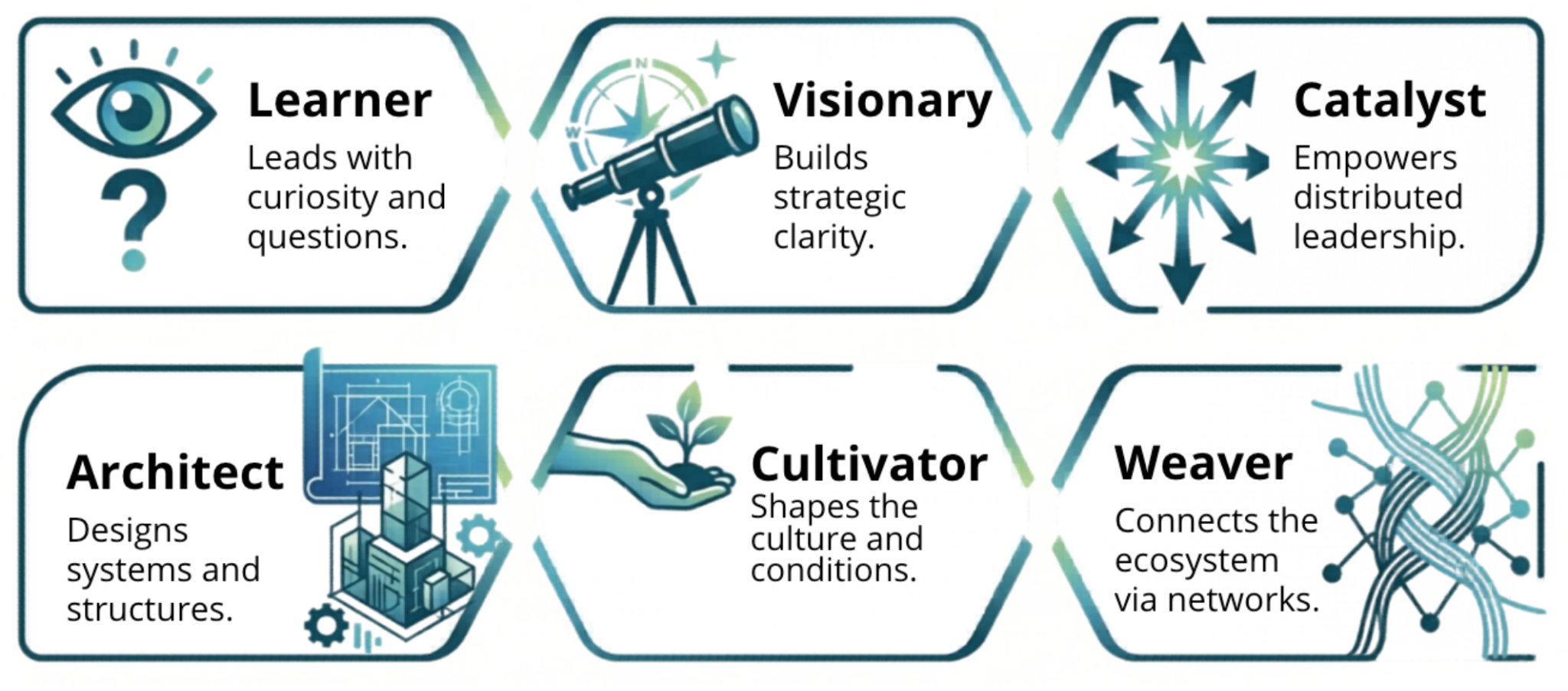
The Learner: Embracing Curiosity and Continuous Growth
The Learner leader actively rejects the notion of having all the answers, instead championing deep inquiry, intellectual curiosity, and a profound belief in human potential. By modeling a commitment to learning, these leaders cultivate environments where innovation and growth can flourish.
Key actions for the Learner include:
- Conducting a personal "curiosity audit" to identify areas for personal learning and vulnerability to share with your team.
- Practicing active listening and empathy during design sprints to truly understand stakeholder needs.
- Articulating a clear set of values and norms, consistently reflecting on them during decision-making processes.
- Setting adaptive and active goals for yourself and your team, fostering a culture of continuous improvement.
The Visionary: Charting a Course for Human Flourishing
The Visionary leader provides strategic clarity, ensuring that even amidst systemic upheaval, the core principles of human thriving remain the central focus. Whether guiding a classroom or an entire district, a well-defined vision acts as a compass for all stakeholders.
To embody the Visionary:
- Tie individual and team objectives directly to the overarching community vision, ensuring a coherent learning model.
- Establish regular reflection periods, such as quarterly reviews, to assess progress and address roadblocks toward the vision.
- Model transparency by openly sharing your own goal reflections and challenges, actively seeking input to refine the roadmap.
The Catalyst: Igniting Motivation and Autonomy
The Catalyst understands that intrinsic motivation—for both educators and students—is fueled by autonomy, relatedness, competence, and purpose. These fundamental elements of self-determination theory are the bedrock for building highly engaged and productive teams.
To act as a Catalyst:
- Distribute leadership by establishing clear, system-wide decision-making processes that define roles and responsibilities.
- Build adaptive skills by encouraging daily reflection on how to empower staff autonomy versus resorting to micromanagement.
- Promote catalytic behavior by regularly assessing team members' sense of autonomy, relatedness, competence, and purpose, and redesigning systems to enhance these areas.
The Architect: Designing for Efficiency and Impact
The Architect designs efficient systems and structures that free up educator time for meaningful student relationships and high-quality learning experiences. This involves a commitment to continuous improvement through structured design sprints.
Key architectural strategies include:
- Identifying and eliminating or automating the single largest non-essential administrative time-sink within your system.
- Reimagining routine tasks by leveraging generative technology to create tools that significantly reduce time spent.
- Building a shared playbook to meticulously document the community vision, learning model, strategies, and key signals, thereby enhancing coherence and knowledge retention.
The Cultivator: Nurturing Conditions for Sustainable Change
Cultivators shape the environment—the policies, culture, climate, leadership, and funding—necessary to sustain meaningful transformation. They focus on building capacity through professional development and fostering commitment by ensuring staff understand and can articulate the rationale for change.
To cultivate lasting change:
- Set conditions by regularly surveying staff about barriers to student success and using this feedback to drive research and improvement cycles.
- Build capacity by co-designing an "Educator Portrait" aligned with the learning model and developing professional learning outcomes that support each competency.
- Grow commitment by mapping stakeholders based on their belief in the vision and trust in your leadership, focusing energy on those most receptive to influence.
The Weaver: Connecting Networks for Collective Progress
Weavers systematically combat professional isolation by integrating teams with broader learning networks, talent pools, community resources, and external expertise. This interconnectedness accelerates transformation and leverages collective knowledge.
To excel as a Weaver:
- Connect teams to external knowledge networks, recognizing that progress elsewhere can significantly accelerate your own transformation efforts.
- Coordinate cross-sector groups by establishing advisory boards that bridge workforce needs with educational offerings.
- Collaborate with external talent by actively participating in or initiating networks that foster innovation and shared learning.
The ambition of these personas is significant, and it's likely that different individuals within your system will embody various strengths. However, the current landscape demands that we, as adults in education, cultivate these competencies within ourselves and our teams. Reflect on the seismic shifts impacting your system and consider which of these leadership personas your team needs most right now. The journey to build a future-ready learning environment for Generation Alpha begins with intentional leadership development, starting today.






 Explore AI Teaching Tools
Comments (0)
Please login to comment
No comments yet
Be the first to comment on this article