
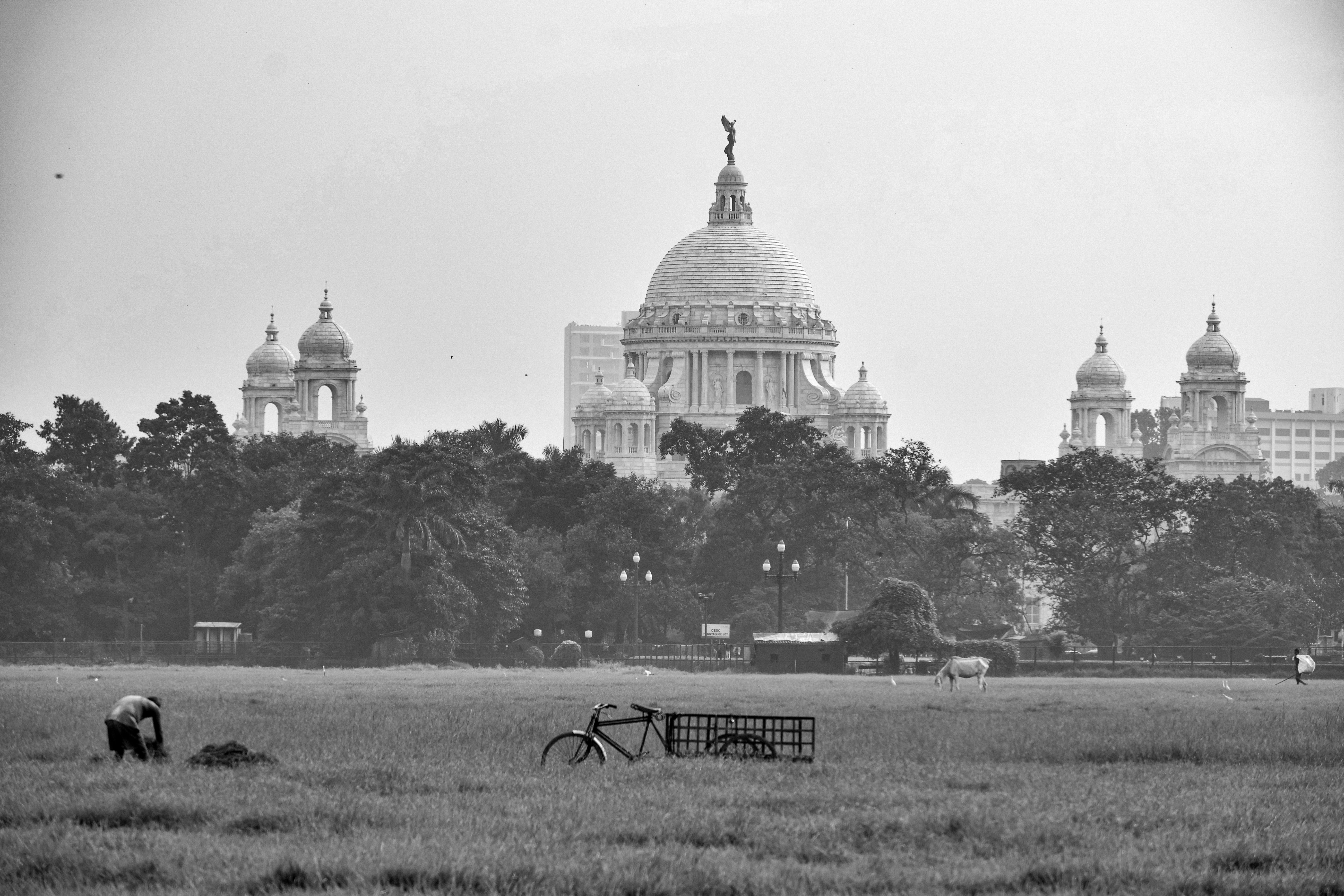
Calcutta's Silent Scourge: How a PhD Candidate Unearths a Forgotten Plague's Echoes in Our Pandemic Present
The sheer scale of the COVID-19 pandemic left many feeling as though history itself had begun anew, a stark demarcation between a "before" and an "after." With over 7.1 million lives lost globally since its onset, the experience felt unprecedented, a singular event in human history. Yet, for some, the present crisis is merely the latest chapter in a much longer, more complex narrative of human resilience and vulnerability.
One such individual is Utsa Bose, a PhD candidate in History, who is dedicating five years of his academic life not to the immediate aftermath of COVID-19, but to a devastating outbreak that once gripped Calcutta. His work delves into the past, seeking to understand how people navigated fear, survival, and societal upheaval during a different, yet eerily resonant, period of widespread illness.
The Spark of Curiosity: A Single Page Ignites a Research Odyssey
While the recent global pandemic undoubtedly amplified interest in historical epidemics, Bose's fascination predates its most acute phase. His journey into the history of disease began not with a grand academic ambition, but with a serendipitous encounter in a Bengali book during his undergraduate studies.
“I came across a reference to a plague in South Asia in a Bengali book,” Bose recalls. “It was a very short excerpt… just a page where they said, ‘then a plague arrived in the city’. There is a line which said people were more afraid of vaccinators, and that made people hide the affected. And that was it.”
This fleeting mention, devoid of detail but rich with implication, lodged itself in his mind. It was a glimpse into a moment of profound fear and societal reaction, a story left untold.
From Literature to Epidemiology: A Shift in Focus
Bose's academic path initially led him through the intricate world of English Literature at St. Stephen's College, Delhi. However, the arrival of the COVID-19 pandemic during his undergraduate years profoundly shifted his perspective.
The global health crisis underscored for him that disease was not merely a scientific or medical issue, but a deeply human one, interwoven with social, cultural, and political dimensions. This realization spurred a fundamental question: How are epidemics remembered, documented, and, perhaps more importantly, how do they fade from collective memory?
This intellectual pivot marked his transition from English Literature to the discipline of History. In 2021, he pursued a Master of Philosophy in Modern South Asian Studies at the University of Oxford, laying the groundwork for his current doctoral research.
Unearthing Calcutta's Forgotten Catastrophe: The Third Pandemic's Shadow
The plague that captured Bose's attention was part of the devastating Third Global Bubonic Plague Pandemic, which swept across the world from the mid-19th to the mid-20th century. Originating in Yunnan, China, in the 1850s, it spread relentlessly, reaching Bombay in 1896 and then Calcutta in 1898.
This period was a crucible of global change. Rapid advancements in transportation and increasing interconnectedness meant that diseases could travel with unprecedented speed. Yet, scientific understanding lagged behind.
“People were still debating what causes diseases,” Bose explains. “At the same time, you have expanding networks and shipping routes. The movement of people was increasing.” This was the dawn of the bacteriological revolution, a time when the existence of microscopic pathogens was beginning to be understood, but certainty remained elusive.
The Third Pandemic claimed approximately 12 million lives worldwide. While its impact on India was severe, detailed historical accounts of its presence in Calcutta were surprisingly scarce, leaving a significant gap in the historical record that Bose is now meticulously filling.
Navigating Fear and Mistrust: The Human Response to Epidemics
Bose's research focuses on the late 19th and early 20th centuries, a period characterized by both scientific burgeoning and profound uncertainty. He is particularly interested in the human responses to such outbreaks, exploring how individuals and communities reacted when faced with an invisible enemy.
“I’m interested in responses,” he shares. “How did people respond to it, and how did governments attempt to deal with it?” This question extends beyond mere survival tactics to encompass the complex interplay of trust, power, and decision-making during moments of acute crisis.
The late 19th century was a pivotal era for public health interventions, including the nascent stages of vaccine development and deployment. This introduced a new layer of complexity: the question of public trust in authority and scientific pronouncements.
“This was one of the first times where vaccines were being rolled out, so the question of trust becomes central,” Bose notes. “Did the people of Calcutta trust its government?” The historical record, including the brief excerpt that first intrigued him, suggests that trust was far from universal. The act of people hiding the sick from authorities speaks volumes about the fractured relationships and deep-seated fears that characterized the era.
The Bacteriological Revolution and Lingering Doubts
The period Bose studies was marked by a scientific revolution, where the germ theory of disease was gaining traction. However, this did not translate into immediate, universally accepted truths. Debates raged about the very nature of the outbreaks.
“There were even debates about whether a pandemic had even broken out,” Bose says. “Do you believe what the press says or not? There’s also the debate about vaccine rollouts and competitions between countries producing vaccines.” This highlights the complex information landscape of the past, where official pronouncements, media reports, and public perception often clashed.
The development and distribution of vaccines, a cornerstone of modern public health, were also fraught with challenges and controversies. The competition between nations to produce and deploy vaccines, a phenomenon familiar to us from recent history, was already a feature of this earlier era.
Beyond Devastation: Epidemics as Histories of Life
Bose's research offers a crucial reframing of how we understand epidemics. Instead of viewing them solely as periods of overwhelming devastation and loss, he proposes a more nuanced perspective: they are, fundamentally, "histories of life."
“We tend to think about it as horrible, a devastation,” he observes. “But I think of them as histories of life.” This perspective acknowledges that even amidst the gravest crises, human life continues. People adapt, they love, they work, and they persevere.
The COVID-19 pandemic, for all its challenges, demonstrated this enduring human capacity. Life did not cease; it transformed. People found new ways to connect, to work, and to maintain a semblance of normalcy in extraordinary circumstances.
“Just like what happened in the COVID-19 pandemic, life goes on,” Bose shares. “People are still living, and people go through things. The past doesn’t have to be the present, but it can help us think about the present and the future.”
Lessons from the Past for a Resilient Future
Studying past epidemics is not about finding perfect parallels to today's challenges. Instead, it is about broadening our historical perspective and understanding the enduring patterns of human behavior in the face of widespread illness.
“One of the things during the COVID-19 pandemic was that it felt like a new thing,” Bose notes. “But historically, it’s not.” From the devastating impact of smallpox on indigenous populations to the eradication of polio, outbreaks have repeatedly shaped the course of human history.
What has changed, Bose suggests, is our collective memory of these events. The idea of a world largely free from mass outbreaks is a relatively recent phenomenon, a testament to advancements in medicine and public health. However, this very success can lead to a sense of historical amnesia.
Bose's work, though academic in its pursuit, carries profound implications for the broader public. His research on the Calcutta plague, a forgotten chapter in the history of a major city, serves as a powerful reminder that our current experiences, however overwhelming, are part of a much larger human story.
By unearthing the fears, the responses, and the resilience of people in Calcutta over a century ago, Bose offers us a richer understanding of our own present. The echoes of that past plague, in its societal disruptions and human adaptations, resonate with the challenges we have faced and continue to navigate. It reminds us that even in the darkest of times, life persists, and humanity finds ways to carry on.






 Explore AI Teaching Tools
Comments (0)
Please login to comment
No comments yet
Be the first to comment on this article