
Navigating Fiscal Challenges: West Contra Costa Unified School District's Labor Agreements and Budgetary Realities
In the dynamic landscape of public education, balancing the needs of dedicated educators with the imperative of fiscal responsibility presents a perennial challenge.This article delves into a critical juncture faced by the West Contra Costa Unified School District, where the approval of significant labor agreements coincided with pressing financial concerns.
We will explore the implications of these decisions for teachers, the district's operational capacity, and the broader context of educational funding in California.
The Delicate Dance: Approving Labor Deals Amidst Financial Uncertainty
The West Contra Costa Unified School District recently navigated a complex decision-making process, ultimately approving tentative labor agreements with its educators and other essential staff.This pivotal moment, however, was underscored by a palpable sense of financial apprehension.
The district board's decision, though a crucial step in acknowledging the contributions of its workforce, has ignited a vital conversation about the sustainability of such commitments when faced with projected budget deficits.
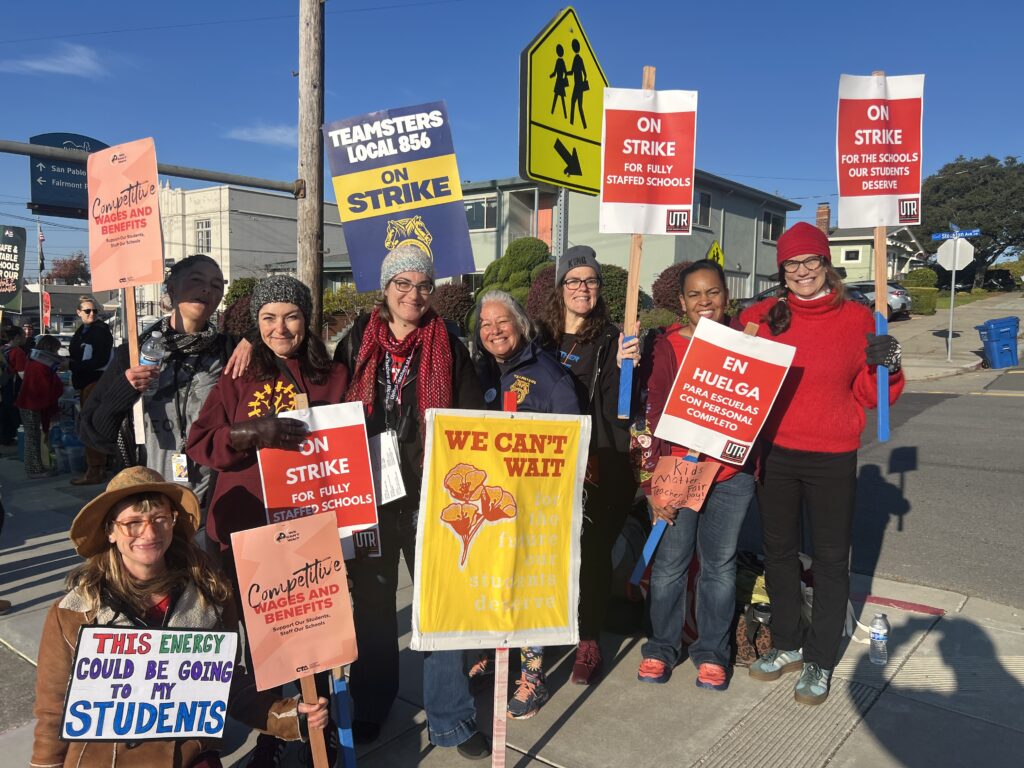
This scenario is not isolated; it reflects a growing trend across California school districts where negotiations with unions are reaching critical junctures, often amplified by the "We Can't Wait" campaign, a statewide initiative advocating for improved educational conditions.
The Weight of the Agreements: Compensation and Benefits
The approved agreements, particularly with the United Teachers of Richmond, represent a significant investment in the district's personnel.These pacts include substantial pay increases, such as an 8% raise for teachers in consecutive years, alongside enhancements to health benefits.
While these provisions are designed to attract and retain skilled educators, they come with a considerable price tag.
District projections estimate the financial impact of these compensation and benefit adjustments to be in the tens of millions of dollars over a three-year period.
This necessitates a careful examination of how these newfound obligations will be integrated into the existing budgetary framework, especially given the district's ongoing efforts to manage a deficit.
The Looming Shadow: Budgetary Deficits and the Quest for Solvency
The West Contra Costa Unified School District is grappling with a substantial projected deficit, necessitating a proactive approach to fiscal management.Administrators have outlined a plan that requires significant budget reductions over the next several years to ensure the district's long-term financial health.
This imperative to find savings, estimated to be in the hundreds of millions of dollars, casts a long shadow over the recently ratified labor agreements.
The challenge lies in identifying areas for reduction without compromising the quality of education and student support services.
The Contra Costa County Oversight: A Cautious Endorsement
As required by state law, the Contra Costa County Office of Education plays a crucial role in affirming the fiscal viability of such agreements.In this instance, county officials offered a cautious endorsement, acknowledging the district's capacity to meet its obligations.
However, this endorsement came with a stark warning: the settlements would become unsustainable if the district failed to implement necessary budget reductions to maintain fiscal solvency.
This highlights the delicate equilibrium the district must strike, where labor commitments are contingent upon successful cost-saving measures.
Navigating Declining Enrollment and Revenue Fluctuations
The fiscal health of any school district is intrinsically linked to student enrollment and the revenue streams that support its operations.Studies indicate that declining student attendance can directly impact funding, creating a ripple effect that exacerbates budgetary challenges.
In the context of West Contra Costa Unified, any further downturn in enrollment or a shortfall in expected revenues could necessitate even more stringent budget cuts.
This underscores the importance of strategic planning and robust revenue generation initiatives to mitigate these risks.
Divergent Perspectives: Board Members' Deliberations
The decision to approve the labor agreements was not unanimous, reflecting the complex considerations and differing priorities among the school board members.Some board members emphasized the critical need to support teachers and staff, arguing that investing in educators is paramount to student success.
They highlighted the dedication of teachers who often work with limited resources and advocate for fair compensation and benefits as a matter of respect and professional recognition.
Conversely, other board members expressed significant reservations, citing the magnitude of the projected budget cuts required to fund the agreements.
Their concerns centered on the sustainability of such drastic reductions and the potential impact on educational programs and student services.
This divergence of opinion underscores the inherent tension between meeting the immediate needs of employees and ensuring the long-term financial stability of the district.
The Union's Counterpoint: A Different Financial Narrative
Union leadership offered a contrasting perspective on the district's financial standing.They argued that the district's budget projections might be inflated and that the financial health of the district is more robust than presented.
This disagreement over financial assessments adds another layer of complexity to the negotiations and the subsequent approval process.
Union representatives pointed to potential state funding increases as a factor that could alleviate some of the financial pressures, although the allocation and availability of such funds remain subject to broader economic conditions.
Looking Ahead: Strategies for Fiscal Resilience
The situation in West Contra Costa Unified serves as a compelling case study for school districts nationwide.To navigate similar fiscal challenges, districts can consider several strategic approaches: * **Diversified Revenue Streams:** Explore opportunities to generate additional revenue beyond traditional state and local funding.
This could include grant writing, partnerships with community organizations, and innovative fundraising initiatives. * **Operational Efficiency Audits:** Conduct thorough reviews of district operations to identify areas where efficiencies can be gained without compromising essential services.
This might involve optimizing transportation routes, energy consumption, or administrative processes. * **Strategic Staffing Models:** Develop flexible staffing models that can adapt to changing enrollment patterns and budgetary constraints.
This could involve cross-training staff, leveraging technology for administrative tasks, and exploring shared service models with neighboring districts. * **Proactive Community Engagement:** Foster open and transparent communication with parents, community members, and stakeholders regarding the district's financial situation and the rationale behind budgetary decisions.
Building trust and understanding can garner support for necessary measures. * **Data-Driven Decision-Making:** Utilize robust data analytics to inform budgetary decisions, program evaluations, and resource allocation.
This ensures that investments are aligned with educational priorities and yield measurable outcomes. * **Collaborative Bargaining:** Engage in collaborative and transparent labor negotiations, fostering a spirit of partnership with employee unions.
Focusing on shared goals and mutual understanding can lead to more sustainable and mutually beneficial agreements.
Conclusion: Charting a Course for Sustainable Education
The West Contra Costa Unified School District's journey through the approval of labor agreements amidst financial headwinds highlights the intricate challenges facing public education.The district's experience underscores the critical need for a balanced approach that honors the invaluable contributions of teachers and staff while ensuring the long-term fiscal health of the institution.
By embracing strategic planning, fostering transparency, and exploring innovative solutions, districts like West Contra Costa Unified can chart a course towards sustainable educational excellence, ensuring that both educators and students thrive in a financially sound environment.
The lessons learned from this district's experience offer valuable insights for school boards, administrators, and educators across the nation as they strive to meet the evolving demands of the 21st-century learning landscape.






 Explore AI Teaching Tools
Comments (0)
Please login to comment
No comments yet
Be the first to comment on this article