
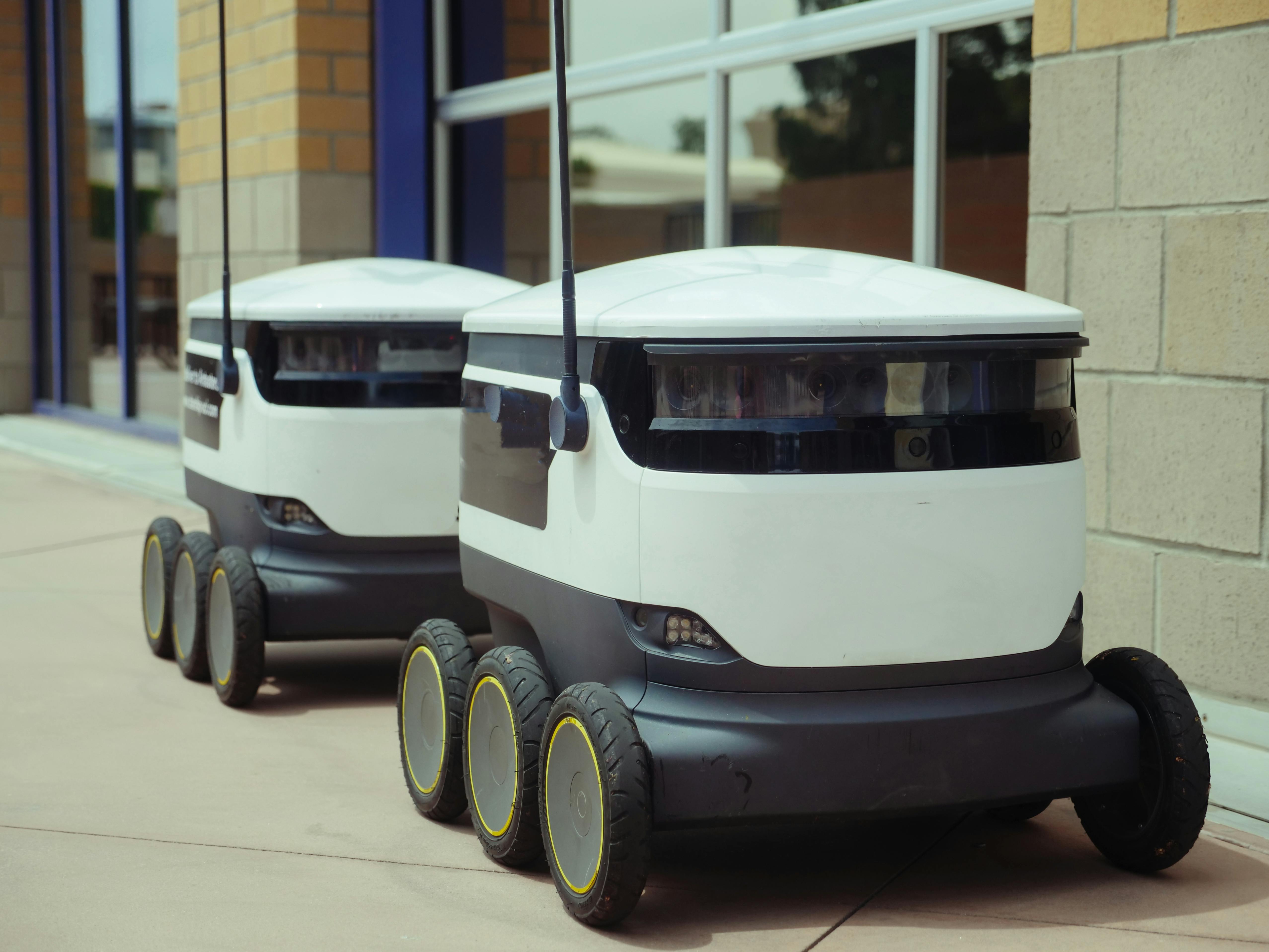
The Physical Frontier: Charting Your Course for the Next Wave of AI
The future of artificial intelligence isn't just in the cloud; it's stepping out into the real world. Experts are increasingly pointing to a seismic shift, where AI systems move beyond screens and keyboards to interact with our physical environment. This burgeoning field, often termed embodied AI, promises a revolution, but it also demands a new generation of thinkers and builders.
Where Intelligence Meets Action: The Rise of Physical AI
Imagine AI that doesn't just process information but can also perceive, learn from, and manipulate the physical world. This is the essence of embodied AI, a cutting-edge domain where algorithms are integrated into physical or virtual bodies. Think of autonomous vehicles navigating complex streets, sophisticated robots performing intricate surgeries, or drones executing precise aerial maneuvers.
The challenge in this domain is immense. Unlike the vast datasets readily available for digital AI, amassing sufficient and accurate data for physical AI systems is a significant hurdle. Furthermore, the precision required for these systems to operate safely and effectively in the real world must be near-perfect, leaving little room for error.
While the full realization of this physical AI frontier may still be a few years away – with some estimates placing it at three to five years out – the time to prepare is now. Aspiring innovators have a unique opportunity to shape this transformative field by pursuing specialized educational paths.
Building the Brains and Bodies: Essential Study Paths
For those who want to be at the forefront of bringing intelligent systems into the physical world, a strategic selection of academic disciplines is key. These fields provide the foundational knowledge and specialized skills necessary to design, build, and deploy embodied AI.
Mechatronics Engineering: The Interdisciplinary Foundation
Mechatronics engineering stands out as a broad yet powerful pathway into embodied AI. This discipline masterfully fuses mechanical engineering, electronics, and computer science into a cohesive curriculum. Students learn the intricate language of how motors, sensors, microcontrollers, and control systems communicate and collaborate.
This degree is ideal for those who envision making robotic arms move with precision or designing systems that seamlessly integrate mechanical and electronic components. Universities in regions renowned for their technological prowess, including Germany, Japan, and an increasing number of institutions in Southeast Asia, offer some of the world's most robust mechatronics programs.
Robotics Engineering: Mastering Autonomous Systems
While mechatronics provides the fundamental building blocks, a dedicated robotics engineering degree offers a comprehensive understanding of the entire system. This specialized field delves deep into critical areas such as kinematics, the study of motion; path planning, enabling robots to navigate environments; and simultaneous localization and mapping (SLAM), allowing robots to build maps of unknown spaces while tracking their own position.
Many modern robotics programs now integrate machine learning directly into their coursework. This training is crucial for bridging the gap between the complex decisions made by neural networks and the physical responses of actuators, ensuring that AI can effectively control physical actions.
Both mechatronics and robotics engineering share a common ground in blending mechanical, electrical, and software engineering principles. The key distinction lies in their scope: mechatronics often focuses on electromechanical systems broadly, while robotics is a specialized subset concentrating on machine motion, perception, and autonomy, particularly in AI-driven applications.
Electrical and Electronic Engineering (EEE): Powering the Physical AI
At its core, physical AI relies on sophisticated electronic circuits. An EEE background equips individuals with the ability to design the fundamental low-level hardware that underpins all AI systems. This includes expertise in power management, printed circuit board (PCB) design, embedded firmware development, and signal processing.
Companies that are developing their own AI chips or pioneering advanced robotics solutions invariably seek graduates with a deep understanding of how silicon and software converge. EEE graduates are essential for creating the very hardware that enables intelligent physical interaction.
Computer Science: The Software Backbone of Embodied Intelligence
A computer science degree, particularly with a specialization in robotics or artificial intelligence, offers a direct route into the field of embodied AI. This path is particularly appealing to those who want to focus on the software side of AI while still contributing to its physical manifestations.
Individuals from this background are often at the forefront of training robots to learn from human demonstrations or developing sophisticated simulation environments for autonomous vehicles. A strong computer science foundation also provides the adaptability needed to pivot as the rapidly evolving field of AI progresses.
For students pursuing computer science, aiming to become a "full-stack engineer" in the AI context is a strategic move. This involves understanding how to build with AI, develop and fine-tune models, and create applications that leverage these intelligent systems.
Mechanical Engineering: Designing the Physical Form
When an AI system needs a physical body, whether it's a humanoid robot or an autonomous vehicle, mechanical engineers are the ones who design and construct it. This branch of engineering applies principles of physics, mathematics, and materials science to create and maintain everything from microscopic sensors to large-scale aerospace systems.
Mechanical engineers are instrumental in translating AI's digital intelligence into tangible, functional machines. Their expertise ensures that the physical embodiment of AI is robust, efficient, and capable of performing its intended tasks in the real world.
Cognitive Science: Understanding Human Intent and Interaction
While perhaps a less conventional choice, cognitive science offers a vital perspective for those interested in the human-centric aspects of physical AI. This field is increasingly important as AI systems move towards interpreting human intent, adapting to unpredictable environments, and collaborating with people.
Researchers with backgrounds in how biological systems process sensory information, make decisions, and acquire motor skills are shaping the next generation of brain-computer interfaces, advanced prosthetics, and intuitive human-robot interaction systems. Combining cognitive science with programming skills can create a uniquely valuable and distinctive professional profile.
Navigating the Evolving Landscape: Hardware vs. Software in AI
A pertinent question arises as digital AI increasingly integrates with the physical world: will hardware-focused roles become more prominent than software positions? This concern is echoed by industry leaders who acknowledge the rapid advancements in AI's self-improvement capabilities.
However, this does not signal a decline in demand for computer science professionals. Instead, it emphasizes the need for greater intentionality in career choices and a focus on specialized, high-impact areas. The creation of new jobs within AI is ongoing, requiring individuals to be adaptable and forward-thinking.
The future of AI development will undoubtedly require a synergistic approach, where the insights from cognitive science inform the design of physical systems engineered with precision, powered by robust electronics, and controlled by sophisticated software. The world is on the cusp of a new era where intelligence is not just observed but actively experienced, and those who prepare now will be the architects of this exciting reality.






 Explore AI Teaching Tools
Comments (0)
Please login to comment
No comments yet
Be the first to comment on this article