
Navigating Campus Speech: Understanding the USC Valedictorian Speech Controversy and Its Implications
The landscape of higher education is often a vibrant arena for diverse perspectives, yet it can also become a focal point for complex debates surrounding free expression and institutional responsibility.When a university makes a significant decision, such as canceling a commencement speech, it sparks widespread discussion, particularly when that decision impacts a student who has earned a prestigious honor.
This situation, exemplified by events at the University of Southern California (USC), offers a crucial learning opportunity for students, educators, and institutions alike, highlighting the delicate balance between ensuring safety and upholding the principles of open discourse.
Understanding the nuances of such events is vital for any student navigating the academic and social complexities of university life.
The USC Decision: A Valedictorian's Speech and a University's Response
At the heart of this discussion lies the University of Southern California's decision to revoke the commencement speech invitation for its valedictorian, Asna Tabassum.This action, taken by university leadership, was attributed to unspecified security risks.
The university stated that the decision was made in consultation with campus law enforcement, emphasizing that the safety of the USC community was paramount and that the goal was to allow graduates to focus on their celebration.
This statement, while prioritizing security, ignited a significant response from many students and observers.
Student Reactions and Protests
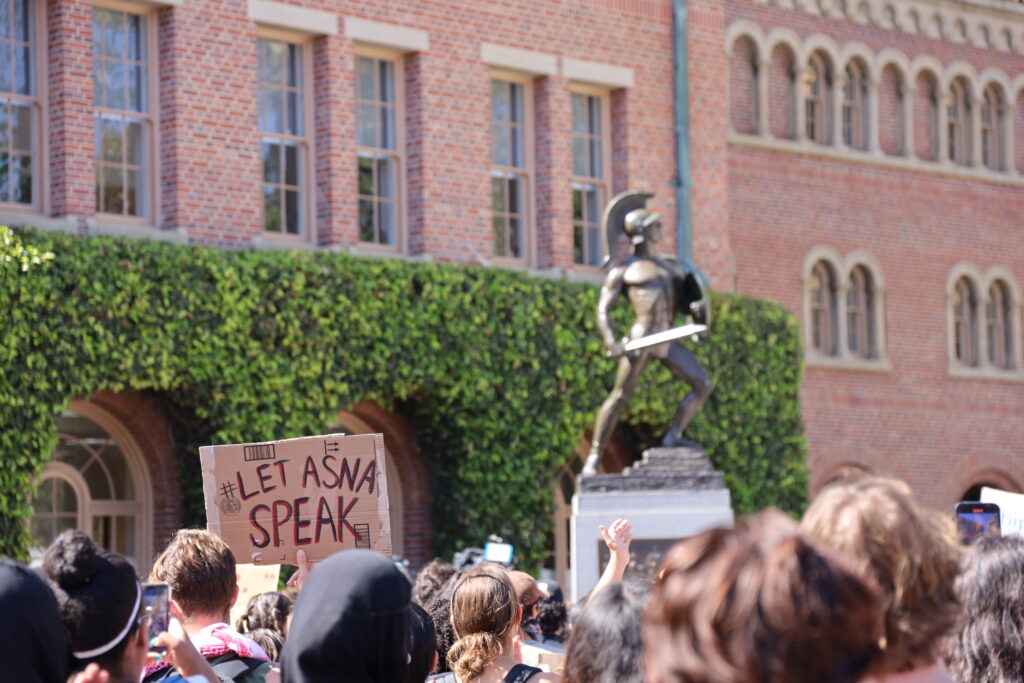
Hundreds of USC students mobilized in protest, marching across campus with signs and chanting messages advocating for the valedictorian to be allowed to speak.Many students wore masks and hoodies, which they explained as symbolic of the silencing of voices.
The demonstration underscored a deep sense of disappointment and a feeling among some students that the university's action was a "slap in the face." For students who felt represented by Tabassum, particularly Muslim students, the decision was seen as an erasure of their voices and experiences.
An international student from Syria expressed devastation, questioning the notion of freedom of speech in the U.S. if such expression is curtailed.
These student actions demonstrate a powerful engagement with campus issues and a commitment to advocating for what they perceive as fundamental rights.
Examining the Rationale: Security Concerns vs.
Freedom of Speech The university's stated reason for canceling the speech was the need to maintain and prioritize security.
Officials indicated that the decision was difficult but necessary to ensure the safety of the USC community and allow for an unimpeded commencement ceremony.
However, the lack of specific details regarding the security risks left room for interpretation and fueled further debate.
The Role of External Pressures and Viewpoints
It is important to note that the selection of Tabassum as valedictorian had already generated discussion.Pro-Palestinian student groups and other supporters viewed the university's decision as potentially Islamophobic, especially given the broader geopolitical context.
Conversely, some pro-Israel groups had expressed concerns about Tabassum's social media content, specifically a link to a webpage discussing the situation in Palestine and describing Zionism as a "racist settler-colonial ideology." A statement from a local rabbi indicated that the initial selection had caused distress to Jewish students, characterizing the content as antisemitic hate speech.
These differing viewpoints highlight the intense emotions and complex narratives surrounding the Israeli-Palestinian conflict, which have increasingly permeated university campuses.
The University's Stance on Free Speech Entitlements
USC officials maintained that the decision to cancel the speech was unrelated to freedom of speech, asserting that no individual student has an inherent entitlement to speak at commencement.This legalistic interpretation, while technically accurate in many contexts, was challenged by some free speech advocates.
They argued that while there might not be a right to speak at commencement, the act of selecting a student for such an honor and then revoking it based on criticism of their viewpoint could indeed impact the campus speech climate.
The argument presented was that once an honor is bestowed, its subsequent withdrawal under pressure can send a chilling message about the tolerance for certain viewpoints.
The Broader Implications for University Campuses
The USC situation is not an isolated incident.Universities across the nation are grappling with how to manage free speech, particularly in the context of heightened political tensions and the potential for protests or disruptions.
The challenge for university administrators is to uphold the principles of open inquiry and expression while also ensuring a safe and inclusive environment for all students.
The Power of Amplification Through Silencing
Ironically, the decision to cancel Asna Tabassum's speech may have amplified her voice beyond what it might have been at the graduation ceremony.She has since been interviewed by national and international media outlets, a testament to the idea that attempts to silence can sometimes lead to greater visibility.
Her own statement suggested that she was surprised by USC's decision to "abandon" her, despite her not being aware of specific threats.
This sentiment underscores the emotional toll such decisions can take on students who feel unsupported by their institution.
Student Advocacy and Collective Action
The response from USC students, including the organization of marches and the signing of an open letter by numerous student and local groups, demonstrates the power of collective action.The open letter called for USC to reverse its decision, allow Tabassum to speak, provide necessary safety measures, and issue a public apology.
This level of organized advocacy highlights students' willingness to engage with institutional policies and demand accountability.
Such actions are crucial for shaping a more responsive and equitable university environment.
Expert Opinions on Campus Speech Climate
Free speech organizations and experts have weighed in on the USC decision.Some have criticized the university for what they perceive as a "calculated move to quiet the critics" without clear evidence of imminent threats or exhaustive efforts to secure the event.
The argument is that canceling the speech should be a last resort, employed only after all other avenues for ensuring safety and allowing expression have been exhausted.
This perspective emphasizes the importance of proactive security measures and robust support for student expression, rather than immediate capitulation to external pressures.
Learning from the USC Experience: Key Takeaways for Students
The events at USC offer valuable lessons for students everywhere, particularly concerning their rights, responsibilities, and the dynamics of campus discourse.Understanding Your Rights and University Policies
It is essential for every student to familiarize themselves with their university's policies on free speech, student conduct, and campus safety.While universities have the right to set certain limitations, understanding the boundaries and the processes for addressing concerns is crucial.
This knowledge empowers students to engage constructively and advocate effectively.
The Importance of Constructive Dialogue and Engagement
While protests and demonstrations are vital tools for expressing dissent, fostering an environment where diverse viewpoints can be discussed respectfully is equally important.Universities are spaces for learning, and this includes learning to engage with ideas that may differ from our own.
Encouraging open dialogue, even on contentious issues, can lead to greater understanding and more nuanced solutions.
Navigating Complex Geopolitical Issues on Campus
The USC controversy is deeply intertwined with global events.Students often find themselves navigating complex geopolitical issues within their academic communities.
It is important to approach these discussions with a commitment to factual accuracy, empathy, and a willingness to understand different perspectives, even when deeply held beliefs are challenged.
The Role of Institutional Accountability
Students have a right to expect their universities to act with integrity and transparency.When decisions are made that impact the student body, institutions should be prepared to explain their rationale and engage with student concerns.
Holding universities accountable for their policies and actions is a vital part of ensuring a healthy academic environment.
Conclusion: Upholding Principles in a Dynamic Educational Landscape
The USC valedictorian speech controversy serves as a potent reminder of the ongoing challenges in balancing freedom of speech with the imperative of campus safety.The decision to cancel a student's commencement speech, regardless of the stated reasons, inevitably sparks debate about the values and priorities of an educational institution.
For students, understanding the complexities of these situations—from the legal frameworks of free speech to the emotional impact of perceived silencing—is paramount.
The actions of students at USC, in organizing and voicing their concerns, highlight the power of collective advocacy.
As universities continue to evolve, the commitment to fostering an environment where diverse voices can be heard, debated, and respected, while ensuring the safety and well-being of all members, remains a critical pursuit for the global learning community.
The decisions made by university administrations, and the responses they elicit from students, shape the very fabric of academic life and influence the development of informed, engaged citizens.






 Explore AI Teaching Tools
Comments (0)
Please login to comment
No comments yet
Be the first to comment on this article