
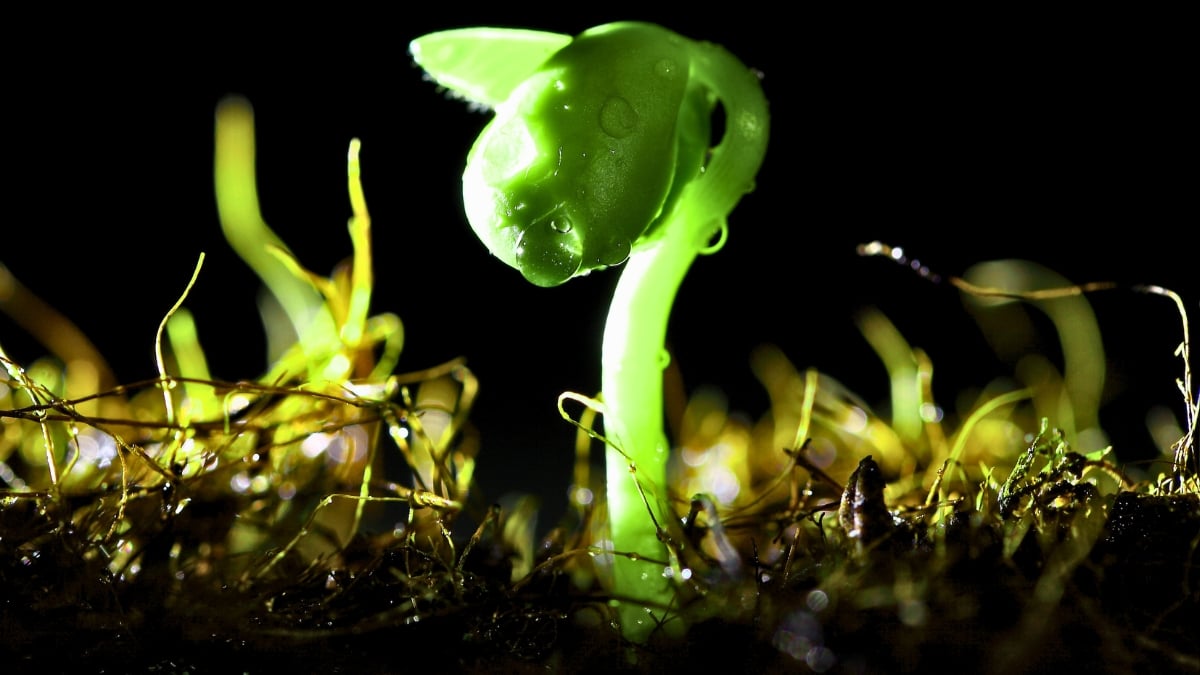
A groundbreaking new study suggests that the seemingly inert world beneath our feet, teeming with tiny microbes, might play a surprisingly active role in the planet's water cycle. This revelation has profound implications for educators, prompting a re-evaluation of how we teach about environmental science, weather patterns, and the interconnectedness of life on Earth. Understanding these microscopic allies could unlock new strategies for conservation and climate resilience.
Unearthing the Secret Life of Soil Microbes
For decades, soil has been understood as the foundation of terrestrial ecosystems, a complex matrix supporting plant life and filtering water. However, recent research is uncovering a dynamic community of bacteria and fungi, often microscopic, that are far more influential than previously imagined.
These tiny organisms, often hiding in plain sight within the soil, are now being linked to atmospheric phenomena. It’s a concept that challenges our macroscopic view of the world and opens up exciting avenues for scientific inquiry and educational exploration.
"We're discovering that the microbial world isn't just a passive component of the soil; it's an active participant in shaping our environment, right up to the clouds."
The implications for educators are immense. Imagine students exploring the hidden world of microbes through interactive lessons or using tools to visualize complex ecological processes. This new understanding provides a compelling narrative to engage young minds in the wonders of science.
How Tiny Organisms Influence Weather Patterns
The core of this discovery lies in the ability of certain soil microbes to influence cloud formation. Researchers have identified specific bacteria that produce proteins capable of acting as ice-nucleating agents. These agents encourage water vapor in the atmosphere to condense and freeze at higher temperatures than it normally would.
This process is crucial for the formation of ice crystals, which are essential components of clouds. When these ice crystals grow large enough, they can eventually fall as rain, snow, or hail, effectively helping to pull precipitation from the sky.
A recent study published in Nature Climate Change highlighted how these microbial contributions, while individually tiny, collectively exert a significant influence on regional weather patterns. This suggests that the health and diversity of soil microbial communities could be a critical factor in predicting and even mitigating drought conditions.
The Unseen Hand in Precipitation
Think of it this way: the atmosphere contains vast amounts of water vapor, but it needs a "seed" to begin forming clouds and precipitation. These specialized microbes provide that seed. Their presence in the soil, and their subsequent dispersal into the atmosphere (often through dust particles or aerosols), is a vital link in the hydrological cycle.
This biological mechanism adds another layer of complexity to our understanding of meteorology. It underscores the interconnectedness of seemingly disparate environmental systems, from the soil under our feet to the rain falling on our heads.
Educational Opportunities: Bringing Microbes to the Classroom
This fascinating research offers a wealth of opportunities for educators to create engaging and relevant learning experiences. Instead of abstract concepts, teachers can now ground lessons in tangible, albeit microscopic, phenomena.
Consider incorporating this discovery into units on:
- Ecology and Biomes
- Weather and Climate
- The Water Cycle
- Biodiversity and Conservation
- The Scientific Method and Research
These topics can be brought to life through hands-on activities, digital tools, and real-world case studies. For instance, students could explore the concept of ice nucleation through simple experiments or use online simulations to model atmospheric processes.
Leveraging Technology for Deeper Understanding
Tools designed for interactive learning can be particularly effective. Platforms that offer classroom games like trivia or word searches can be adapted to reinforce vocabulary and concepts related to soil science and meteorology. Imagine a live quiz about the role of microbes in cloud formation, or a word search game featuring terms like "ice nucleation," "aerosols," and "hydrological cycle."
Furthermore, educators can utilize AI lesson plan generators to quickly develop curriculum materials that incorporate this cutting-edge research. These tools can help craft engaging narratives and suggest activities that align with learning objectives, saving valuable preparation time.
A recent survey of 1,200 K–12 educators indicated a strong interest in integrating novel scientific discoveries into their curriculum, provided accessible resources and support are available.
The ability to create custom assessments, perhaps using an exam creator that focuses on these new scientific insights, can also help gauge student comprehension effectively. Even AI grading tools can streamline the assessment process, freeing up teachers to focus on instruction.
Conservation and the Future of Our Planet
The discovery that soil microbes can help pull rain from the sky has significant implications for conservation efforts. Protecting and restoring soil health, therefore, becomes not just about supporting plant life but also about maintaining crucial atmospheric processes.
This perspective can fundamentally alter how we approach land management, agriculture, and urban planning. Practices that degrade soil quality could inadvertently disrupt local and regional rainfall patterns, exacerbating drought or altering ecosystems.
Understanding the intricate relationship between soil, microbes, and weather might lead to innovative solutions for water scarcity. For example, agricultural techniques that promote healthy soil microbial communities could potentially increase local precipitation over time.
Actionable Steps for Educators and Students
Here are some concrete ways educators can integrate this knowledge:
- Introduce the concept: Explain to students that tiny organisms in the soil can influence the weather.
- Visual aids: Use diagrams, videos, and animations to illustrate the process of ice nucleation and cloud formation.
- Local connections: Discuss local weather patterns and how soil conditions might play a role.
- Citizen science: Encourage participation in citizen science projects related to soil health or weather monitoring.
- Future research: Highlight that this is an active area of study, inspiring students to consider careers in science.
By making these complex scientific ideas accessible and engaging, educators can foster a deeper appreciation for the natural world and empower the next generation to become stewards of the environment. The potential for positive impact, from the microscopic world of soil to the vast expanse of the atmosphere, is truly remarkable.
This ongoing exploration into the hidden powers of soil microbes reminds us that the most profound discoveries often lie in the places we least expect. As educators, embracing these new insights allows us to equip our students with a more complete and awe-inspiring understanding of the planet we inhabit, and the vital, often unseen, forces that shape our world.







 Explore AI Teaching Tools
Comments (0)
Please login to comment
No comments yet
Be the first to comment on this article