
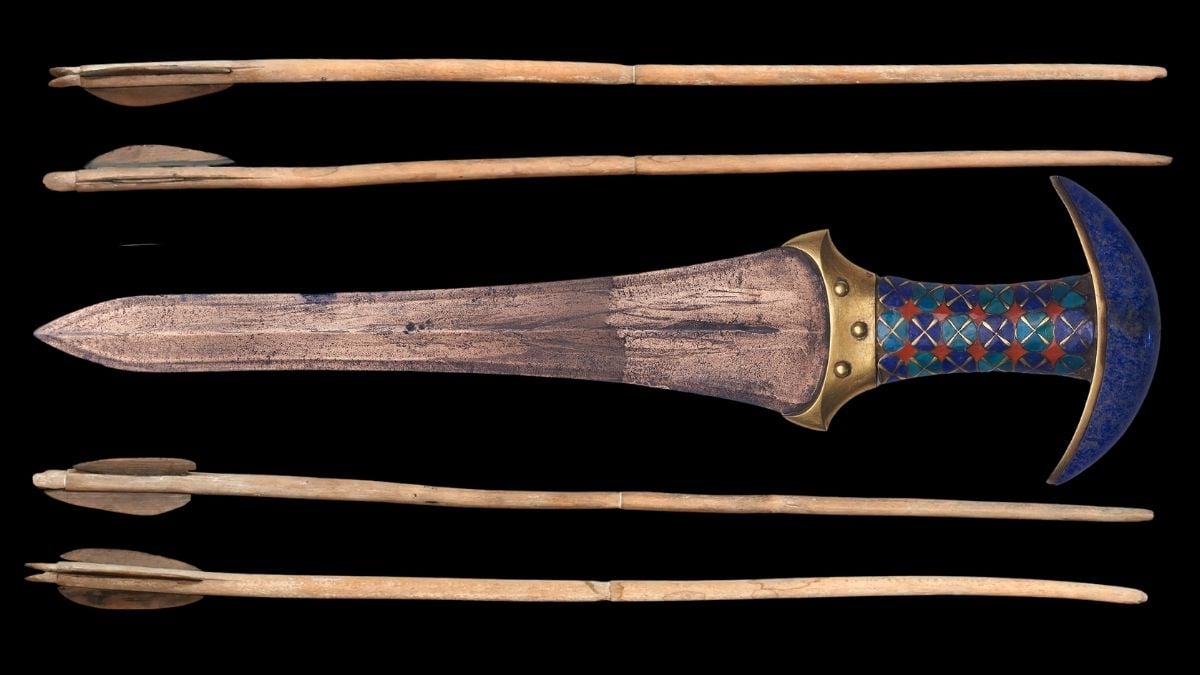
The sands of time have yielded a startling revelation: ancient Egyptian princesses were not merely figures of royal lineage, but were often interred with potent weapons, suggesting a far more active and powerful role than previously assumed. This discovery challenges long-held perceptions of their lives and has profound implications for how we approach historical narratives and, by extension, the educational frameworks we build today.
The Warrior Queens Buried With Their Arsenal
For centuries, our understanding of ancient Egyptian royalty, particularly its female members, has been shaped by tomb art and hieroglyphic texts that often depicted them in more ceremonial or domestic roles. However, recent archaeological findings, including the analysis of skeletal remains and accompanying grave goods, paint a different picture.
Excavations in previously undisturbed burial sites have uncovered evidence of princesses armed with sophisticated weaponry. These weren't symbolic trinkets; they were functional tools of combat, ranging from finely crafted daggers to bows and arrows, suggesting a level of martial training and preparedness.
"The sheer quantity and quality of the weapons found alongside these royal women indicate they were not mere decorative items. They were intended for use, implying a society that valued and perhaps even expected its female elite to be capable defenders."
The presence of these weapons challenges the traditional narrative of passive royalty. It suggests a society where power, even for the highest echelons of women, was intertwined with the ability to defend and potentially project force. This shifts our perspective from a purely symbolic understanding of their status to one that acknowledges their practical capabilities.
Unearthing a Lost Legacy of Strength
The lost remains of these princesses whisper tales of a forgotten era where gender roles may have been far more fluid than we often imagine. The meticulous care taken in their burial, including the inclusion of their personal weapons, underscores their significance and the respect afforded to their martial prowess.
This discovery forces us to re-evaluate the historical record. What other aspects of ancient Egyptian society, or indeed other ancient civilizations, have we overlooked due to preconceived notions? It’s a powerful reminder that history is an ongoing excavation, constantly revealing new layers of understanding.
Educators can leverage this discovery to foster critical thinking skills. Instead of presenting history as a settled subject, we can frame it as an ongoing investigation, encouraging students to question assumptions and explore new evidence. This approach can make learning more dynamic and engaging.
Implications for Modern Education: Beyond the Textbook
The narrative of powerful princesses armed for battle offers a compelling opportunity to engage students with history in a more nuanced way. It moves beyond simple memorization of dates and names, prompting discussions about societal roles, power structures, and the evolution of gender dynamics across different eras.
Consider how this can be integrated into lessons. Instead of just discussing pharaohs, we can explore the potential roles of their female relatives who might have been trained warriors. This adds depth and complexity to historical studies, making them more relevant to contemporary discussions about leadership and capability.
Bringing Ancient Power to the Modern Classroom
How can educators bring this newfound understanding of ancient power to life for their students? It requires moving beyond traditional lecture formats and embracing interactive learning experiences. Tools that allow for creative exploration and critical analysis are key.
For instance, imagine using Mentofy AI teaching tools to generate debate prompts about the societal implications of these findings. Students could research and present arguments on whether these princesses were primarily ceremonial figures with symbolic weapons or active participants in defense.
Furthermore, the concept of "skilled" individuals extends beyond ancient warriors. In the modern classroom, fostering diverse skill sets is paramount. This is where innovative pedagogical approaches and technologies come into play.
- Reimagining Historical Narratives: Encourage students to look for evidence that challenges traditional viewpoints.
- Developing Critical Thinking: Use historical discoveries as springboards for analytical discussions.
- Promoting Inquiry-Based Learning: Frame lessons around questions that arise from new archaeological findings.
- Integrating Technology: Utilize platforms that support interactive learning and content creation.
The idea of princesses wielding powerful weapons is not just a historical curiosity; it's a prompt to reconsider how we define strength and capability across all contexts, including the modern classroom. This historical lens can inspire educators to foster a more robust and inclusive understanding of potential in their students.
Leveraging Technology to Uncover Historical Truths
The discovery of these armed princesses highlights the importance of continuous exploration and the re-evaluation of existing knowledge. In education, this translates to embracing tools that facilitate deeper understanding and engagement with complex subjects.
Platforms that offer dynamic learning experiences can help students connect with historical concepts on a more profound level. For example, using MentofyCove classroom games like trivia or word searches focused on ancient Egypt can reinforce learning in an enjoyable, competitive format.
The ability to generate varied assessment types, such as those offered by Mentofy AI teaching tools, can also help educators gauge student comprehension of these nuanced historical topics. An AI lesson plan generator could even help craft modules specifically around the archaeological evidence of these powerful women.
"The archaeological record is never truly complete. Each new find, like that of the armed princesses, reminds us that our understanding of the past is always evolving, urging us to remain curious and open to revision."
The notion that ancient Egyptian princesses were skilled with powerful weapons, as revealed by their lost remains, is a potent reminder that history is full of surprises. It encourages us to look beyond the surface and question established narratives. For educators, this is an invitation to inspire a new generation of critical thinkers, ready to uncover the complexities of the past and shape a more informed future.
The journey of discovery, much like the excavation of ancient tombs, is ongoing. By embracing new evidence and innovative teaching methods, we can ensure that the lessons of the past, however surprising, continue to illuminate the path forward for our students.







 Explore AI Teaching Tools
Comments (0)
Please login to comment
No comments yet
Be the first to comment on this article