
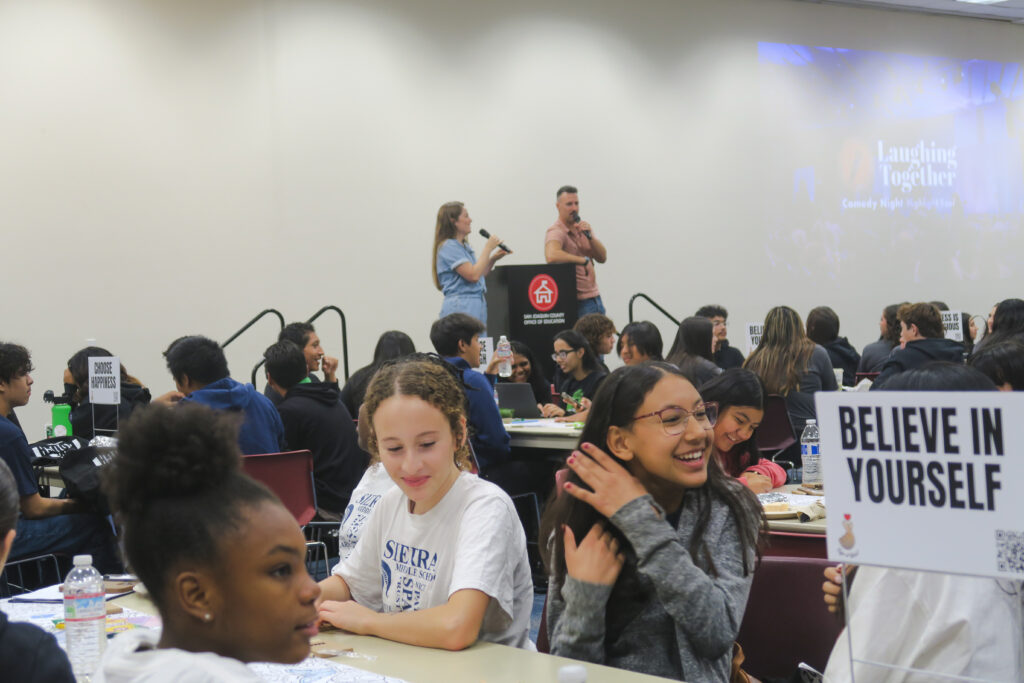
Unlocking Student Potential: How Comedy and Play Boost Mental Health and Learning
In today's dynamic educational landscape, fostering holistic student development is paramount.
Beyond traditional academics, schools are increasingly recognizing the profound impact of social-emotional learning (SEL) and mental well-being on a student's ability to thrive.
This article explores how innovative approaches, particularly those rooted in comedy and interactive play, are empowering students to build resilience, enhance self-expression, and forge stronger connections, ultimately leading to a more engaged and successful learning journey.
We'll delve into the science behind these methods and provide actionable insights for educators and students alike.
The Power of Play: Engaging Students Through Laughter and Improv
Many educational institutions are now embracing the transformative power of comedy and improvisational theater to cultivate essential life skills in their students.
These programs go beyond mere entertainment; they are meticulously designed to address critical social-emotional needs, encourage authentic self-expression, and foster a sense of belonging within the school community.
By integrating game-based learning and interactive activities, educators can re-engage students who may have experienced academic or social setbacks, particularly in the wake of recent global challenges.
These methods create a dynamic learning environment where students feel encouraged to take "big swings" in exploring their identities and emotions.
Consider a scenario where a group of high school students is participating in an improv workshop.
A facilitator might pose a seemingly simple question: "If you were an object, what object would you be?" This exercise, while lighthearted, often unlocks deeper personal narratives.
One student might identify as an avocado, explaining how they once believed they disliked them, only to discover a newfound appreciation after trying one.
This personal revelation, framed through a comedic lens, becomes a powerful metaphor for self-discovery and acceptance.
It highlights how these playful activities provide a safe space for students to explore complex aspects of themselves, such as their identity, in a low-stakes, accessible manner.
This is particularly crucial in a world where young people's experiences are often under intense scrutiny and politicization.
Comedy exercises allow them to lower their defenses and engage in meaningful self-exploration.
The Science Behind Laughter and Learning
Research consistently indicates that when students practice social-emotional skills in environments that are both safe and structured, they demonstrate significant improvements in their social behavior, emotional regulation, and academic performance.
Clinical psychologists often collaborate with improv instructors to ensure that these exercises are not only fun but also therapeutically beneficial.
These activities are designed to enhance nonverbal communication, strengthen eye contact, build comfort with making mistakes, and empower students to take calculated risks in the spotlight.
The goal is to facilitate learning organically, without students feeling like they are being lectured to or spoon-fed information.
Instead, they should feel empowered to share ideas freely, knowing they won't be judged or criticized.
The impact of these programs is evident in student testimonials.
Many students report feeling more engaged and connected when learning through interactive play compared to traditional lecture-based instruction.
They appreciate educators who teach *with* them, rather than *at* them.
This collaborative approach fosters a sense of shared discovery and mutual respect, which are foundational to effective learning and positive social interaction.
The integration of art, play, and game therapy research into these workshops ensures that the development of social-emotional learning and communication skills is woven into every activity.
Building Resilience and Connection: Comedy as a Tool for Social-Emotional Growth
The challenges faced by students in recent years, including extended periods of remote learning and social isolation, have underscored the importance of robust mental health support systems within schools.
Comedy and improv workshops offer a unique and effective avenue for addressing these needs.
By creating an environment where laughter is encouraged and vulnerability is met with support, these programs help students navigate the complexities of their emotional lives and build stronger connections with their peers.
For many students, the pandemic led to a significant increase in screen time and a decrease in meaningful social interaction.
This shift impacted their social cognition skills, such as cooperation and communication, as well as executive functions like attention and memory.
The return to in-person learning presented new challenges, with some students feeling anxious about social expectations and fitting in.
Comedy workshops provide a vital antidote to these anxieties, offering a space where students can practice essential social skills in a fun and supportive setting.
From Anxiety to Confidence: Real-World Impact of Improv
The benefits of these programs are often seen in the tangible confidence and comfort students gain.
For instance, a senior and peer counselor at a high school, who was initially anxious about a presentation on mental health resources, found that participating in a few improv skits and games significantly boosted her confidence, relaxation, and sense of connection with others.
This experience taught her a crucial lesson: balancing heavy topics like anxiety and depression requires incorporating activities that promote well-being and positive coping mechanisms.
She realized that laughter itself plays a vital role in the brain, releasing endorphins and serotonin that can alleviate feelings of sadness and anxiety.
Building these healthy coping skills together with friends at school is invaluable.
Another powerful example comes from an exercise where students had to think on their feet to explain why they felt like a particular object, then improvise a skit with a partner.
In another game, students progressively added to a juggling act until it became unmanageable.
This exercise served as a potent metaphor for managing the many thoughts and pressures in one's mind, teaching students how to unravel and organize their thoughts for themselves and others.
This ability to think on one's feet is directly applicable to navigating various real-life situations, and it also helps students understand that different people require different types of support, making them more effective mentors and friends.
Addressing Diverse Learning Needs with Creative Engagement
The effectiveness of these creative learning approaches is particularly evident when working with students who have diverse learning needs, including those with Individualized Education Plans (IEPs).
In one instance, a comedian leading workshops at a high school where over half the student body had IEPs observed a significant shift in student engagement over time.
Initially, some students struggled to focus and reached for their phones.
However, after a few sessions, teachers reported a remarkable improvement in their ability to concentrate and remain present.
This suggests that these interactive, play-based methods can be instrumental in regaining and strengthening focus, especially for students who may have found it challenging to re-engage after periods of disruption.
The ability to focus and engage is a critical component of academic success and overall well-being.
For students who may have experienced a decline in these areas due to factors like reduced social interaction and increased screen time, creative learning environments offer a path back to engagement.
The positive impact on these students' ability to "lock in" and focus is a testament to the power of well-designed, interactive educational experiences.
This approach can truly "change the game" for these students, providing them with the tools and confidence they need to succeed.
The Future of Learning: Integrating Play and Well-being in Schools
The growing body of research and anecdotal evidence strongly supports the integration of comedy, improv, and game-based learning into school curricula.
These methods are not just supplementary activities; they are essential tools for building resilient, well-adjusted, and academically successful students.
By embracing these innovative approaches, schools can create environments where students feel safe to express themselves, comfortable taking risks, and empowered to connect with others.
This holistic approach to education, which prioritizes both cognitive and emotional development, is crucial for preparing students for the complexities of the 21st century.
The statistics on rising rates of anxiety and depression among young people highlight the urgent need for effective mental health interventions in schools.
The pandemic exacerbated these issues, leading to a significant increase in health-related absenteeism.
However, by fostering environments that encourage laughter, creativity, and genuine connection, schools can equip students with the coping mechanisms and social skills they need to navigate these challenges.
The ability to find humor in difficult situations, to express oneself authentically, and to build supportive relationships are invaluable assets that will serve students throughout their lives.
Mentofy is committed to supporting these innovative educational practices, providing resources and platforms that empower educators to create engaging and impactful learning experiences for all students.
Conclusion
In summary, the integration of comedy, improv, and interactive play into educational settings offers a powerful pathway to enhancing student mental health and academic achievement.
These methods foster crucial social-emotional skills, encourage self-expression, and build strong peer connections, all within a safe and engaging learning environment.
By allowing students to "take big swings" in a low-stakes, supportive atmosphere, educators can unlock their potential for growth and resilience.
The evidence suggests that these approaches are not only effective but essential for navigating the complexities of modern education and preparing students for a bright future.
Mentofy champions these innovative learning strategies, believing that by working together, we can create a more supportive and effective educational experience for every student.







 Explore AI Teaching Tools
Comments (0)
Please login to comment
No comments yet
Be the first to comment on this article