
The Equation Whisperer: How One PhD Student Aims to Decode the Universe's Most Elusive Waves
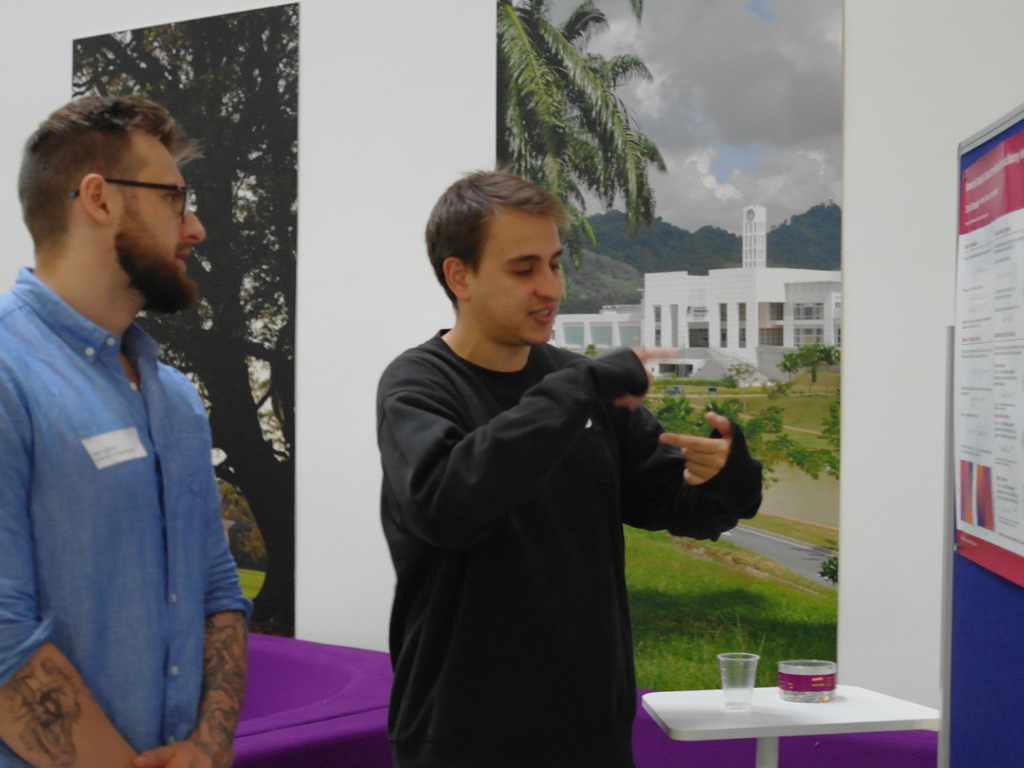
The notion of dedicating years to a PhD in mathematics often conjures images of solitary figures hunched over complex calculations. Yet, the reality is far more dynamic and collaborative. Thomas Caussade, a doctoral candidate in mathematics, is challenging this perception, focusing his considerable intellect on a singular, ambitious goal: to unlock the secrets held within a specific set of challenging mathematical equations.
It’s a common misconception that mathematics exists in a vacuum, detached from the tangible world. However, the truth is that mathematical principles are the invisible architects of our reality. From the intricate trajectories of space missions to the seamless flow of information through our smartphones and the predictive power of weather forecasts, every phenomenon is underpinned by fundamental equations.
History itself offers compelling evidence of mathematics' profound impact. Consider the groundbreaking work of Alan Turing, whose doctoral research in mathematical logic laid the groundwork for his pivotal role in deciphering the Enigma code during World War II, a feat that undeniably altered the course of human events. For Caussade, mathematics transcends mere abstract symbols; it is the universal language through which the universe communicates its deepest secrets.
Unraveling the Mysteries of Wave Dynamics
When we think of waves, images of gentle ripples on a pond or the reverberations of sound in a concert hall often come to mind. Thomas Caussade, however, perceives waves as a profound mathematical enigma, a complex system governed by intricate rules waiting to be fully understood.
His doctoral research delves into the very heart of these rules, exploring the complex equations that dictate how waves propagate, scatter, and interact with their surroundings. These mathematical constructs, known as partial differential equations (PDEs), are the bedrock of our comprehension of the physical world. They explain everything from the subtle bending of light around an obstacle to the powerful seismic waves that traverse the Earth's interior.
The inherent challenge lies in the fact that finding exact solutions to these equations is often an insurmountable task due to their immense complexity. This is where the ingenuity of mathematicians like Caussade comes into play. They turn to sophisticated numerical methods, employing the computational power of modern technology to approximate solutions.
Instead of a single, definitive answer, these computer-driven approaches break down the problem into infinitesimally small segments. The computer then performs a multitude of calculations on each segment before piecing the results together to model the wave's behavior. However, this meticulously constructed approximation begins to falter when dealing with waves of higher energy, often referred to as "high-frequency" waves.
The High-Frequency Hurdle
The term "high frequency" in the context of waves signifies shorter wavelengths. To accurately capture the detailed nuances of these shorter wavelengths, an exponentially larger number of computational points are required. What might have taken mere seconds to compute for lower-frequency waves can suddenly escalate into weeks of processing time.
This computational bottleneck is precisely the problem Caussade's doctoral work is designed to address. He is dedicated to developing more intelligent and efficient numerical methods capable of handling these high-frequency waves without overwhelming computational resources.
His approach is akin to teaching a computer advanced shortcuts, employing mathematical insights that allow it to predict wave behavior without the need for exhaustive, point-by-point calculations. This innovative strategy combines theoretical understanding with practical computation.
Caussade begins by meticulously formulating the equations that describe the intricate interaction between waves and objects. He then designs algorithms that can efficiently approximate these complex equations. The final, crucial step involves rigorous testing through simulations to validate the effectiveness of his newly developed methods.
The Far-Reaching Implications of Wave Mastery
The potential benefits of Caussade's research are vast, promising to enhance fields as diverse as acoustics, radar technology, seismology, and even the sophisticated techniques used in medical imaging. In essence, his work aims to equip mathematicians and scientists with the tools to perceive and understand the world around them with unprecedented clarity.
Originally hailing from Chile, Caussade relocated to pursue his advanced studies in mathematics, driven by a passion to contribute to this vital area of scientific inquiry. His journey underscores the global nature of cutting-edge research and the pursuit of knowledge.
The significance of his work cannot be overstated. Waves are the fundamental carriers of information in numerous technologies, powering everything from our Wi-Fi signals and radar systems to the echoes that allow us to perceive our environment. Understanding their behavior is not merely an academic exercise; it is crucial for technological advancement.
Caussade's focus on the mathematical equations governing these waves is directly contributing to the development of faster and more accurate computational simulations. His ultimate objective is to empower engineers to rigorously test designs in a virtual environment before committing to costly physical prototypes.
“The expense of constructing an antenna only to discover it’s not functional can be substantial,” Caussade explains. “However, by leveraging simulations on a computer, we can conduct thousands of tests, identifying the optimal design long before any physical construction begins.”
The Enduring Power of the Helmholtz Equation
At the core of Caussade’s research lies the Helmholtz equation, a foundational model that has been instrumental in describing wave propagation and scattering for over a century. Despite its long history, efficiently solving this equation at high frequencies continues to present a significant challenge for the scientific community.
As wave frequencies increase, so too does the computational demand. Problems that were once solvable in seconds can now require days of processing power, creating a substantial barrier to progress in many research areas.
Caussade's innovative work aims to fundamentally alter this paradigm. By developing numerical methods whose computational cost does not escalate dramatically with increasing frequency, he is paving the way for simulations that are not only faster but also more scalable and conducive to groundbreaking innovation.
The potential impact of these advancements is transformative, with applications spanning from the design of advanced antennas to the intricate processes of medical imaging. This research powerfully demonstrates that even the most venerable mathematical equations can still be the source of cutting-edge scientific breakthroughs, revealing new insights into the fundamental workings of our world.





 Explore AI Teaching Tools
Comments (0)
Please login to comment
No comments yet
Be the first to comment on this article