
Differentiated instruction, the art of tailoring teaching to meet individual student needs, is a cornerstone of effective education. Yet, for many educators, it remains one of the most challenging aspects of their profession. The sheer volume of planning, resource creation, assessment, and feedback required to truly personalize learning for every student can feel overwhelming, especially in diverse classrooms. But what if there was a powerful ally that could not only alleviate this burden but elevate your differentiation strategies to new heights? Enter Artificial Intelligence. This guide will explore how modern education technology tools for teachers, powered by AI, can transform your approach to differentiated instruction, making it more efficient, impactful, and genuinely tailored to every learner, from K-12 to higher education, across international classrooms.
You'll discover practical, actionable tips on leveraging AI to understand student needs, create customized content, manage groups, deliver engaging activities, and provide timely feedback, all while reclaiming valuable time. Get ready to embrace a future where differentiation is not just an aspiration, but an achievable, data-driven reality.
1. Personalize Learning Paths with AI-Powered Diagnostic Assessments
The first step in effective differentiation is understanding where each student stands. Traditional diagnostic assessments can be time-consuming to create, administer, and analyze, often delaying the start of truly personalized learning. AI revolutionizes this process by providing rapid, insightful diagnostics that pinpoint individual strengths, weaknesses, and learning gaps with unprecedented precision.
Automated Assessment Generation and Analysis
Imagine needing to assess students on a specific math concept or historical period. Instead of manually crafting multiple versions of a quiz, AI can generate varied assessments on demand. Platforms like Mentofy Academia allow teachers to create exams with over 25 question types, automatically adjusting difficulty or focus areas based on learning objectives. This means you can quickly deploy pre-assessments that cover a wide range of content, or target specific sub-skills, providing a clearer picture of student readiness.
- Adaptive Questioning: Some AI tools can even adapt questions in real-time, posing easier or harder follow-ups based on student responses, much like a human tutor. This dynamic approach quickly hones in on a student's true proficiency level, avoiding the frustration of overly difficult questions or the boredom of overly simplistic ones.
- Instant Data Insights: Once completed, AI instantly analyzes results, identifying common misconceptions across the class and individual areas where students need support or enrichment. This data is invaluable for grouping students, tailoring subsequent instruction, and creating personalized learning paths. Instead of spending hours grading and charting, you get actionable insights in minutes.
Tailoring Content Recommendations
With diagnostic data in hand, AI can then recommend specific resources and activities tailored to each student's needs. If a student struggles with fractions, the AI might suggest a particular video, an interactive simulation, or a set of practice problems. For advanced learners, it could recommend extension activities, research topics, or more complex problem sets. This level of personalized content curation, driven by education technology tools for teachers, ensures that every student is challenged appropriately and receives the support they need, exactly when they need it.
2. Streamline Content Creation and Adaptation with AI
One of the biggest time sinks in differentiated instruction is creating or adapting content for various learning levels and styles. Teachers often find themselves rewriting explanations, simplifying texts, or developing alternative activities for different student groups. AI transforms this challenge into an opportunity for efficiency and creativity.
Generating Varied Learning Materials
AI can act as your personal content assistant, generating a wealth of diverse learning materials almost instantly. Need a simplified version of a complex scientific article for struggling readers? AI can rephrase it in simpler language, highlight key vocabulary, or create a summary. Want to provide an advanced text for accelerated learners? AI can find and suggest relevant, higher-level readings or research prompts. These capabilities are crucial for any teacher using modern Mentofy AI teaching tools.
- Text Adaptation: From rewriting a historical document at a 5th-grade reading level to summarizing a dense academic paper for a quick overview, AI can adjust text complexity with remarkable accuracy. This allows teachers to provide every student with access to core content, regardless of their reading proficiency.
- Question and Prompt Generation: Beyond text, AI can generate open-ended questions for discussion, multiple-choice quizzes, essay prompts, or creative writing assignments, all aligned with specific learning objectives and differentiated difficulty levels. This saves hours of manual work and ensures a consistent flow of relevant practice.
- Resource Curation: AI can also help curate external resources, suggesting videos, simulations, or interactive websites that align with specific topics and student needs. This expands the learning landscape beyond your immediate classroom materials.
Crafting Differentiated Lesson Plans and Activities
The core of differentiated instruction lies in the lesson plan. AI can assist in developing comprehensive lesson plans that inherently incorporate differentiation. For example, using Mentofy Academia, teachers can generate detailed AI lesson plan outlines that include varying activities, discussion prompts, and assessment strategies for different student groups. This might involve suggesting a hands-on activity for kinesthetic learners, a group debate for social learners, or independent research for self-directed students, all within the same lesson framework.
This capability means you spend less time on the mechanics of content creation and more time on the art of teaching, observing student engagement, and providing targeted support. It truly empowers teachers to focus on pedagogy rather than paperwork.
3. Differentiate Grouping and Collaboration Strategically with AI
Effective small-group instruction is a cornerstone of differentiated learning, allowing teachers to provide targeted support and foster peer collaboration. However, manually creating student groups that are balanced, purposeful, and dynamic can be a logistical nightmare. AI offers an intelligent solution to this perennial challenge.
Smart Student Grouping Based on Data
AI can analyze a multitude of student data points—from diagnostic assessment results and previous performance to learning styles and even social dynamics—to recommend optimal group configurations. For instance, MentofyGroups can take your student roster (even importing directly from Google Classroom) and suggest groupings based on various criteria:
- Skill-Based Grouping: AI can identify students who need support in a specific area and group them for targeted intervention, or group advanced learners for enrichment activities.
- Mixed-Ability Grouping: For collaborative tasks, AI can create heterogeneous groups that promote peer tutoring and diverse perspectives, ensuring each group has a mix of strengths.
- Interest-Based Grouping: If students are working on projects, AI can group them based on expressed interests within a topic, fostering intrinsic motivation and deeper engagement.
- Social Dynamics: In some cases, AI can even consider personality traits or past collaboration success to create harmonious and productive teams, minimizing potential conflicts.
This intelligent grouping capability saves teachers immense time and ensures that groups are formed strategically, maximizing learning outcomes for all students. It moves beyond arbitrary grouping to data-informed decisions, making your classroom more dynamic and responsive.
Facilitating Group Cohesion and Engagement
Once groups are formed, AI can also provide tools to kickstart collaboration and engagement. MentofyGroups, for example, offers over 10 types of icebreakers, which can be particularly useful for new groups or for shifting dynamics. These quick activities help students feel comfortable, build rapport, and prepare for collaborative tasks, whether they are working on a shared project or engaging in a differentiated discussion. The ability to quickly form and launch productive groups is a significant advantage offered by these powerful Mentofy AI teaching tools.
4. Enhance Engagement and Formative Assessment with Interactive AI-Powered Tools
Keeping every student engaged and regularly checking for understanding is critical for differentiated instruction. AI-powered interactive tools make this process dynamic, fun, and highly informative, allowing teachers to adapt their teaching in real-time.
Gamified Learning Experiences
Gamification is a powerful motivator, and AI-enabled platforms bring engaging games directly into your classroom. Instead of generic quizzes, you can use interactive games that cater to different learning preferences and skill levels. For example, MentofyCove classroom games offer a suite of multiplayer live classroom games like Word Search, Trivia, Hangman, Crossword, Anagram, and Group Words. These games can be tailored to review specific content, reinforce vocabulary, or challenge students on particular concepts. While tools like Kahoot and Quizizz offer similar game-based learning, MentofyCove provides a diverse range of formats that can be integrated seamlessly into various differentiated activities.
- Differentiated Challenges: You can set up games with varying difficulty levels or content focuses for different groups. For instance, one group might play a Word Search game focusing on basic vocabulary, while another engages in a Trivia game requiring deeper conceptual understanding.
- Real-time Feedback: These games provide instant feedback to students on their performance, allowing them to self-correct and learn from mistakes immediately. For teachers, the aggregated data from these games offers quick insights into class-wide understanding and individual student progress, informing on-the-fly adjustments to instruction.
Interactive Classroom Management and Displays
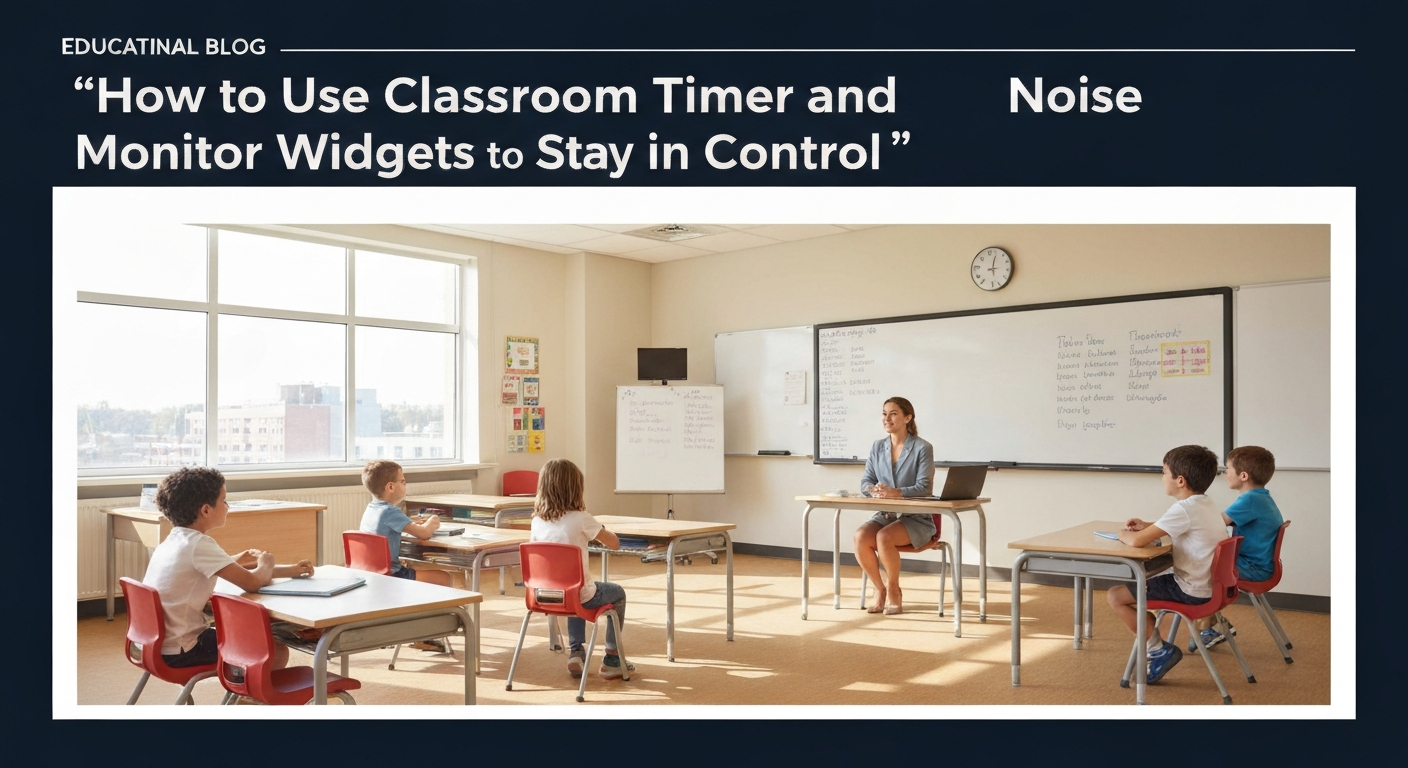
Beyond games, AI-powered interactive boards and widgets enhance classroom management and engagement for differentiated activities. MentofyBoards offers 18 interactive classroom display widgets that can be used to support varied learning experiences:
- Timers and Clocks: Use countdown timers to manage differentiated group work or activity rotations, ensuring all groups have adequate time.
- Scoreboards and Polls: Motivate students with scoreboards for group challenges or use polls to gather quick feedback on understanding, allowing you to gauge where adjustments are needed for different learners.
- Noise Monitor: Maintain optimal learning environments, especially when different groups are working on varied tasks that might require different noise levels.
- Dice and Randomizers: Introduce elements of chance for group selection, activity choice, or problem generation, adding variety and engagement to differentiated tasks.
These interactive widgets, part of comprehensive Mentofy AI teaching tools, help maintain a dynamic and organized learning environment where differentiated activities can flourish without adding to the teacher's cognitive load.
5. Automate Grading and Feedback for Targeted Intervention
Providing timely, personalized feedback is crucial for student growth, but the reality of grading a diverse classroom's worth of assignments can be overwhelming. AI offers a powerful solution, automating much of the grading process and freeing teachers to focus on high-impact, individualized support.
Efficient Exam Generation and Auto-Grading
Imagine generating an exam that includes 25 different question types, from multiple-choice to short answer to diagram labeling, and then having it graded automatically. Mentofy Academia's exam creator allows teachers to do just this, ensuring that assessments are comprehensive and varied. The true game-changer, however, is the auto-grading capability. For traditional assessments, AI can grade objective questions instantly. But Mentofy Academia goes a step further with its Vision AI auto-grading of handwritten papers. This technology can interpret and grade handwritten responses, a monumental leap forward for efficiency in grading.
- Instant Feedback Loop: With AI handling the grading, students receive feedback much faster. This immediate gratification helps them understand their mistakes while the content is still fresh in their minds, leading to more effective learning.
- Reduced Teacher Workload: By automating the tedious task of grading, teachers reclaim countless hours. This time can then be redirected towards more impactful activities, such as planning targeted interventions, developing enrichment opportunities, or providing one-on-one coaching to students who need it most. This is a prime example of how education technology tools for teachers can fundamentally change workflow.
Personalized and Actionable Feedback
Beyond simply assigning a grade, AI can be trained to provide constructive, personalized feedback. For example, if a student consistently makes a particular type of error in an essay, the AI can highlight that pattern and suggest specific resources or strategies for improvement. For math problems, it can not only mark an answer incorrect but also show the correct steps or guide the student to a relevant tutorial.
This level of detailed, immediate feedback is often difficult for a single teacher to provide to every student, especially in large classes. By offloading this task to AI, educators can ensure that every student receives the guidance they need to progress, fostering a growth mindset and encouraging self-correction. The insights gained from AI-graded assignments also directly inform subsequent differentiation strategies, allowing teachers to adjust content or support based on identified learning gaps.
6. Empower Student Choice and Voice with AI-Curated Resources
A key tenet of differentiated instruction is empowering students with choice and fostering their voice in the learning process. When students have a say in how they learn, their motivation and engagement skyrocket. AI can facilitate this by curating a diverse range of resources and pathways, allowing students to navigate their learning journey with greater autonomy.
Personalized Resource Libraries
Imagine a digital library where every student has access to resources tailored to their interests, preferred learning modalities, and current understanding. AI can create such a library by recommending articles, videos, podcasts, interactive simulations, or project ideas based on individual student profiles. If a student is a visual learner interested in space exploration, the AI might suggest documentaries and virtual reality experiences. For an auditory learner interested in creative writing, it might recommend podcasts on storytelling or audiobooks by diverse authors.
- Choice in Modality: Students can choose to learn through reading, watching, listening, or hands-on activities, ensuring that the content resonates with their preferred method of processing information. This is particularly valuable in diverse classrooms where learning styles vary widely.
- Choice in Depth and Breadth: AI can present options for exploring a topic at different levels of complexity, allowing students to delve deeper into areas of high interest or review foundational concepts as needed. This fosters self-directed learning and intellectual curiosity.
Facilitating Student-Led Projects and Inquiry
When students embark on projects or inquiry-based learning, AI can serve as a powerful research assistant. It can help students refine their research questions, suggest credible sources, and even assist in organizing their findings. This support is invaluable for differentiating project work, as students can pursue topics that genuinely excite them while still receiving scaffolding from the AI to ensure academic rigor. This kind of adaptive support is a hallmark of advanced education technology tools for teachers.
By leveraging AI to provide a personalized menu of options, teachers can move beyond a one-size-fits-all curriculum and truly empower students to take ownership of their learning, developing critical skills in decision-making, self-advocacy, and independent inquiry.
7. Reflect and Refine Teaching Practices with AI-Driven Insights
The journey of differentiated instruction is cyclical: assess, plan, teach, assess, reflect, and refine. AI doesn't just assist in the 'doing' of differentiation; it also provides invaluable data to help teachers reflect on their strategies and continuously improve their practice.
Data-Driven Reflection on Effectiveness
AI platforms collect vast amounts of data on student performance across various activities, assessments, and learning pathways. This data, when aggregated and analyzed by AI, can reveal patterns and insights that would be nearly impossible for a human teacher to discern manually. For example:
- Impact of Specific Strategies: AI can help identify which differentiated strategies or resources were most effective for particular student groups or individual learners. Did the visual aids significantly improve comprehension for visual learners? Did the advanced readings genuinely challenge the accelerated group?
- Identifying Gaps in Differentiation: Conversely, AI can highlight areas where differentiation might not be working as intended. Are certain groups consistently underperforming despite targeted interventions? Is there an unexpected learning gap emerging across a specific demographic?
- Longitudinal Progress Tracking: AI can track individual student progress over time, across different topics and assignments, providing a comprehensive view of their learning trajectory. This helps teachers identify long-term trends and adjust their overall instructional approach.
Continuous Improvement of Teaching Practices
Armed with these AI-driven insights, teachers can make informed decisions about refining their differentiated instruction strategies. This might involve:
- Adjusting Grouping Methodologies: If AI data suggests that certain grouping strategies are less effective, teachers can use MentofyGroups to experiment with different configurations.
- Modifying Content and Resources: Based on student performance on AI-generated exams or interactive games from MentofyCove classroom games, teachers can fine-tune the complexity or modality of learning materials.
- Targeting Professional Development: Data might reveal a consistent challenge in teaching a specific concept or supporting a particular learning style, prompting teachers to seek out relevant professional development opportunities.
By transforming raw data into actionable insights, AI empowers teachers to move beyond intuition and make evidence-based decisions about their differentiated instruction. It fosters a culture of continuous improvement, ensuring that your teaching practices are always evolving to meet the dynamic needs of your diverse learners. The integration of such sophisticated Mentofy AI teaching tools truly elevates the art and science of teaching.
Conclusion
Differentiated instruction, once a lofty ideal often constrained by time and resources, is now within every teacher's reach, thanks to the transformative power of AI. By embracing intelligent education technology tools for teachers, you can move beyond the daunting logistical challenges and focus on the profound impact of personalized learning. From generating tailored content and assessments to intelligently grouping students, fostering engagement through interactive games, automating feedback, and providing invaluable data for reflection, AI acts as an indispensable partner in your pedagogical journey.
Remember, AI doesn't replace the teacher's vital role; it amplifies it. It frees you from the mundane, empowers you with insights, and allows you to dedicate more energy to the art of teaching—connecting with students, inspiring curiosity, and guiding each learner to reach their full potential. The future of differentiated instruction is here, and it's more accessible and impactful than ever before.
Ready to save hours every week? Mentofy is free for teachers — start in under 2 minutes.




 Explore AI Teaching Tools
Comments (0)
Please login to comment
No comments yet
Be the first to comment on this article