
The Silent Crisis: Why America's Students Are Failing to Write, and How Schools Are Fighting Back
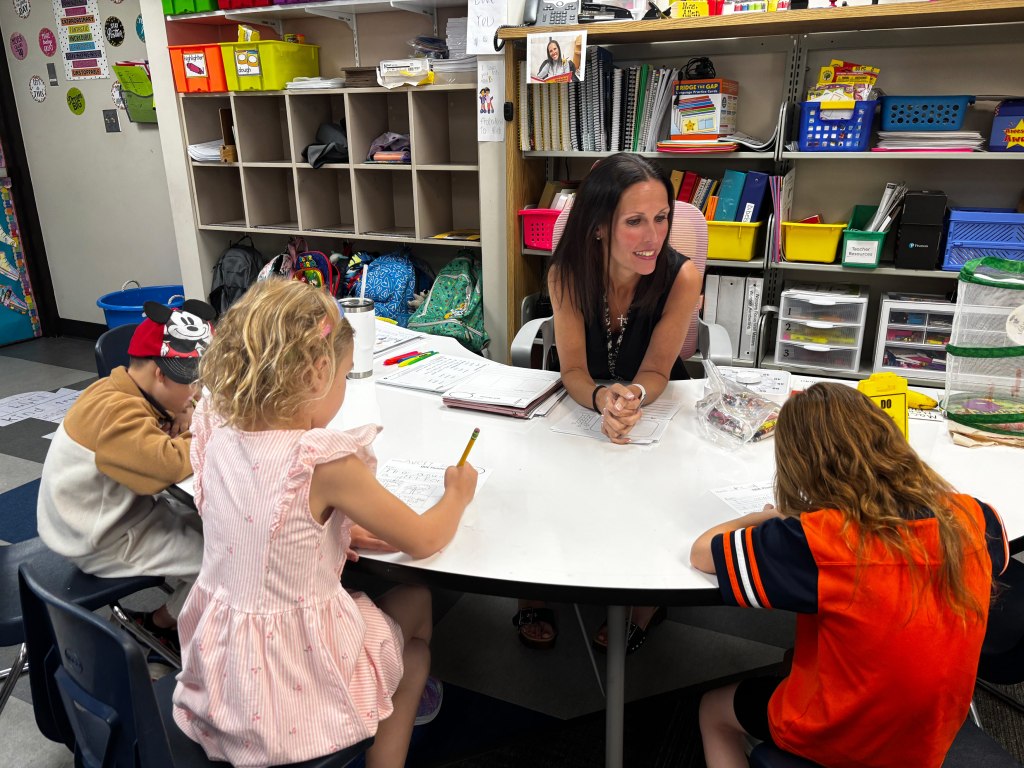
In a first-grade classroom in suburban Denver, a 6-year-old named Dean finishes his writing assignment with astonishing speed. While his classmates diligently jot down details about their summer plans, Dean has already composed a topic sentence and a list of activities, declaring, "This stuff was just too easy for me." His teacher, Gabrielle Grace, beams, reflecting a sentiment many educators share: fostering confident, competent writers is a dream, and for too long, it's felt like an uphill battle.
The Widespread Struggle: From Sentences to Essays
Across the nation, teachers are grappling with a stark reality: many students struggle to construct even basic sentences, let alone master the nuances of spelling and punctuation. This challenge intensifies in upper elementary grades, where students are expected to produce well-structured paragraphs and essays but often lack the foundational skills to do so.
This widespread deficiency is not going unnoticed. Concerned by declining writing scores on state assessments, school districts are beginning to re-evaluate their approaches. In the vast Douglas County School District, for instance, administrators are investing in professional development for teachers, focusing on evidence-based writing strategies and prioritizing explicit writing instruction for students.
Similar initiatives are gaining traction in states like Tennessee, Pennsylvania, California, and Rhode Island. The consensus among many school leaders is that with the right instruction, American students are capable of significant improvement in their writing abilities.
An Overlooked Pillar of Education
For years, the educational spotlight has largely focused on reading and mathematics, with recent emphasis on the "science of reading." Writing, however, has often been relegated to the sidelines, receiving less attention and fewer resources. Unlike reading and math, comprehensive national data on elementary students' writing proficiency is surprisingly scarce.
The last nationwide standardized writing scores for elementary students were released in 2002, showing that only 27 percent of fourth graders met the proficient benchmark. This lack of current data makes it difficult to gauge the true state of student writing, yet anecdotal evidence from educators suggests a significant problem.
"The word on the street is that kids can't write," observes Vicki McQuitty, a professor of elementary education and director of the Maryland Writing Project. This sentiment is echoed in recent state test results, which paint a concerning picture.
Disturbing Data Points Emerge
In Texas, over half of third graders in 2025 received no credit for their essay responses on a state English language arts test. California saw only 17 percent of third graders meet the standard for well-organized writing on a research-based essay prompt. Florida students, on average, scored just half the possible points on their state writing assessment.
These challenges persist as students progress through their academic careers. Employers, college professors, and high school teachers consistently report that incoming students struggle with coherent, multi-paragraph essays, a skill crucial for academic and professional success.
The Complexities of Teaching Writing
Elementary teachers, tasked with laying the groundwork for writing skills, face a multitude of hurdles. Writing is an inherently complex process that demands a robust background knowledge, well-developed fine motor skills, and a strong vocabulary. It also heavily relies on executive function skills—the ability to plan, organize, and execute tasks sequentially.
"I think writing is the hardest thing to teach," admits Chrissy Everett, a fourth-grade teacher with 23 years of experience. She highlights the intricate cognitive processes involved in piecing together ideas and determining the next steps in the writing process.
The "Science of Writing" Takes Shape
While the "science of writing" may not be as extensively researched as the science of reading, experts have identified key pedagogical practices. These include dedicating daily time for students to write, exposing them to various genres and purposes for writing, and explicitly teaching foundational components like handwriting, spelling, and vocabulary.
Adrea Truckenmiller, an associate professor at Michigan State University, emphasizes the importance of teaching students the building blocks of a sentence—a subject and a verb—rather than just focusing on capitalization and punctuation. She advocates for teaching students how to expand and combine sentences to develop more complex ideas, eventually leading to essay writing with the aid of planning tools.
However, a significant gap exists in teacher preparation. Research indicates that many teacher education programs offer limited or no standalone courses on writing instruction, leaving aspiring educators feeling ill-equipped to teach this critical skill. "Even teacher educators do not always feel comfortable teaching preservice teachers about writing," notes McQuitty, adding that it's often "pushed to the back."
Competing Priorities and Shifting Skills
Once in the classroom, teachers often face immense pressure to prioritize subjects tested on standardized exams, primarily reading and math, which can inadvertently sideline writing instruction. This creates a cycle where teachers may assume writing is being adequately addressed, only to find it lacking when they observe classrooms.
Adding to the challenge is a generational shift in how children interact with technology. With increased screen time on iPads and keyboards, some young students struggle with fundamental fine motor skills, such as holding a pencil. Occupational therapists report encountering kindergartners who have limited experience with physical manipulation of objects, impacting their readiness for traditional writing tasks.
A District's Bold Reimagining of Writing Instruction
In 2023, leaders in the Douglas County School District recognized a significant disparity between their students' reading and writing scores on state tests. An internal review revealed that many teachers lacked the explicit training needed to effectively teach writing. The district found that instruction was often inconsistent, relying on a patchwork of resources found online or through teacher marketplaces.
This lack of a unified approach meant writing instruction varied dramatically from classroom to classroom. Teachers often felt they were starting from scratch each year, with a heavy reliance on creative writing prompts that lacked structure and purpose. "We did 'Describe your shoe' for like a month," recalls Janet Merrill, the district's literacy coordinator, describing the "random writing" that characterized instruction.
Embracing the Science: The SRSD Model
Merrill began researching evidence-based writing methods and discovered the Self-Regulated Strategy Development (SRSD) approach, which had been championed by disability advocates within the district. SRSD moves beyond free-form creative writing, offering a prescriptive framework that guides students in responding to texts with evidence and employing specific strategies for planning and organizing their work.
With the support of a specialized group, the district implemented this new writing framework across its elementary schools, training instructional coaches and teachers. The result is a consistent, district-wide approach where teachers model strategies using memorable acronyms like "TIDE" (Topic, Important Details, Ending). Students at all grade levels now follow a similar process, adapted for age-appropriateness.
The SRSD model also fosters resilience in young writers. Students begin their drafting process with a positive self-affirmation, a tool to draw upon when they encounter frustration or feel stuck.
Early Successes and Shifting Perceptions
In Kristin Allen's kindergarten class, students are actively engaged in retelling a story through writing. Allen guides small groups, prompting them to articulate their topic sentences and identify key details. She meticulously corrects spelling and punctuation while also observing pencil grip and encouraging proper spacing between words.
Allen, a former kindergarten teacher, notes a dramatic difference from her earlier teaching experiences. "I did not see anything like this," she says, gesturing to papers filled with her students' writing, some already forming complete paragraphs. She firmly believes that young children are capable of more than often assumed.
While some veteran teachers initially expressed reluctance towards the structured SRSD process, fearing it might stifle creativity, Merrill points out that students often struggled with the ambiguity of blank pages. "Now, students love writing because they have the skill to actually write," she asserts.
The Power of Visible Progress
The most compelling argument for the new approach has been the observable improvement in student writing. Educators in higher grades began noticing that students who had been taught using SRSD entered middle school with significantly stronger writing skills, prompting colleagues to inquire about the changes in elementary classrooms.
Federal research supports the efficacy of SRSD, demonstrating its ability to enhance writing quality across various genres and grade levels, and serving as an effective intervention for students with learning disabilities. Despite this evidence, the widespread adoption of SRSD and similar science-based writing methods has been slow, partly due to a lack of awareness among educators.
"We have this knowledge base concentrated in a really small number of people that hasn't been scaled yet," explains Truckenmiller. Competing educational priorities, such as ensuring reading instruction is solid, often lead schools to defer focus on writing.
A Ripple Effect: Beyond Writing Scores
In Douglas County, however, officials believe that strengthening writing instruction is intrinsically linked to improving reading comprehension. They have already witnessed a positive impact on test scores, with a reported 3 percentage point increase in state writing scores after the first year of implementing the SRSD strategy in select schools.
Remarkably, math scores also saw an increase, which district officials attribute to students' enhanced ability to analyze questions and problems more effectively through their improved writing skills. This summer, the district plans to expand its SRSD training to all middle school teachers, responding to their requests for similar professional development.
Student Voices: A Newfound Confidence
Students themselves are articulating the profound difference. Connor Miles, a fourth grader, recalls feeling "completely lost" with previous writing assignments. Now, he observes that teachers provide clearer explanations and effective strategies.
Arya Melancon, a 10-year-old classmate, appreciates the structured approach that allows her to "build" paragraphs and responses by sorting through evidence from texts. The impact was most evident during their spring state tests. "Last year we were all scared of writing prompts," Arya shares. "This year, we felt like we were ready."






 Explore AI Teaching Tools
Comments (0)
Please login to comment
No comments yet
Be the first to comment on this article