
Nurturing Futures: The Power of Intentional Practices in Early Childhood Education
The foundational years of a child's life are a period of unparalleled growth and learning.While the journey through formal education is long, the seeds of future success are sown long before a student enters primary school.
High-quality early childhood education and care (ECEC) is not merely a preparatory step; it's a critical investment in a child's lifelong trajectory.
When these formative experiences are intentionally designed, they equip children with the essential cognitive, social, and emotional tools needed to thrive, not just in school, but in all aspects of life.
This article delves into the profound impact of deliberate child development practices within ECEC settings, highlighting how thoughtful approaches by dedicated staff can shape brighter futures for every child.
The Crucial Role of Early Foundations
The earliest years of a child's existence are a period of rapid neural development, laying the groundwork for all subsequent learning.Research consistently shows that children who experience supportive and stimulating environments during this time demonstrate significant advantages as they progress through their educational journeys.
Conversely, a lack of adequate early stimulation can lead to developmental gaps that are incredibly challenging, and sometimes impossible, to bridge later on.
These early deficits can manifest as difficulties in language acquisition, literacy, numeracy, and social-emotional regulation, creating hurdles that impact academic achievement, future career prospects, and even contribute to intergenerational cycles of disadvantage.
Therefore, understanding and implementing effective ECEC practices is paramount for fostering equitable opportunities and ensuring every child has the chance to reach their full potential.
Cognitive, Social, and Emotional Development: A Holistic Approach
Effective ECEC recognizes that a child's development is not compartmentalized.It encompasses a rich interplay of cognitive abilities, social skills, and emotional intelligence.
Intentional practices aim to nurture all these domains simultaneously.
This means creating environments where children are encouraged to explore, question, and experiment.
It involves providing opportunities for them to make choices, take initiative, and solve problems, thereby fostering critical thinking and planning skills.
Even simple activities, like allowing a young child to decide how to organize their art supplies or choose the order of a storytelling sequence, contribute to their growing sense of agency and cognitive flexibility.
Similarly, engaging in imaginative play, collaborating with peers on a project, or learning to manage their emotions when faced with a challenge are all vital components of a well-rounded development.
Intentional Practices in Action: Strategies for ECEC Staff
The effectiveness of ECEC hinges significantly on the deliberate actions of the staff.While responding to a child's immediate needs, such as comforting them when upset or engaging in their spontaneous play, is undoubtedly important, a truly impactful ECEC experience is built upon a foundation of intentional planning and execution.
This involves proactively designing learning opportunities that target specific developmental milestones and skills.
Fostering Agency and Problem-Solving
One of the most powerful ways ECEC staff can promote cognitive development is by empowering children to take the lead in their learning.This can be achieved through various engaging activities.
For instance, setting up a dramatic play area with diverse props encourages children to create narratives, negotiate roles, and develop complex social interactions.
When children are given the freedom to choose their materials for an art project, they not only express their creativity but also practice decision-making and planning.
Even in settings for very young children, simple choices, like selecting which book to read or which building blocks to use, foster a sense of autonomy and encourage early problem-solving.
These opportunities for self-directed learning are crucial for building confidence and intrinsic motivation.
Integrating Foundational Skills into Daily Routines
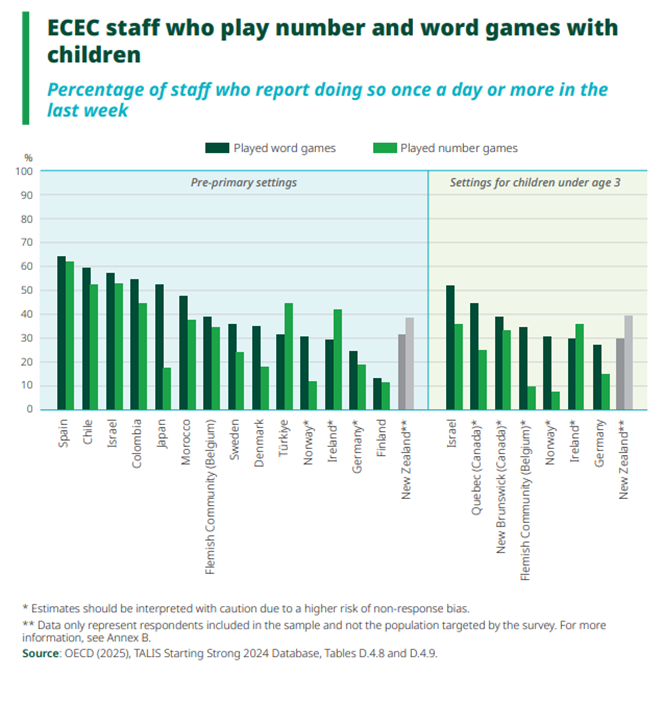
While dedicated lessons in literacy and numeracy are valuable, research indicates that these skills are most effectively absorbed when seamlessly integrated into the fabric of daily ECEC life.This approach makes learning feel natural and relevant to children.
For example, when staff engage children in conversations about the sequence of activities – using words like "first," "next," and "last" – they are subtly introducing concepts of time and order, which are foundational to mathematical thinking.
Similarly, discussing the quantities of objects, such as counting snacks or comparing the sizes of different toys, naturally builds early numeracy skills.
Reading aloud to children is a cornerstone of literacy development, and when staff incorporate discussions about the story, characters, and vocabulary, they significantly enhance comprehension and language acquisition.
These integrated practices ensure that learning is not confined to specific times but is a continuous and organic process throughout the day.
Supporting Social and Emotional Growth
The development of strong social and emotional skills is a hallmark of high-quality ECEC.Intentional practices in this area are widespread and highly effective.
Encouraging children to share toys and materials, for instance, is a common and vital strategy that helps them learn about cooperation, empathy, and negotiation.
Staff play a crucial role in modeling these behaviors and providing guidance when conflicts arise.
Creating a safe and nurturing environment where children feel comfortable expressing their feelings and learning to manage them is also paramount.
This involves actively listening to children, validating their emotions, and teaching them healthy coping mechanisms.
When children develop strong social and emotional competencies, they are better equipped to form positive relationships, navigate social situations, and build resilience, which are essential for success both in school and in life.
The Impact of Intentional Practices on Child Outcomes
The deliberate application of intentional child development practices within ECEC settings yields tangible and lasting benefits for children.Studies consistently demonstrate a strong correlation between high-quality ECEC experiences and positive developmental outcomes.
Building Stronger Academic Foundations
Children who participate in ECEC programs that emphasize intentional learning experiences tend to enter primary school with more developed cognitive abilities.This includes stronger emerging literacy and numeracy skills, which are critical predictors of academic success.
When staff intentionally plan activities that promote language development, phonological awareness, and early mathematical concepts, children are better prepared to engage with the formal curriculum.
This early advantage can set them on a path of academic achievement, reducing the likelihood of falling behind and the need for remedial interventions later in their educational careers.
Enhancing Emotional Resilience and Well-being
Beyond academic gains, intentional ECEC practices significantly contribute to a child's emotional well-being and resilience.By fostering social skills, teaching emotional regulation, and providing a secure attachment with caregivers, these programs help children develop a strong sense of self-worth and the ability to cope with challenges.
Children who learn to manage their emotions, resolve conflicts peacefully, and build positive relationships are better equipped to navigate the complexities of social interactions and adapt to new situations.
This emotional foundation is crucial for their overall happiness and long-term mental health.
Promoting Equity and Opportunity
Intentional ECEC practices are particularly impactful for children from disadvantaged backgrounds.These programs can help to mitigate the effects of early environmental disadvantages by providing a rich and stimulating learning experience that may not be available elsewhere.
By offering targeted support and tailored interventions, ECEC settings can help to level the playing field, ensuring that all children have the opportunity to develop the skills and knowledge needed to succeed.
This focus on equity is a cornerstone of effective ECEC, aiming to break cycles of poverty and create a more just society.
Supporting ECEC Professionals: The Key to Quality Practice
The success of intentional child development practices relies heavily on the support, training, and professional development provided to ECEC staff.Recognizing these professionals as skilled educators, rather than mere caregivers, is fundamental to elevating the quality of early childhood education.
Investing in Professional Development
While ongoing training is a common feature in many ECEC settings, the impact of job-embedded professional development, such as coaching, mentorship, and opportunities for peer learning, is often underestimated.Coaching, in particular, has been identified as one of the most effective forms of professional development, providing individualized support and guidance to staff.
However, access to such programs remains limited in many ECEC systems.
Strengthening induction programs for new staff is also crucial, ensuring they are well-prepared to implement effective practices from the outset.
Creating Time and Space for Reflection and Growth
To truly foster a culture of continuous improvement, policymakers and ECEC leaders must prioritize providing staff with protected time for training, collaboration, and reflection during working hours.This acknowledges the complexity of their roles and the importance of ongoing learning.
When ECEC staff are treated as early educational professionals, equipped with a solid understanding of child development and evidence-based pedagogical strategies, they are empowered to deliver the highest quality of care and education.
Strengthening Leadership and Recognition
Effective leadership within ECEC settings plays a vital role in cultivating a supportive environment for intentional practices.Targeted training for leaders can enhance their ability to guide their teams, foster a culture of continuous improvement, and advocate for the resources needed to support quality programming.
Furthermore, recognizing and rewarding excellence among ECEC professionals can help to attract and retain skilled individuals, ensuring a stable and dedicated workforce committed to nurturing the development of young children.
Conclusion
The evidence is clear: intentional child development practices are the bedrock of high-quality early childhood education and care.By proactively designing engaging learning experiences that foster cognitive, social, and emotional growth, ECEC staff empower children with the essential skills and confidence needed to thrive throughout their lives.
Investing in the professional development and support of ECEC professionals is not just an investment in educators; it is a critical investment in the future of our children and our society.
As we look to build stronger educational systems and more equitable opportunities, the foundational years, guided by intentional and expert practices, stand as the most powerful starting point.






 Explore AI Teaching Tools
Comments (0)
Please login to comment
No comments yet
Be the first to comment on this article