
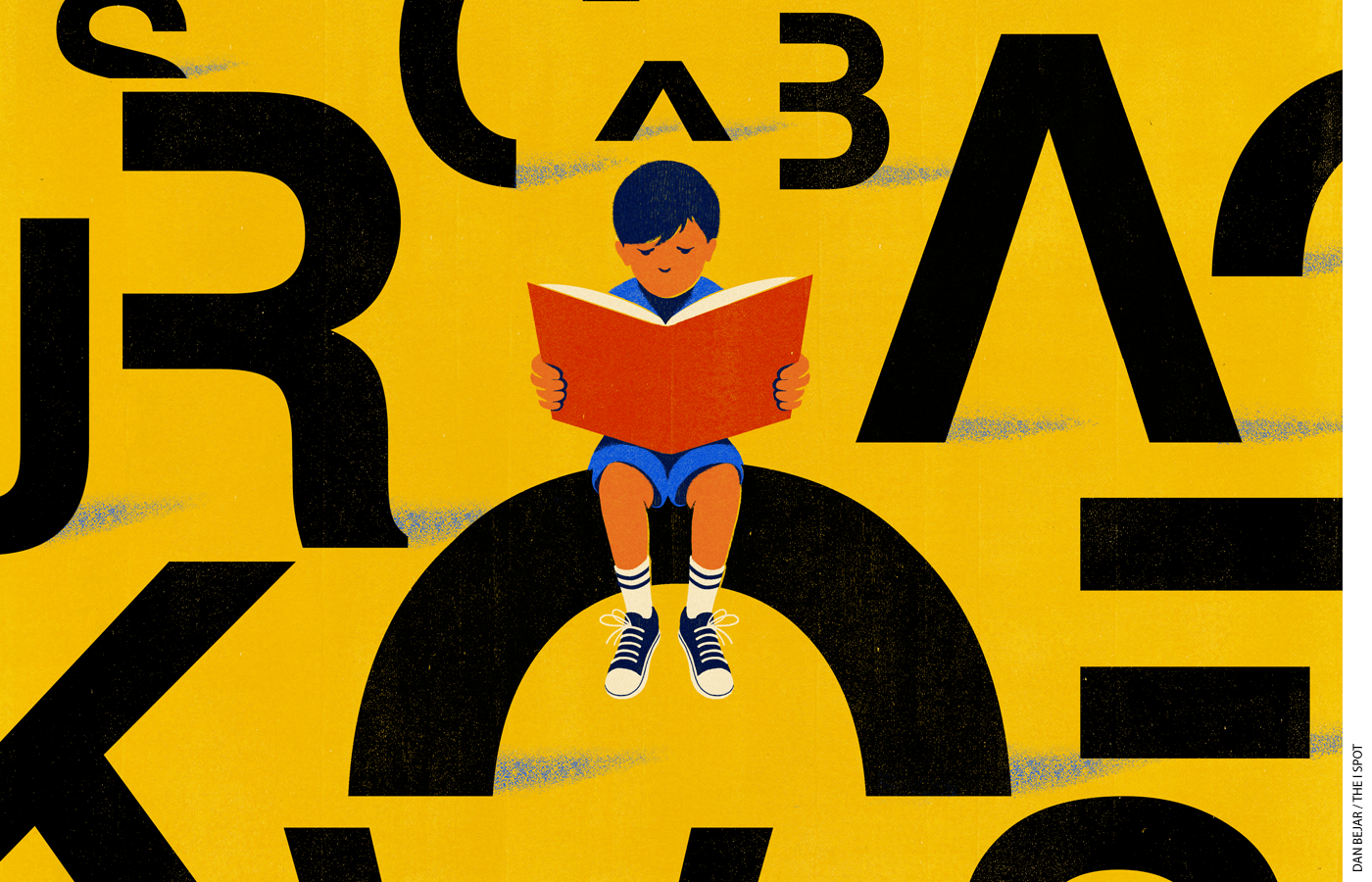
Phonics Frenzy: Are We Teaching Too Much, Too Soon?
The landscape of reading instruction has dramatically shifted. Across the nation, states are embracing the "science of reading," with a widespread consensus that explicit, systematic instruction in letter-sound relationships is paramount for student success. Yet, beneath this unified front, a subtle but significant issue is emerging in classrooms: the over-teaching of phonics. This practice, while often well-intentioned, may be inadvertently hindering the very students it aims to help.
The Delicate Balance: Enough to Fly, Not Too Much to Burden
Experts now suggest that the goal of phonics instruction isn't to teach every conceivable pattern in the English language. Instead, the aim is to equip students with enough foundational skills to achieve "escape velocity"—the point where they can begin to decipher new words independently. This ability to internalize and apply patterns, often termed the "self-teaching mechanism," is a crucial yet sometimes overlooked aspect of reading acquisition.
The science of reading movement rightly emphasizes systematic phonics instruction. However, the precise "how much" and "how long" remain areas of considerable debate and interpretation. Researchers acknowledge that while explicit phonics is beneficial, the exact dosage and scope for every student are not definitively established.
This ambiguity allows for significant variation in how phonics programs are designed and implemented. Different interpretations of the research lead to distinct instructional approaches, with some programs potentially including more elements than necessary for many students.
When More Becomes Too Much: The Pitfalls of Over-Instruction
Over-teaching can manifest in several ways, each with distinct consequences for students. For high-achieving students, lessons on mastered skills represent lost opportunities for deeper learning in other subjects. For struggling readers, particularly those with dyslexia, excessive instruction can consume valuable practice time and strain working memory, making it harder to grasp essential concepts.
The Trap of Memorization Over Mastery
One common pitfall is the overemphasis on memorizing complex rules and mnemonic devices. While catchy rhymes and sayings can aid recall, they can also become the focus of instruction, overshadowing the actual skill of reading and spelling. Teachers may find students can recite rules but struggle to apply them in practice.
This focus on verbalizing rules can be particularly challenging for students with reading disabilities. Their cognitive load is already high as they work to decode sounds and words. Adding the burden of articulating intricate linguistic rules can lead to confusion rather than comprehension.
For students who intuitively grasp certain patterns, being forced to memorize rules they've already internalized can lead to disengagement. The goal should be application, not rote recitation.
Eliminating the Unnecessary: A Strategic Approach to Skills
Some instructional programs are now re-evaluating which phonics patterns are truly essential. For instance, the explicit teaching of consonant clusters as single units is being questioned. Linguistically, it may be more effective to teach the individual sounds within these clusters and then guide students in blending them to form words.
By strategically excluding certain patterns, such as many consonant clusters, educators can streamline instruction, focusing on the most high-yield skills. This allows for more time dedicated to essential reading practice.
The Return on Investment in Phonics
Researchers are attempting to quantify the optimal amount of phonics instruction by considering the "return on investment" for each skill taught. This involves analyzing how frequently a pattern appears in the English language and how many words it unlocks for students.
Studies suggest that a sweet spot exists, likely between 95 and 110 sound-spelling patterns, beyond which the added benefit for students diminishes significantly. Teaching fewer than this range can limit access to words, while teaching substantially more can be considered over-teaching.
Some educators are exploring even more focused approaches, aiming to teach a carefully curated set of words that exemplify key phonics properties, with the ultimate goal of accelerating a student's ability to read independently.
Navigating Contentious Territory: Phonemic Awareness and Syllable Division
Certain aspects of reading instruction remain hot-button issues. Phonemic awareness, the ability to identify and manipulate individual sounds in spoken words, is one such area. While foundational phonemic awareness is crucial, the extent and method of its instruction are debated.
Evidence suggests that phonemic awareness is most effectively developed when linked to written letters, rather than solely through oral exercises. Furthermore, advanced oral manipulation of sounds, such as substituting sounds to create new words, lacks robust scientific backing for its benefit to reading skills.
Some researchers propose that explicit phonemic awareness instruction in isolation may be unnecessary, as students naturally develop this skill through systematic phonics instruction that connects sounds to spellings.
Syllable division, the teaching of rules for breaking down multisyllabic words, is another area under scrutiny. While a staple of some established reading methods, research indicates that syllable pronunciations can be unreliable, questioning the efficacy of teaching rigid division rules.
Instead of strict rules, a more flexible approach, known as "set for variability," is gaining traction. This encourages students to use their phonics knowledge to sound out words while being adaptable in their pronunciation until they recognize the word. This is not guessing, but rather a strategic application of decoding skills.
The Teacher's Enthusiasm: A Double-Edged Sword
Teachers' passion for the intricacies of language can sometimes lead to over-instruction. As educators delve into the fascinating workings of English, they naturally want to share this knowledge with their students. However, a distinction needs to be made between understanding linguistic systems and identifying what is essential for a child's reading development.
Similarly, the jargon associated with reading instruction can be a source of over-teaching. While teachers may be excited to learn new terminology, bombarding students with terms like "breve," "macron," "fricative," and "affricate" can be counterproductive. The focus should remain on the practical application of phonics skills, such as recognizing letter patterns and their corresponding sounds, rather than defining technical linguistic terms.
The Real Cost: Less Reading, More Rules
Perhaps the most significant consequence of over-teaching phonics is the reduction in time dedicated to actual reading. With extensive phonics lessons, the time available for students to engage with connected text—where decoding and comprehension skills converge—is often squeezed.
Reading connected text is vital for building fluency, developing vocabulary, and deepening comprehension. It allows students to apply their decoding skills in meaningful contexts, reinforcing their learning and fostering a genuine love for reading.
By streamlining phonics instruction to focus on the most impactful skills, teachers can reclaim valuable time for reading. This efficiency benefits both students and educators, leading to faster progress and a more manageable workload.
Moving Forward: A Scientific and Adaptive Approach
The goal is not to abandon phonics instruction but to refine it. This involves a commitment to ongoing assessment of student needs and a willingness to adapt teaching practices based on evidence. The science of reading movement thrives on scientific inquiry, which includes challenging assumptions and evolving with new research.
For instance, the efficacy of long-held beliefs about syllable division requires continuous examination. By embracing a scientific mindset, educators can ensure that instruction is as effective and efficient as possible, ultimately serving the best interests of students learning to read.
The ultimate aim is to equip students with the skills they need to become proficient readers quickly and effectively. This requires a focused approach that prioritizes high-impact skills, minimizes unnecessary complexity, and ensures ample opportunities for students to engage in the act of reading itself.







 Explore AI Teaching Tools
Comments (0)
Please login to comment
No comments yet
Be the first to comment on this article