
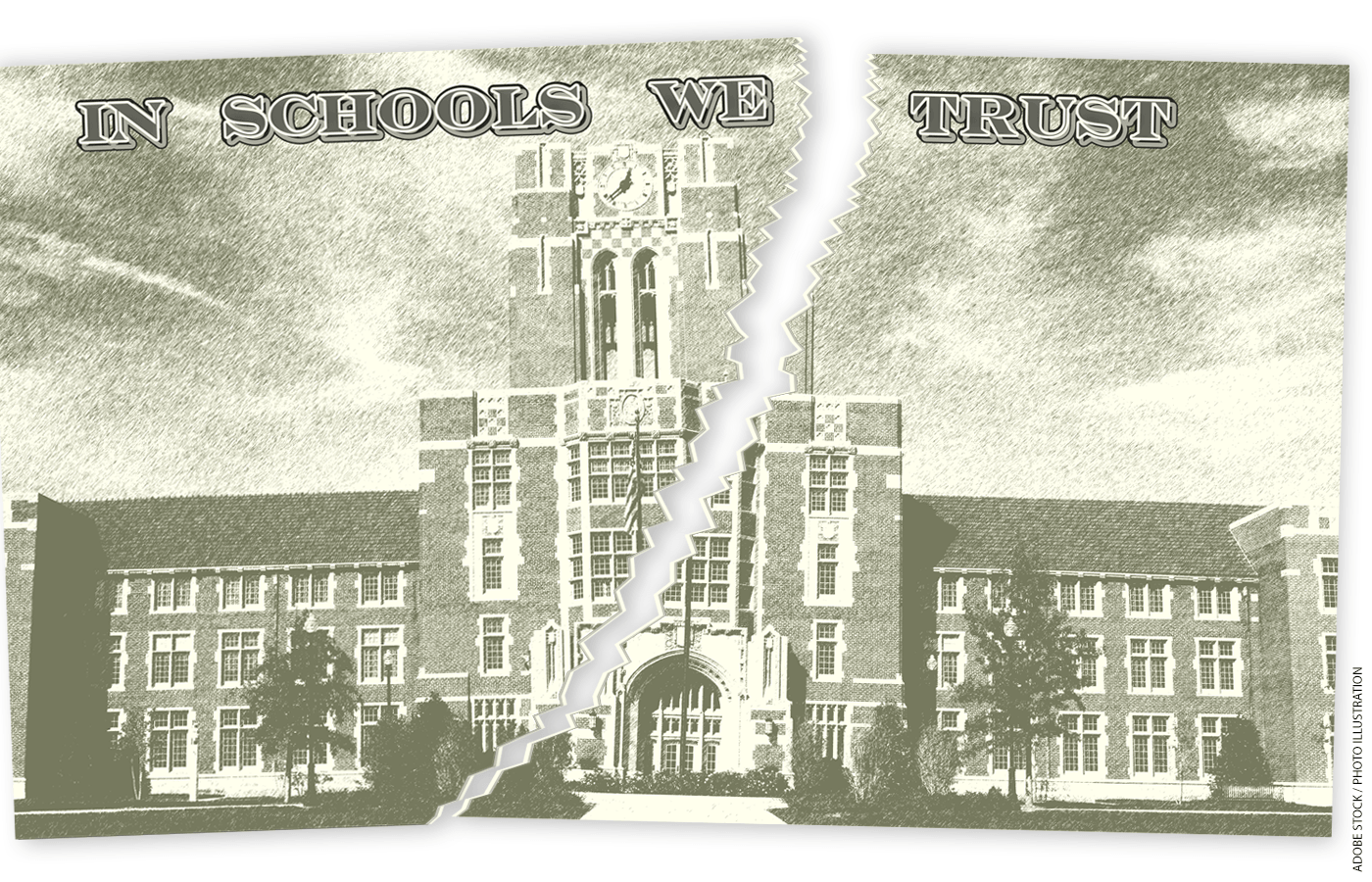
Public Trust in Schools Plummets: A Crisis Reshaping Education's Future
A seismic shift has occurred in how Americans view their educational institutions, fundamentally altering the landscape of public and higher education. This erosion of trust, once a bedrock of societal support, now fuels explosive growth in school choice, ignites culture war battles, and places colleges under intense scrutiny. Understanding this decline is key to deciphering the future of education.
The Great Confidence Collapse
For decades, schools and colleges enjoyed a privileged position in the American psyche, largely shielded from widespread public doubt. This era of deference has dramatically ended, replaced by a significant downturn in confidence across the political spectrum.
In 1973, a substantial majority of both Republicans and Democrats expressed high levels of confidence in public schools. By 2022, these numbers had dwindled significantly, with a stark partisan divide emerging. Overall public school confidence fell from 58 percent in 1973 to a mere 28 percent by 2022.
The trajectory for higher education has been even more precipitous. In 2010, a strong 75 percent of Americans deemed college "very important." Fast forward to recent surveys, and that figure has plummeted to just 35 percent. When Gallup first polled confidence in higher education in 2015, 57 percent expressed it; by 2024, this had fallen to 36 percent.
Unpacking the Roots of Distrust
This widespread erosion of faith isn't an isolated phenomenon; it's part of a broader trend of declining trust in institutions. Several potent forces have converged to accelerate this decline.
The rise of populism and the divisive nature of certain ideologies have played a significant role. Compounding these factors, the COVID-19 pandemic saw many school systems struggle with closures and remote learning, while elite colleges became associated in the public mind with issues like antisemitism and overwhelming student debt.
Historically, policymakers and the public afforded colleges significant deference and treated the internal workings of K–12 schools with a degree of benign neglect. Even well-intentioned reforms rarely delved deeply into the day-to-day curriculum, grading, or staffing decisions within individual schools.
However, the confluence of the pandemic, populist movements, and the increased visibility of certain educational philosophies fundamentally altered this hands-off approach, leaving educational leaders unprepared for the backlash.
The Threefold Impact on Educational Institutions
The consequences of this shattered trust have hit the education sector particularly hard, impacting its core mission, financial underpinnings, and institutional autonomy.
A Formative Mission Under Fire
Educational institutions have always played a role in shaping students' views and values. As public trust wanes, however, these formative efforts face increased scrutiny. Questions about which values are being promoted, who is making those decisions, and how effectively they are being implemented are now front and center.
Whatever one believes the proper role of schools and colleges should be, declining trust undeniably complicates their ability to fulfill their educational missions. This scrutiny extends to curriculum choices, pedagogical approaches, and the very content of instruction.
The Pocketbook Connection
Schools and colleges are heavily reliant on public funding, making trust a critical pocketbook issue for taxpayers. When confidence erodes, questions naturally arise about the value received for the vast sums invested.
With K–12 schools spending upwards of $20,000 per pupil annually and the public underwriting hundreds of billions in student loan debt, the financial implications of distrust are substantial. Taxpayers are increasingly demanding accountability for their investment in education.
Autonomy Under Threat
Educational institutions have long taken their autonomy for granted. For higher education, independence is seen as crucial for safeguarding academic freedom. In K–12, early 20th-century reforms created insulation from political pressures.
This culture of independence left many institutional leaders ill-equipped to handle the populist backlash that has emerged. The resulting loss of trust has profound implications for policy and practice, challenging the traditional boundaries of educational self-governance.
School Choice: A Surge Fueled by Doubt
The growth of school choice initiatives has been dramatic, particularly in the wake of recent educational disruptions. Parents seeking alternatives are driven by more than just academic performance.
For decades, school choice advocates faced incremental progress. However, the COVID-19 school closures and debates surrounding gender identity and diversity initiatives created a tipping point. Many parents became less concerned with test scores and more focused on immediate concerns like their children's return to school and the content of their education.
When parents and policymakers lose faith in public schools' ability to navigate complex and sensitive issues, the appeal of alternative educational options grows exponentially. This erosion of default confidence creates a fertile ground for the expansion of choice programs.
Accountability's Rocky Road
Despite declining student performance, the push for greater K–12 accountability has faced significant headwinds. One might expect distrust to bolster demands for testing and oversight, but the reality is more complex.
Initiatives like No Child Left Behind and the Common Core, along with the broader populist-institutionalist divide, have inadvertently cast accountability advocates as part of the educational establishment. Instead of being seen as champions of public interest, they are often perceived as elite regulators seeking to maintain the status quo.
The future effectiveness of accountability measures may hinge on the ability of reformers to reframe their narrative and regain public trust. Without this, their efforts risk being dismissed as more of the same.
Grade Inflation: A Symptom of Deeper Issues
Concerns about grade inflation, a problem that has persisted for decades, have recently gained prominence. This heightened attention is a direct result of declining trust in educational institutions.
When faith in good intentions erodes, long-standing issues like grade inflation can be reinterpreted as deliberate attempts to deceive parents and defraud students. This perception leaves little room for self-policing by schools and colleges.
On one end of the spectrum, the push for "equitable grading" aims to combat perceived systemic biases in teaching. On the other, directives like those seen in some higher education policy proposals call for measures such as grade distribution dashboards.
Regardless of the ideological framing, these responses highlight a demand for greater external oversight and stricter guidelines on how educational institutions manage their day-to-day academic practices, including grading.
Chronic Absenteeism: A Plea Met with Skepticism
Efforts to address chronic absenteeism have struggled to gain traction, even among a broad, bipartisan coalition. The lingering skepticism is a direct consequence of lost public trust.
When school leaders who oversaw prolonged COVID-era shutdowns now advocate for student attendance, their pleas are often met with cynicism. Many parents question the sincerity of these calls, recalling the numerous teacher workdays and testing periods that have historically taken precedence.
This jaded response underscores a deeper disconnect, where the perceived priorities of educational institutions are at odds with the concerns of the public they serve.
Higher Education: A Starker Reckoning
The consequences of declining trust are arguably even more pronounced in higher education. The landscape has shifted dramatically from a period of relative bipartisan support.
Twenty years ago, even during significant policy discussions, the level of federal scrutiny now directed at elite universities would have been unimaginable. Proposed cuts to university research funding once faced strong bipartisan opposition; this is no longer consistently the case, particularly on the right.
While some Democratic officials still express affection for elite higher education, younger Democrats are increasingly vocal in criticizing colleges for their cost and perceived ties to the establishment. The era of simply expanding student lending has given way to a more critical examination of what those dollars are actually buying.
The Biden administration's student loan forgiveness push, for instance, implicitly suggests that college may have been an overpriced proposition for many. Republicans, who once warned against federal micromanagement of higher ed, now appear more amenable to it, as evidenced by recent legislative efforts to limit college borrowing.
This shift represents a move from bipartisan enthusiasm for student lending to a shared skepticism about the value and efficacy of those investments. The days of unquestioning support for higher education's financial models are clearly over.
The Path Forward: Rebuilding Bridges
While the impulses driving these changes may sometimes seem contradictory, and emotions certainly play a role, the impact of lost trust is undeniable and far-reaching.
A significant portion of future "education reform" efforts, for both K–12 schools and higher education, will likely focus on the arduous task of regaining public trust. This will require more than just policy adjustments; it demands a fundamental shift in how these institutions operate and communicate.
College leaders are exploring institutional neutrality and addressing grade inflation, but the more challenging task of belt-tightening to tackle concerns about costs and exorbitant sticker prices remains a significant hurdle. In K–12, reformers are highlighting career pathways and a renewed focus on literacy, perhaps hoping that time will diminish memories of past controversies.
Whether these strategies will be sufficient to reverse the trend remains to be seen. As any experienced educator knows, rebuilding trust once it has been broken is an exceptionally difficult endeavor, requiring sustained effort and genuine change.





 Explore AI Teaching Tools
Comments (0)
Please login to comment
No comments yet
Be the first to comment on this article