
Decoding the Struggle: Why Millions of Kids Can't Read and What's Really Holding Them Back
Imagine a classroom where a child, brimming with energy and a sharp mind, consistently falls behind. This isn't a rare anomaly; it's a daily reality for countless students whose struggles with reading are often misunderstood and inadequately addressed by traditional teaching methods. For years, educators have grappled with why so many kids, despite intense effort, fail to grasp the fundamental skill of reading, leading to frustration for both students and their families.
The Illusion of Progress: When Guessing Replaces Reading
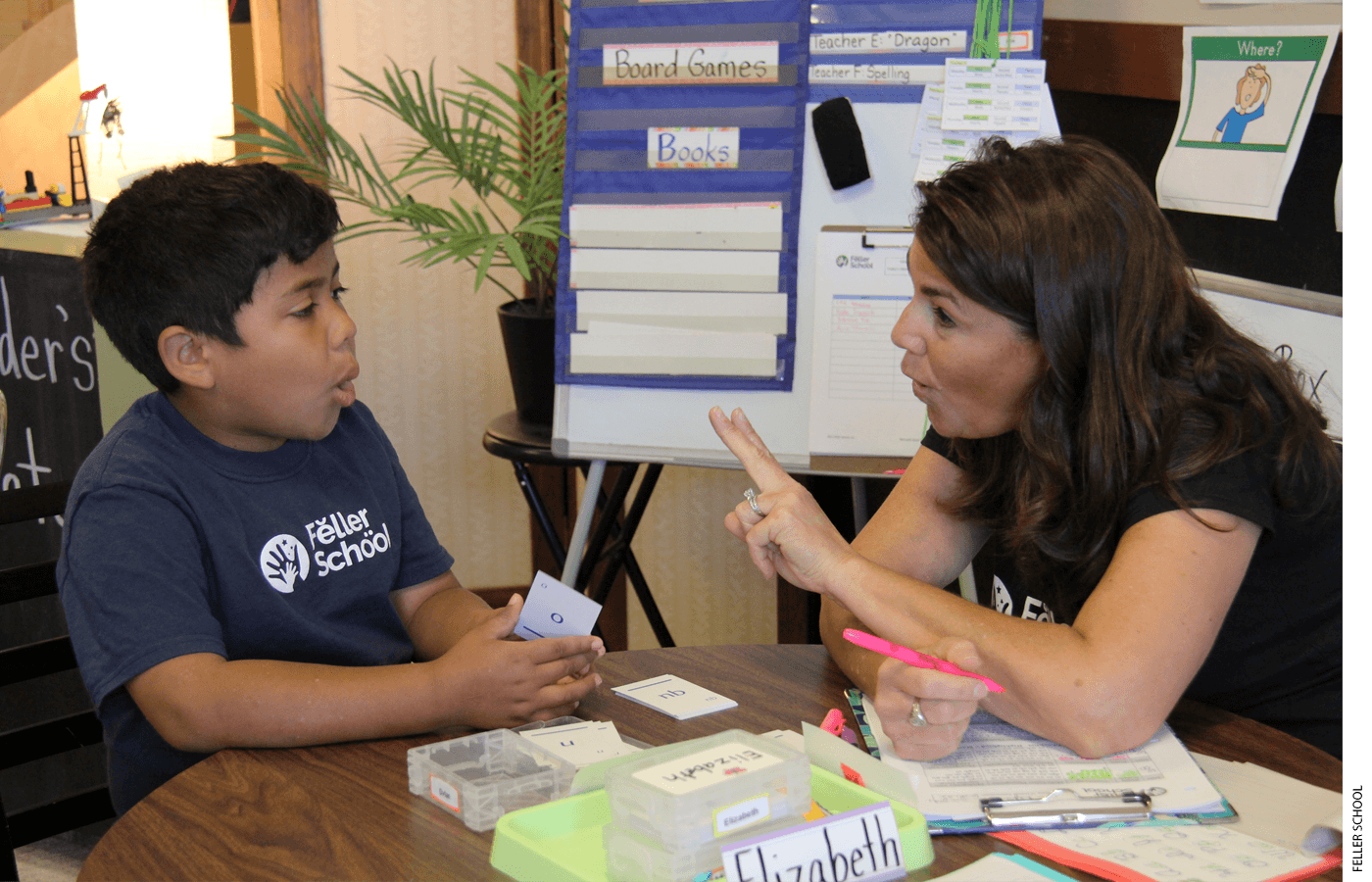
For years, educators like Kim Feller, founder of Feller School, employed methods that, while well-intentioned, inadvertently taught children to become proficient guessers rather than confident readers. The prevailing approach often relied on context clues and picture cues, a strategy known as three-cueing. This method encouraged kids to look at pictures, consider what might make sense in a sentence, and then attempt to produce a word, often prompting them with "Get your mouth ready for the first sound."
This system, deeply embedded in many school curricula, prioritized memorization of whole words, like "was" and "the," without explaining the underlying linguistic rules. The predictable nature of early readers, designed to foster a sense of success, actually masked a deeper issue: students were learning to anticipate words based on familiar patterns and illustrations, not truly decoding them. This created a fragile foundation, destined to crumble when the visual aids and predictable text disappeared in later grades.
The result was a cycle of diminishing self-esteem. Children who couldn't master reading felt a growing sense of shame and inadequacy, often internalizing the belief that they simply "couldn't read." This persistent struggle, year after year, chipped away at their confidence, leaving them feeling defeated before they had a real chance to succeed.
The Unspoken Truth: The Systemic Blind Spot
The educational system, for a long time, operated under a cloud of avoidance when it came to understanding the root causes of reading difficulties. The term "dyslexia" was often met with resistance, dismissed as a fabricated issue or a costly burden. Schools were hesitant to acknowledge its existence, fearing the financial implications of providing specialized support and resources.
Even when educators attended conferences that touched upon brain research and dyslexia, the insights rarely translated into classroom practice. The prevailing philosophy of "balanced literacy" and "whole language" continued to dominate, emphasizing immersion in books and hoping that a love for reading would magically transform struggling learners. Parents were consistently advised to "read more at home" and "practice more," placing the onus on the family rather than re-evaluating the effectiveness of the school's instructional methods.
This disconnect became starkly evident during parent-teacher conferences. One mother, seeking ways to help her son, Jermiah, revealed a heartbreaking truth: "I can't read." This revelation exposed the profound irony of the situation. Educators were urging parents, some of whom lacked the very skills they were being asked to impart, to support their children's reading development. The system, it seemed, was failing everyone.
A Paradigm Shift: Unlocking the Logic of Language
The realization that the problem lay not with the children but with the teaching methods was a turning point for many educators. Kim Feller, after years of feeling like a "fraud" and witnessing the persistent struggles of her students, made a courageous decision to step away from the conventional system. She began a personal quest to understand how children truly learn to read.
Her research led her to a profound discovery: the English language, far from being chaotic and riddled with exceptions, is governed by predictable, systematic, and logical patterns. It was found that approximately 98 percent of English words follow these patterns. This understanding challenged the long-held belief that reading instruction should focus on memorization and guessing.
The key, it turned out, was to teach children the code of the language. Instead of relying on pictures and context, students needed explicit instruction in phonics and the underlying structure of words. This approach empowers kids to decode words by understanding the relationship between sounds and letters, recognizing the patterns that make our language work.
The Power of Patterns
Children's brains are inherently wired to recognize patterns. This is particularly true for individuals who struggle with traditional reading instruction, often labeled as having dyslexia. Their brains are not broken; they are simply wired differently, with a remarkable capacity for systematic thinking and pattern recognition. When these innate strengths are leveraged through explicit, pattern-based instruction, their ability to learn to read and spell is unlocked.
This new understanding highlights a critical flaw in past teaching methodologies. Asking children with logical, rule-following brains to guess their way through a systematic language is counterproductive. Instead, they need to be taught the rules and patterns that govern English, enabling them to build strong reading pathways.
From Guessing to Decoding
The shift from guessing to decoding is transformative. When kids are taught to sound out words and understand the logic behind spelling, they gain the tools to tackle unfamiliar words independently. This process not only improves their reading fluency and accuracy but also significantly boosts their confidence and reduces the anxiety associated with reading.
The impact of this approach is profound. Children who were once considered "struggling readers" can become proficient decoders and strategic thinkers. This requires educators to receive proper training in the science of reading and to embrace instructional methods that align with how children's brains actually learn. The goal is to move away from asking kids to guess and towards empowering them with the knowledge to read.
A New Dawn for Reading Instruction
The journey to understanding how children learn to read is ongoing, but the evidence is clear: explicit, systematic instruction that focuses on language patterns is essential. The work of educators like Kim Feller and researchers in the science of reading is paving the way for a future where fewer children are left behind. By recognizing the inherent logic of English and teaching it effectively, we can ensure that every child has the opportunity to become a confident and capable reader.
The tragedy is not in a child's brain wiring, but in the methods we use to teach them. When we equip teachers with the right knowledge and tools, and when we embrace a system that prioritizes understanding the code of language, we can unlock the potential within every child. The future of reading instruction lies in empowering kids with the patterns and logic that make our language accessible, transforming struggling readers into the strategic thinkers they are destined to be.






 Explore AI Teaching Tools
Comments (0)
Please login to comment
No comments yet
Be the first to comment on this article