
Crafting Inclusive Classrooms: Beyond Decoration, Building Community
The pressure to create an Instagram-worthy classroom can feel overwhelming, often overshadowing the true purpose of the learning space.Instead of focusing solely on aesthetics, educators can cultivate environments where every student feels seen, valued, and empowered.
This article explores innovative approaches that prioritize student connection and belonging, transforming classrooms into dynamic hubs of shared learning and growth.
What truly matters is not the visual appeal, but the palpable sense of community that students experience.
1.
The Power of "One Word": Unveiling Student Identity Moving beyond superficial classroom decor, educators can initiate powerful activities that delve into the core of student identity.
This approach helps students understand themselves and each other on a deeper level, fostering empathy and connection.
The goal is to create a space where students feel safe to express who they are, not just what they know.
Activity: The "One Word" Identity Exploration
This engaging activity encourages students to distill their multifaceted identities into a single, powerful word.
It's a process that requires introspection and can be a surprisingly profound experience for learners of all ages.
The initial step involves providing students with a template, perhaps a bubble map, with their name at the center.
They are then tasked with filling in five descriptive words that best represent them.
These words can span a wide spectrum, including personality traits, values, beliefs, hobbies, aspirations, or even significant personal history.
What they choose to share is entirely up to them.
The brainstorming process itself is crucial.
For many students, articulating their essence into just five words can be a challenge.
It’s a reminder that sometimes, having too many ideas can be as difficult as having too few.
Educators can guide this by prompting students to consider various categories of self-description.
The beauty of this exercise lies in its flexibility; students are encouraged to select words that resonate authentically with them.
For instance, if a student identifies with multiple cultural backgrounds, they are not expected to choose just one.
The emphasis is on genuine self-representation.
A vital component of this activity is establishing a safe space for sharing.
Students should be explicitly told that they only need to share what they are comfortable with.
If they wish to jot down a word they don't want others to see, they can use a personal code word.
While this option is rarely utilized, the underlying message of agency and privacy is paramount.
Furthermore, students should be discouraged from suggesting words for their peers or commenting on the words others have chosen.
This ensures that the focus remains on individual expression and avoids any potential for judgment.
Sharing and Refining: The Journey to a Single Word
Once students have completed their initial lists, the educator can begin by sharing their own five words and the reasoning behind their choices.
This vulnerability can create a bridge of trust and encourage students to open up.
The educator might share personal experiences, such as navigating learning differences or pursuing creative passions, illustrating that identity is fluid and evolving.
This can also help generate ideas for students who are still struggling to reach five words.
The next, and often most challenging, step is the process of elimination.
Students are guided to cross off words one by one, reflecting on why they chose each word and what it signifies.
This iterative process can be surprisingly emotional, even for adults.
It prompts a deeper consideration of what aspects of their identity they might feel pressured to set aside in different contexts, including the school environment.
What parts of their identity do they feel are most essential, and which can be temporarily set aside?
This is where the true learning often occurs, leading to profound self-awareness.
Ultimately, students arrive at a single word that they feel best encapsulates them at that moment.
This word becomes a powerful symbol of their identity.
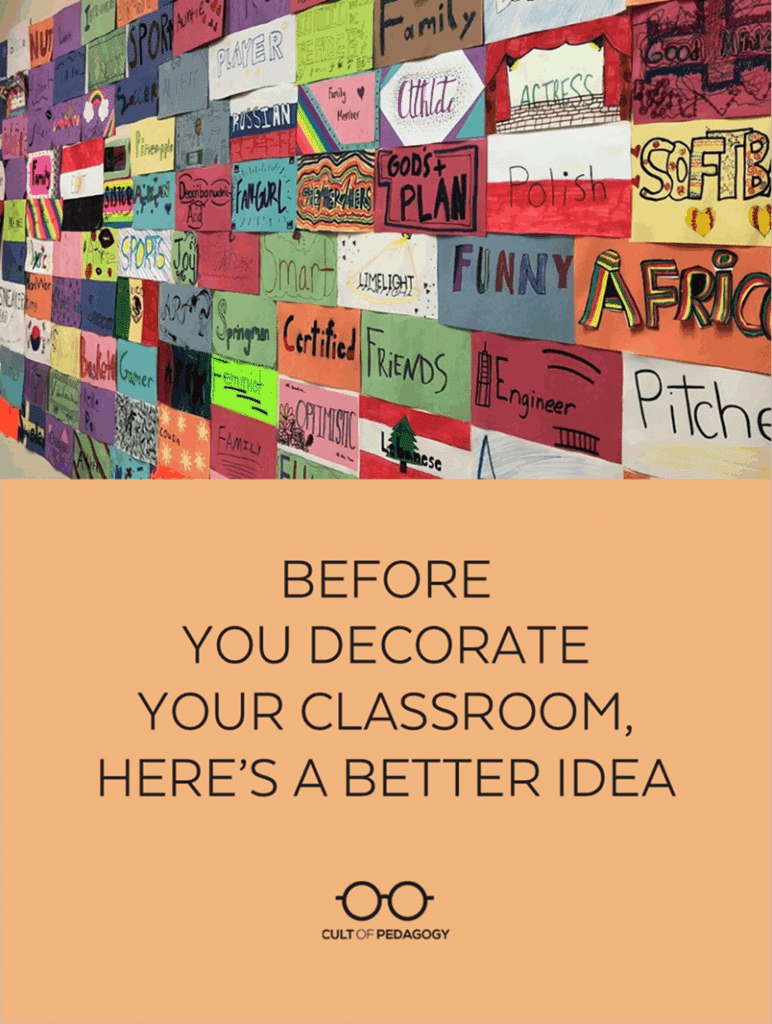
The educator can then showcase examples of "Word Walls" from previous years, demonstrating how this single word can be transformed into a visual representation.
Students are then provided with blank paper strips and encouraged to select a color that speaks to them.
Before permanently inscribing their word, they are reminded to ensure it is the word they truly want to share and to double-check the spelling meticulously.
This final act solidifies their commitment to this chosen representation.
2.
Building a Visual Tapestry: The "One Word Wall" The culmination of the "One Word" activity is the creation of a "Word Wall." This isn't just a decorative element; it's a living testament to the diverse identities within the classroom.
It serves as a constant reminder that each student brings a unique perspective and a rich inner world to the learning community.
Creating and Displaying the Word Wall
The process of adding words to the wall can be approached in various ways.
Some educators opt for a ceremonial approach, where each student shares their word and its significance before it’s added.
Others prefer a more organic integration, allowing words to be added throughout the week as students feel ready.
Regardless of the method, the completed Word Wall becomes a powerful visual anchor for the classroom.
The impact of the Word Wall extends far beyond the initial creation.
Students often point out their words to peers and visitors, exclaiming, "There I am!" It becomes a personal declaration of presence and belonging.
What's particularly rewarding is when teachers from other departments or even former students visit the classroom specifically to see the evolving Word Wall.
They recognize it as a unique snapshot of the current class's collective identity.
This visual representation hangs throughout the year, a constant, tangible reminder that the classroom is a space where individuality is celebrated, differences are acknowledged, and everyone is united in their shared learning journey.
3.
Beyond the Single Word: The "What You Bring" Project While the "One Word" activity focuses on a singular essence, the "What You Bring" project encourages students to explore the multifaceted nature of their contributions to the classroom.
This project celebrates the diverse talents, passions, and knowledge that students possess, many of which might not be immediately apparent in traditional academic settings.
Exploring Multifaceted Contributions
This project, often undertaken during the first week of school, moves beyond a single descriptor.
Students are encouraged to think about all the various aspects of who they are, what they love, and the unique skills and knowledge they bring with them to school each day.
The brainstorming phase is critical here, as students can easily default to what they are most known for.
The educator's role is to gently push them to consider less obvious, yet equally valuable, contributions.
The "What You Bring" project is intentionally open-ended, allowing for a wide range of creative expression.
Students might create collages, artwork, paintings, write songs, build mini-sculptures, or even develop QR codes linking to games they've programmed.
The emphasis is on showcasing a broader spectrum of their abilities and interests.
What are they passionate about outside of the classroom?
What unique perspectives do they offer?
What hidden talents do they possess?
Presenting and Appreciating Diverse Talents
The final presentation of these projects is where much of the magic happens.
Even students who have known each other for years discover new facets of their classmates' personalities and talents.
When given ample time and encouragement, students can ask each other questions, draw connections, and offer positive feedback.
This process lays a strong foundation for a classroom culture built on genuine appreciation and acceptance.
The visual display of these projects around the room further reinforces the message that every student is welcomed and valued in their entirety.
It signals that the classroom is a space where diverse contributions are not only accepted but actively celebrated.
What makes this project particularly impactful is the opportunity for students to see and understand the richness of their peers' lives beyond the academic curriculum.
They learn that everyone has something valuable to contribute, and that these contributions enrich the entire learning community.
Conclusion
Transforming a classroom from a mere physical space into a vibrant, inclusive community requires a deliberate shift in focus.By prioritizing activities that celebrate student identity, encourage self-expression, and highlight diverse contributions, educators can cultivate environments where every student feels a profound sense of belonging.
These approaches, centered on connection and mutual respect, empower students to thrive academically and personally, creating a truly enriching learning experience for all.
What they have built together is far more valuable than any decorative element.







 Explore AI Teaching Tools
Comments (0)
Please login to comment
No comments yet
Be the first to comment on this article