
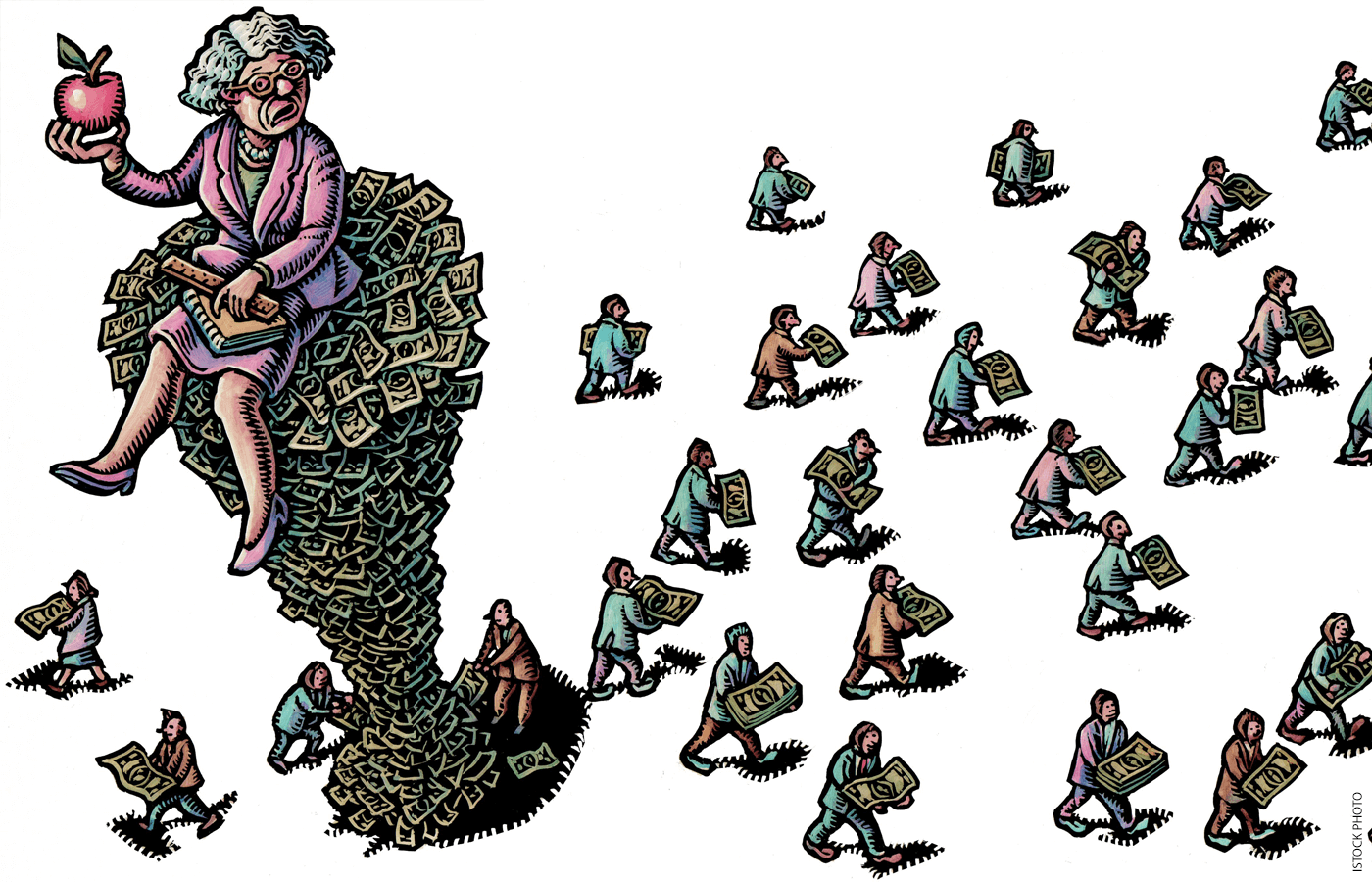
Unpacking the Paradox: Why Teacher Salaries Aren't Rising with School Spending
In the realm of education, a perplexing trend has emerged: despite significant increases in per-pupil expenditure, the real salaries of teachers have stagnated or even declined.This disconnect raises critical questions about resource allocation and its impact on the teaching profession and student outcomes.
This article delves into the data, exploring where the increased funding is going and the implications for educators and the future of our schools.
We aim to provide a clear, actionable understanding of this complex issue for our global learning community.
The Alarming Trend: Declining Teacher Compensation Amidst Rising Budgets
Recent analyses of national education data reveal a stark reality for educators.While public schools are allocating more financial resources than ever before, the purchasing power of teachers' salaries has not kept pace.
In fact, over the past two decades, the real annual salaries for teachers have seen a noticeable decrease.
This trend is not isolated to a few districts but appears to be a widespread phenomenon affecting nearly every state. * **Stagnant Growth:** For a significant period, teacher salaries remained largely flat when adjusted for inflation. * **Recent Decline:** More recently, a notable percentage drop in real salaries has been observed, impacting the financial well-being of many educators. * **State-Level Variations:** While most states have experienced this downward pressure on salaries, a few have shown marginal increases, though these are often modest and do not offset the broader trend.
This situation is particularly concerning when juxtaposed with the dramatic increases in per-pupil spending.
The disparity suggests that increased funding is not directly translating into improved compensation for the frontline professionals in our schools.
Understanding the drivers behind this paradox is crucial for fostering a sustainable and valued teaching profession.
Where is the Money Going?
A Deep Dive into School District Expenditures The substantial rise in per-pupil spending necessitates a closer examination of how these funds are being allocated.
Research indicates that a significant portion of the increased budgets is not being directed towards teacher salaries.
Instead, the funds are being channeled into other areas, often with less direct impact on classroom instruction and teacher retention.
Increased Non-Instructional Staffing
One of the most significant shifts in school district expenditures has been the substantial growth in non-teaching personnel.While the student population has seen only modest growth, the number of adults employed within school districts has increased at a much higher rate.
This includes a surge in administrators, counselors, social workers, speech pathologists, and instructional aides. * **Shifting Workforce Demographics:** Non-teachers now constitute a majority of employees in many public school systems. * **Resource Allocation Debate:** The question arises whether this expansion of non-instructional roles is the most effective use of limited educational resources, especially when teacher salaries are not keeping pace. * **Impact on Student Support:** While these roles are often intended to support students, their proliferation alongside declining teacher compensation raises concerns about the overall balance of investment in educational services.
Pension and Benefit Plan Funding Challenges
Another substantial contributor to the rise in per-pupil spending is the increasing cost of teacher benefit plans, particularly pensions.Studies indicate that a portion of the increased expenditure is allocated to cover these rising costs. * **Underfunded Liabilities:** In many cases, school districts have faced challenges with adequately funding pension plans for retired or departing teachers.
This means current budgets are often used to cover past funding shortfalls. * **Disparities in Pension Benefits:** The structure of many pension plans disproportionately benefits long-serving employees, including administrators, while teachers who leave the profession earlier may receive little to no pension benefits. * **Impact on Early-Career Teachers:** This is a significant concern for new entrants to the teaching profession, many of whom are under 30 years old and are more likely to leave the profession within their first few years.
The prospect of receiving no pension can be a major deterrent.
The Cost of Benefits vs.
Salaries It is important to distinguish between the rising costs of benefits and the need for competitive salaries.
While benefit packages are a crucial component of compensation, they cannot fully substitute for adequate base salaries, especially for beginning teachers who are often struggling with the cost of living.
The current system, where payouts heavily favor long-term employees, may not be adequately addressing the immediate financial needs of new educators.
Consequences for Students and the Education System
The disconnect between increased spending and stagnant teacher salaries has tangible consequences for students and the broader education system.Research points to several concerning outcomes that coincide with these financial trends.
Declining Student Achievement
Despite increased investment, national assessments of student performance have shown a decline in average achievement levels.This trend began prior to the pandemic and has been exacerbated in recent years. * **NAEP Trends:** Data from national assessments indicate a downward trajectory in student performance in key subjects. * **Pandemic Impact:** While the COVID-19 pandemic undoubtedly presented challenges, studies suggest that additional funding during this period did little to mitigate the steep decline in student learning.
Rising Chronic Absenteeism
Another alarming trend is the significant increase in chronic absenteeism among students.A substantial percentage of students are now considered chronically absent, meaning they miss a significant portion of the school year. * **Pre- and Post-Pandemic Data:** Chronic absenteeism rates have risen considerably, with a notable increase compared to pre-pandemic levels. * **Impact of Non-Instructional Staff:** While schools have hired more support staff, such as counselors and social workers, these measures have not yet demonstrably curbed the rise in student absenteeism.
Challenges in Teacher Recruitment and Retention
The financial realities faced by teachers, including stagnant salaries and uncertain pension benefits, can significantly impact recruitment and retention efforts. * **High Turnover Rates:** Early-career teachers, who are crucial for the vitality of the profession, face a higher risk of leaving the field due to financial pressures and a lack of long-term security. * **Impact on Experience Levels:** This can lead to a less experienced teaching workforce, potentially affecting the quality of instruction.Rethinking Resource Allocation for a Stronger Future
The current educational landscape demands a critical re-evaluation of how resources are allocated.To foster a more effective and equitable education system, several adjustments are necessary.
Prioritizing Teacher Compensation
The most direct and impactful change would be to prioritize increasing teacher salaries, particularly for those at the beginning of their careers.This would not only improve the financial well-being of educators but also enhance the attractiveness of the profession, leading to better recruitment and retention. * **Competitive Salaries:** Offering competitive salaries can attract and retain high-quality educators. * **Addressing Cost of Living:** Salaries should reflect the cost of living in different regions to ensure teachers can afford to live in the communities where they teach. * **Incentives for Early-Career Teachers:** Specific incentives or salary structures could be implemented to support and retain new teachers.
Rebalancing Non-Instructional Spending
While non-instructional staff play important roles, a careful assessment of their numbers and the allocation of funds towards these positions is warranted.The goal should be to strike a balance that supports student needs without detracting from the core mission of effective instruction and teacher compensation. * **Efficiency Audits:** School districts could conduct efficiency audits to identify areas where non-instructional spending can be optimized. * **Data-Driven Staffing Decisions:** Staffing decisions should be based on clear data and evidence of impact on student outcomes.
Reforming Pension and Benefit Systems
Pension and benefit plans need to be reformed to ensure fairness and sustainability for all teachers, not just those who serve for extended periods. * **Vesting Period Adjustments:** Reviewing vesting periods for pension plans could provide more security for teachers who leave the profession earlier. * **Parity in Benefits:** Striving for greater parity in benefit policies across different employee groups within school districts could lead to a more equitable system. * **Adequate Current Funding:** Ensuring that pension plans are adequately funded in the present can prevent future budget crises.Adapting to Enrollment Changes
With anticipated declines in student enrollment in some areas, school districts need to proactively adjust expenditures to align with these demographic shifts.This includes a strategic approach to staffing and resource allocation. * **Forecasting and Planning:** Utilizing enrollment forecasts to make informed decisions about staffing and resource deployment. * **Flexible Resource Models:** Developing flexible resource models that can adapt to changing student populations.
Conclusion
The paradox of rising per-pupil spending alongside declining real teacher salaries presents a critical challenge for the future of education.The data clearly indicate that increased funding is not automatically translating into better compensation for educators or improved student outcomes.
By re-evaluating resource allocation, prioritizing teacher salaries, and reforming benefit structures, we can move towards a more sustainable and effective educational system.
At Mentofy, we believe that investing in our teachers is investing in our students and the global learning community.
Understanding these complex financial dynamics is the first step towards creating positive change and ensuring that every student has access to a high-quality education delivered by a valued and well-supported teaching force.





 Explore AI Teaching Tools
Comments (0)
Please login to comment
No comments yet
Be the first to comment on this article