
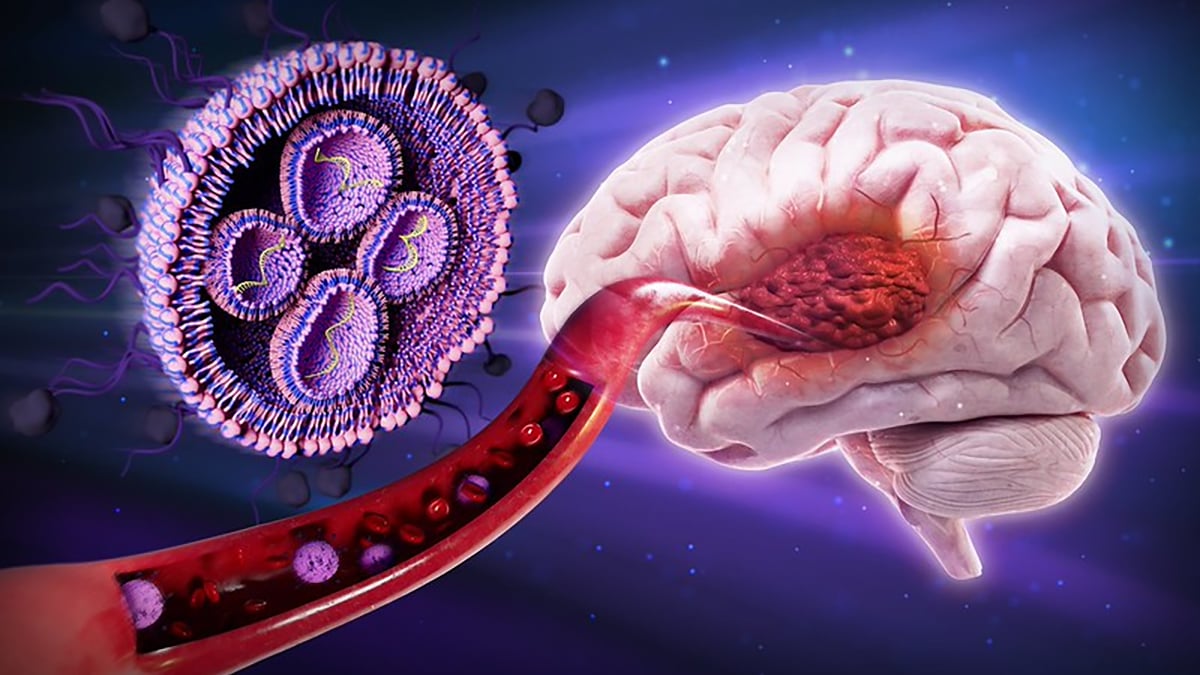
A groundbreaking study has unveiled a novel approach to combating aggressive brain tumors, offering a glimmer of hope where conventional treatments often fall short. Researchers have successfully employed sugar-coated nanoparticles to deliver chemotherapy directly to cancerous cells in mice, significantly shrinking deadly brain tumors. This innovative method bypasses healthy tissue, minimizing side effects and maximizing therapeutic impact, a development that could profoundly reshape how educators discuss scientific advancements and inspire future innovators.
The Tiny Trojan Horses Delivering a Powerful Punch
For decades, the challenge of effectively treating glioblastoma, the most common and aggressive form of primary brain tumor, has loomed large. The blood-brain barrier, a protective shield for the brain, also acts as a formidable obstacle for many life-saving drugs, preventing them from reaching their target. This new research, published in a leading scientific journal, details how scientists engineered microscopic particles to overcome this very barrier.
These aren't just any delivery vehicles. The nanoparticles are designed to be "sticky" to cancer cells, latching onto them with remarkable precision. Their outer coating, made from a type of sugar, plays a dual role: it helps the particles navigate the complex environment of the brain and also aids in their cellular uptake once they reach the tumor site. It’s a sophisticated biological engineering feat.
"We've essentially created a stealth delivery system that disguises the chemotherapy within these tiny sugar shells, allowing it to slip past defenses and directly attack the tumor."
The implications for future medical treatments are immense. While this research is still in its early stages, the principle of using targeted nanoparticles could be adapted for a wide range of diseases, not just cancer. It’s a testament to human ingenuity and the power of interdisciplinary science.
Beyond the Lab: Inspiring the Next Generation of Scientists
Stories like this offer a powerful opportunity for educators to engage students with the real-world applications of science, technology, engineering, and mathematics (STEM). Discussing the challenges of treating brain tumors and the innovative solutions being developed can spark curiosity and a deeper understanding of complex biological processes.
Imagine using this breakthrough as a springboard for a lesson on the human brain, the immune system, or even the principles of nanotechnology. It’s far more engaging than a dry textbook chapter and provides a concrete example of scientific progress. This can be particularly effective when integrated with interactive learning tools.
For instance, educators could use MentofyCove classroom games like a science-themed trivia game or a word search game focused on medical terminology to reinforce key concepts. These engaging activities can help students absorb information more effectively and make learning fun, transforming complex scientific ideas into accessible challenges.
Bridging the Gap Between Discovery and Understanding
The journey from a laboratory discovery to a clinical treatment is long and arduous. However, by highlighting the key steps and the scientific reasoning behind them, educators can demystify the process for their students. This particular breakthrough involves understanding how to make something that is normally harmful – chemotherapy – less so by controlling its delivery.
The concept of using something seemingly innocuous, like sugar, to create a powerful therapeutic agent is a fascinating paradox. It’s not a sugar-coated lie; it’s a clever application of chemistry and biology working in harmony. This can lead to discussions about how everyday materials can be repurposed for extraordinary scientific ends.
When discussing such advancements, educators can leverage tools that simplify the creation of engaging learning materials. Platforms offering AI lesson plan generation can help teachers quickly develop curriculum modules that incorporate these cutting-edge scientific discoveries. This allows for more time spent on actual teaching and less on administrative tasks.
The Role of AI in Fostering Scientific Literacy
The rapid pace of scientific discovery necessitates tools that can help educators keep pace and translate complex information into digestible formats for students. Artificial intelligence is emerging as a powerful ally in this endeavor.
Consider the potential of AI grading tools that can assess student understanding of scientific concepts, freeing up valuable teacher time. Furthermore, AI lesson planning tools can assist in designing lessons that not only cover foundational knowledge but also incorporate recent breakthroughs like the nanoparticle research.
A recent survey of 1,500 K–12 educators indicated that over 70% are looking for ways to integrate current scientific events into their curriculum, but often lack the time or resources. Tools designed to streamline content creation and assessment are therefore invaluable.
A 2024 report from the International Society for Technology in Education (ISTE) highlighted the growing need for AI-powered educational resources that can assist teachers in delivering up-to-date and engaging content.
The ability to quickly generate quizzes, create interactive presentations, or even develop prompts for student research on topics like cancer treatment can be transformative. This ensures that students are not only learning established science but are also exposed to the frontiers of discovery.
Looking Ahead: A Future Where Science Offers More Hope
While the immediate application of these findings is in treating aggressive brain tumors in preclinical models, the broader implications are vast. The successful use of sugar-coated nanoparticles to target and treat disease represents a significant leap forward in precision medicine.
This research offers tangible hope for patients and families affected by devastating illnesses. For educators, it provides a compelling narrative to inspire critical thinking, scientific inquiry, and a belief in the power of human innovation to solve complex problems. It reminds us that even the most daunting challenges, like deadly brain tumors, can be tackled with creativity and scientific rigor.
As we continue to witness such remarkable scientific progress, integrating these stories into our classrooms, perhaps with the help of engaging tools like Mentofy AI teaching tools and interactive classroom games, becomes not just beneficial, but essential for nurturing a generation equipped to understand and contribute to the future of science. It's about more than just memorizing facts; it's about fostering a mindset of curiosity and possibility.







 Explore AI Teaching Tools
Comments (0)
Please login to comment
No comments yet
Be the first to comment on this article