
Beyond Borders: How One University is Forging the Future of Global Legal Practice
In an era where digital innovation knows no geographical boundaries, the legal profession faces an unprecedented challenge: preparing legal minds for a world of complex, cross-border transactions and rapidly evolving technology. A leading university is stepping up to this challenge, offering a transformative educational experience that equips aspiring lawyers with the critical skills and global perspective needed to thrive in this new landscape.
From European Roots to American Shores: A Journey of Legal Discovery
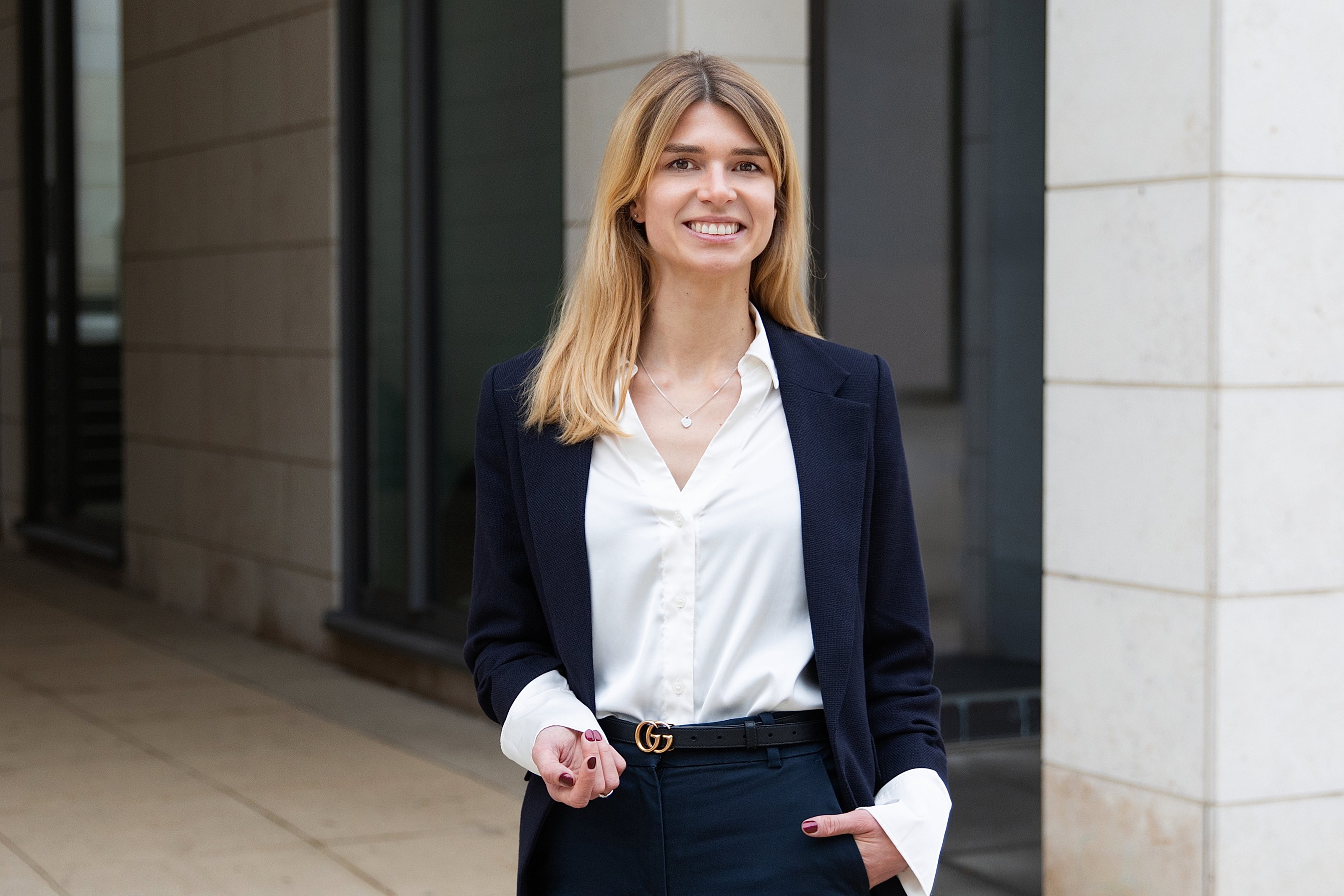
Dr. Pia Theresa Kremer, hailing from Germany, embarked on a traditional legal education, honing her skills in Munich and Frankfurt. Her path, while distinguished, was rooted in a familiar academic soil. Across the continent, Bianca Stella Bruschi, a native of Rome, found her passion ignited by the burgeoning field of digital regulation during an immersive semester at Maastricht University. Her focus on Internet Law and European Data Protection hinted at a future shaped by the digital frontier.
Their distinct journeys converged at a prestigious university's LLM program, a testament to the institution's ability to attract diverse talent with a shared ambition. For Dr. Kremer, the allure was multifaceted: a desire to immerse herself in a new culture, forge international connections, and build a professional network that continues to enrich her career.
Bruschi, on the other hand, approached the program with a strategic imperative. She sought a deeper understanding of the American legal ecosystem, a powerful force shaping many of the world's most influential technology companies. The LLM promised to unlock insights from various legal systems, enabling her to guide businesses through the intricate web of European regulations.
Bridging the Digital Divide: Law Meets Technology
Suffolk University Law School's LLM in Global Law and Technology offered Bruschi precisely the interdisciplinary approach she craved. The program was meticulously designed to foster a transnational analysis, seamlessly blending rigorous legal doctrine with an acute awareness of the broader economic and political forces driving technological advancement.
“Suffolk provided an invaluable opportunity to develop practical skills that are often conspicuously absent from traditional legal curricula in Italy,” Bruschi shared. The program’s innovative approach extended beyond theoretical discussions, introducing her to fundamental programming concepts. She delved into the intricacies of Python, grappling with concepts like linear regression, Word2vec, and neural networks.
The curriculum also compelled students to confront the real-world implications of artificial intelligence. Topics such as algorithmic accountability and AI governance were recurring themes, particularly as many widely adopted technologies, including credit scoring systems and surveillance tools, have significant societal impact. This focus on practical consequences meant that readings and case studies often reflected tangible outcomes rather than purely hypothetical scenarios.
Courses like "Emerging Issues in Transnational Business" and "Race, Ethics, AI and Cyber Civil Rights" were particularly instrumental in this regard, offering a rich tapestry of real-world applications and ethical considerations. Dr. Kremer, pursuing a General LLM, found her own academic experience equally demanding and rewarding.
“The case-based and discussion-driven format necessitated active engagement and fostered a culture of critical thinking,” she explained. Through moot courts and spirited in-class debates, she honed her ability to articulate arguments with newfound confidence and respond adeptly to opposing viewpoints. The intimate class sizes further enhanced the learning experience, fostering a more personalized and supportive environment.
“That individual attention not only deepened my comprehension but also bolstered my self-assurance in presenting and defending legal arguments within an international context,” Dr. Kremer added. Her immersion in an American corporate setting provided invaluable insights into the practicalities of in-house legal practice, strengthening her skills and deepening her understanding of cross-border corporate operations.
Navigating the Labyrinth of Cross-Border Legal Challenges
Suffolk's curriculum is strategically crafted to equip students with the ability to navigate the complex legal landscapes that span multiple jurisdictions. This proficiency is no longer a niche skill but an essential requirement in today's interconnected digital economy. Dr. Kremer’s enhanced understanding of corporate governance, board operations, and the far-reaching impact of legal decisions on stakeholders emerged during her Corporate Law course.
For Bruschi, a pivotal moment arrived in Professor Lander's "Privacy and Data Security" course. This module offered a profound comparative analysis of how privacy is conceptualized across the Atlantic. In Europe, privacy is viewed as a fundamental right of data subjects, while in the United States, it is primarily framed as a matter of consumer protection.
“Studying in the US allowed me to witness this fundamental tension firsthand, rather than observing it from a distance,” Bruschi elaborated. “It provided an opportunity to engage deeply with the strengths and limitations inherent in both models.” During this course, she even had the chance to discuss the future of the EU-US data privacy framework with former Secretary of the US Department of Commerce, Cameron Kerry, gaining invaluable real-world perspective.
Graduates Shaping the Global Legal Landscape
Today, both graduates are actively applying the knowledge and skills acquired at Suffolk to shape the future of global legal practice. Bruschi now serves as a legal tech consultant in Rome, guiding companies through the complexities of international data regulations. Her unique perspective allows her to anticipate compliance challenges for European companies entering the US market and to effectively translate not only the rules but also the underlying logic of European data protection for American businesses venturing into Europe.
Dr. Kremer, working as a legal tech consultant in Frankfurt, finds her cross-border fluency equally indispensable. “My LLM enables me to quickly identify potential points of friction between German and US law,” she stated. Her time studying in the US also provided a crucial understanding of the strategic priorities of her American clients and counterparties. This cultural and legal fluency significantly enhances communication, manages expectations, and ultimately elevates the quality of her advice in cross-border matters.






 Explore AI Teaching Tools
Comments (0)
Please login to comment
No comments yet
Be the first to comment on this article