
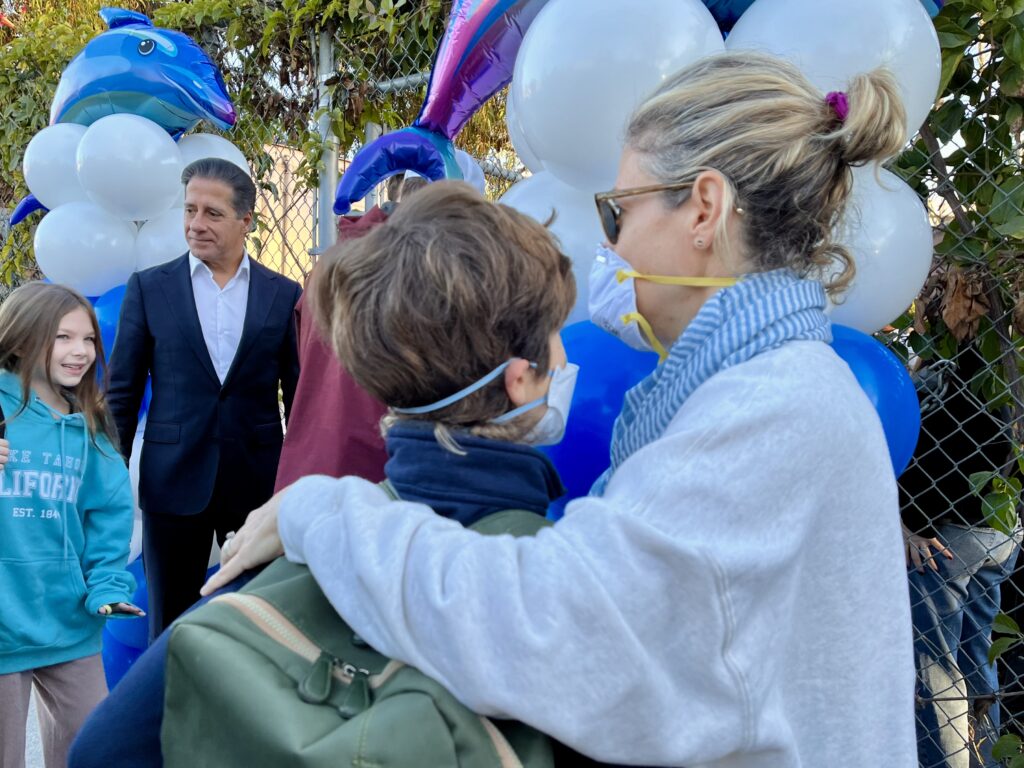
Navigating Disruption: How Schools Foster Resilience After Natural Disasters
The aftermath of natural disasters like wildfires presents immense challenges for students, educators, and entire school communities.While the physical destruction can be devastating, the emotional and academic toll on young learners is equally significant.
This article explores how schools, particularly elementary institutions, have demonstrated remarkable resilience and adaptability in the face of such crises, focusing on the strategies that help students recover and thrive.
We will delve into the unique circumstances that arise, the critical role of educators, and the surprising academic outcomes that can emerge from adversity.
The Unforeseen Impact of Fires on School Communities
Wildfires, such as those that have impacted regions like Los Angeles, create a ripple effect that extends far beyond the immediate damage.For students, the disruption can be profound, affecting their sense of security, their academic progress, and their emotional well-being.
When fires strike, they can dislocate hundreds of families, leading to significant shifts in student populations within school districts.
This means that students might transfer into or out of schools, creating a dynamic and often challenging environment for both educators and learners.
The experience of displacement is not uniform.
Every student faces different circumstances and is at a unique point academically and emotionally.
Some may have lost their homes, their pets, or their familiar community, while others might be spared direct physical loss but still experience the anxiety and uncertainty that pervades the affected area.
This variability makes a one-size-fits-all approach to recovery impossible.
The Emotional Echoes of Displacement
Consider the poignant experience of a second-grade student at Canyon Charter Elementary School.Weeks after returning to school following the Los Angeles fires, this young student's grief was palpable as he watched his teacher pack up the belongings of an absent classmate.
The explanation that his friend had been displaced by the fire and had to move to another school was met with deep sadness.
This single instance highlights the profound emotional impact of such events on children.
The loss of a friend, the disruption of routine, and the underlying fear can be overwhelming.
This emotional burden is compounded when students witness the destruction of their school buildings or the displacement of their teachers and classmates.
The fires in the Los Angeles Unified School District and Pasadena Unified School District, which tragically resulted in the loss of elementary school buildings, underscore the severity of these events.
The Pasadena Unified School District, in particular, was heavily impacted, encompassing areas like Altadena that bore the brunt of the devastation.
Schools as Pillars of Stability Amidst Chaos
Despite the immense challenges, research and anecdotal evidence consistently show that schools serve as a crucial source of stability and continuity for children during and after natural disasters.Even when campuses undergo significant adjustments and students grapple with ongoing grief, the structured environment of a school can provide a sense of normalcy and safety.
Pedro Noguera, Dean of USC’s Rossier School of Education, emphasizes this point, stating that schools offer a vital sense of continuity and safety for children.
This intrinsic value of being in a school setting is paramount, especially when other aspects of a child's life have been upended.
The physical presence of teachers, the interaction with peers, and the predictable rhythm of the school day can act as an anchor in turbulent times.
Rebuilding and Relocating: The Immediate Response
Following the fires, school districts demonstrated remarkable agility in bringing students back to a semblance of normalcy.Los Angeles Unified and Pasadena Unified were relatively swift in relocating students and resuming classes at new sites.
Many students were able to return to a learning environment by the end of January, a testament to the dedication of educators and administrators.
A key strategy employed was the relocation of entire school communities to new campuses.
This meant that students could remain with their familiar campus community, their classroom, their classmates, and their teachers, even if the physical building was different.
This approach minimized further disruption and helped maintain the social and emotional bonds that are so critical for young learners.
Addressing Environmental Concerns and Parental Anxiety
The fires also brought about new concerns for parents, such as potential environmental risks.At Canyon Charter Elementary, for instance, parents expressed apprehension about environmental hazards, leading many to keep their children home until the district completed a comprehensive Soil and Indoor Air Dust Report.
This highlights the need for transparent communication and thorough investigation to reassure families and ensure a safe return to school.
The varying degrees of impact meant that students who lived in affected communities experienced different circumstances and missed varying amounts of instruction.
Some students, upon returning, initially expressed happiness to be reunited with their teachers and classmates.
Others, however, struggled significantly with the emotional fallout of the disaster.
This underscores the individualized approach required in supporting student recovery.
Adapting the Learning Environment: A Shift in Focus
The immediate aftermath of a disaster often necessitates a recalibration of educational priorities.Teachers, faced with students experiencing trauma and disruption, shifted their focus from comprehensive curriculum coverage to emotional well-being and essential learning.
Wendy Connor, a veteran first-grade teacher at Marquez Charter Elementary School, which was destroyed in the Palisades fire, described the initial days and weeks after resuming classes at Nora Sterry Elementary.
The primary emphasis was on students' emotional needs.
Academic instruction was adapted to be more manageable.
For example, instead of assigning five questions for an exercise, she might ask students to complete only three.
The goal was to re-establish routine and build confidence without overwhelming students.
The Power of a Smaller Class Size
In some instances, the displacement caused by fires led to smaller class sizes.While this was a consequence of students leaving the district, it also presented unexpected pedagogical advantages.
Connor noted that with a smaller group of 12 students compared to her usual 20, she could provide more individualized attention.
This allowed for extra time in the afternoon, which could then be dedicated to enrichment activities like coding, offering a silver lining amidst the challenges.
Academic Resilience: Surprising Outcomes
Perhaps one of the most striking observations from the recovery process is the unexpected academic progress seen in some affected districts.In Pasadena Unified, despite the evacuation of 10,000 of its 14,000 students due to the Eaton fire, diagnostic assessments revealed an increase in the number of students performing at or above grade level in math and reading across elementary and middle schools.
Specifically, the number of elementary students performing at mid- or above-grade level rose by an impressive 15 percentage points in math and 14 percentage points in reading between assessment periods.
Middle school scores also saw significant gains, with math scores increasing by 11 percentage points and reading scores by 6 percentage points.
These results suggest that the focused efforts of educators and the structured environment of the school, even in a relocated setting, can foster remarkable academic resilience.
While Los Angeles Unified did not have specific data to measure the direct impact of the Palisades fire on student performance at affected schools, the overall trend in Pasadena Unified indicates that academic recovery is not only possible but can, in some cases, exceed pre-disaster levels.
The Evolving Landscape of Student Mobility and Attendance
Natural disasters inevitably lead to shifts in student enrollment.In the wake of the fires, both Los Angeles Unified and Pasadena Unified experienced a loss of students as families relocated.
Pasadena Unified, for example, lost roughly 420 students, while Los Angeles Unified saw at least 89 students depart.
However, the narrative of student mobility is complex.
Some families, despite displacement, expressed a strong desire to return to their original districts, indicating a commitment to their schools and communities.
This was often framed as a temporary situation, with families planning to re-enroll once circumstances allowed.
Unexpected Gains and Policy Impacts
Interestingly, Los Angeles Unified also experienced an unexpected gain of 263 students.This phenomenon is speculated to be a result of a California executive order that permitted students affected by the fires to attend schools in other districts.
This policy, designed to support displaced students, highlights the interconnectedness of educational systems and the importance of flexible policies during crises.
Conversely, the fires, coupled with broader anxieties around immigration enforcement, also contributed to an uptick in chronic absenteeism in some districts.
This underscores the multifaceted nature of the challenges faced by vulnerable student populations during times of crisis.
Long-Term Recovery and the Future of School Resilience
The process of recovery and rebuilding after a large-scale disaster is a marathon, not a sprint.While schools can provide immediate stability, the long-term implications for communities and their educational institutions are significant.
Pedro Noguera points out that many communities, such as those in Santa Rosa and Paradise that suffered extensive fire damage, have demonstrated a capacity to return and rebuild.
However, he cautions that a large-scale return of families might be less likely in certain areas, particularly in more expensive regions like Los Angeles.
The ability to afford to return and rebuild is a critical factor that can influence the demographic makeup and the future of school communities.
The process of full recovery and understanding the long-term impact will take time.
The ability of families to return, the rebuilding of infrastructure, and the sustained support for student well-being will all play a crucial role in shaping the future of these educational landscapes.
Conclusion
The resilience demonstrated by students, teachers, and school administrators in the face of devastating wildfires offers invaluable lessons for the global learning community.While the immediate aftermath of such events is marked by disruption, loss, and emotional distress, the unwavering commitment to education and student well-being can foster remarkable recovery.
Schools, even when displaced or damaged, serve as vital anchors of stability, providing a sense of continuity and safety that is indispensable for children.
The strategies employed, from prioritizing emotional support to adapting academic instruction and leveraging the benefits of smaller class sizes, highlight the adaptability of the educational sector.
Furthermore, the surprising academic gains observed in some districts underscore the profound impact of dedicated educators and supportive school environments.
As we continue to navigate a world increasingly susceptible to natural disasters, the insights gleaned from these experiences are crucial for building more resilient and responsive educational systems, ensuring that every student, regardless of circumstance, has the opportunity to learn, grow, and thrive.





 Explore AI Teaching Tools
Comments (0)
Please login to comment
No comments yet
Be the first to comment on this article