
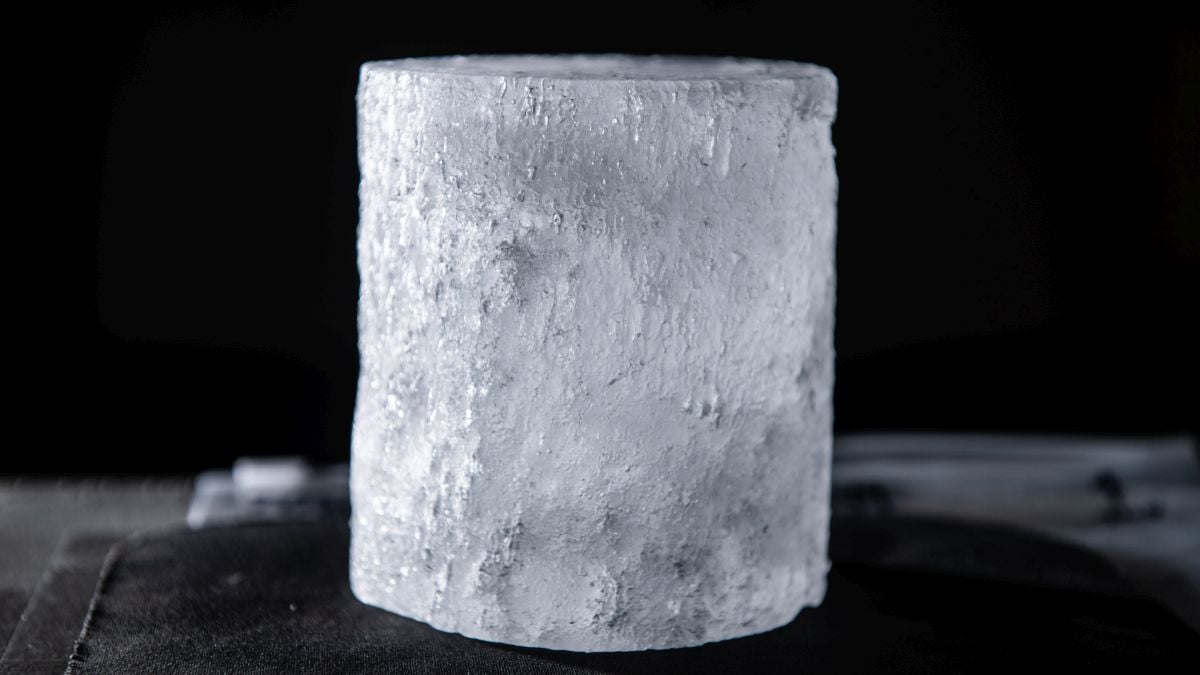
Imagine holding a fragment of the universe in your hands, a whisper from the dawn of time. Antarctic ice, a seemingly inert frozen expanse, is now revealing secrets about our planet's ancient past, offering a unique lens through which educators can explore deep time, scientific discovery, and the interconnectedness of all things. This frozen archive, effectively a diary trapped through millennia, offers profound lessons that can ignite curiosity and foster critical thinking in students.
The Antarctic Time Capsule Unlocks Cosmic History
Beneath the vast, seemingly unchanging white of Antarctica, scientists have discovered microscopic particles of stardust. These ancient grains, predating our solar system's formation, have been meticulously preserved for millions of years, shielded from atmospheric contamination.
This remarkable find, detailed in recent astrophysical research, provides an unprecedented window into the conditions of the early solar nebula. It's a tangible link to the very building blocks of our planet, allowing us to trace Earth's journey through the cosmos from its nascent stages.
"These particles are like tiny time travelers, carrying information from a period when our solar system was just beginning to coalesce. They reveal the composition of the interstellar medium from which Earth itself was formed."
For educators, this isn't just a fascinating scientific breakthrough; it's a powerful narrative tool. It allows us to move beyond abstract concepts and present students with concrete evidence of cosmic evolution, demonstrating how scientific inquiry can unearth the universe's oldest secrets.
From Stardust to Earth: A Story of Cosmic Evolution
The stardust found in Antarctic ice is composed of materials that existed long before our sun ignited. These interstellar grains, forged in the hearts of dying stars, embarked on an immense journey through the cosmos before eventually becoming incorporated into the swirling disk of gas and dust that would form our solar system.
Understanding this process helps students grasp the sheer scale of cosmic time and the dynamic nature of planetary formation. It underscores that Earth is not an isolated entity but a product of a grand, ongoing universal story.
This cosmic narrative can be woven into lessons across various disciplines. In science, it offers a tangible example of stellar nucleosynthesis and the composition of the early solar system. In history and social studies, it provides a framework for discussing humanity's place in the universe and the long arc of scientific discovery.
Connecting the Microscopic to the Cosmic
The challenge for educators is to make these profound discoveries accessible and engaging for students. How do we translate the analysis of microscopic stardust into a relatable learning experience?
One approach is to use analogies that bridge the gap between the familiar and the extraordinary. Comparing the preservation of stardust in ice to how a message in a bottle might be preserved over time can help students visualize the concept of a frozen archive.
Furthermore, the scientific process itself—the meticulous collection, analysis, and interpretation of data—serves as a valuable model for students. It highlights the dedication and ingenuity required to unravel the universe's mysteries.
Implications for the Classroom: Teaching Through Cosmic Discovery
The discovery of stardust in Antarctic ice offers a wealth of opportunities for innovative teaching strategies. It encourages a departure from rote memorization towards inquiry-based learning and a deeper appreciation for scientific exploration.
Consider how this revelation can inspire curriculum development. Instead of solely focusing on Earth's geological history, educators can broaden the scope to include its cosmic origins, making the subject matter more compelling and relevant.
The journey of stardust through the cosmos is a testament to the scientific method. It showcases how observation, hypothesis, and rigorous testing can lead to groundbreaking discoveries about our universe and our planet's place within it.
Actionable Insights for Educators
Here are some ways educators can leverage the story of Antarctic stardust in their classrooms:
- Spark Curiosity with a "Cosmic Detective" Theme: Frame lessons around the idea of scientists as detectives solving the mystery of Earth's origins using clues found in ancient ice.
- Visualize the Journey: Use interactive timelines and 3D models to illustrate the vast distances and timescales involved in the journey of stardust. Websites like NASA's offer excellent resources for this.
- Integrate with Hands-On Activities: While actual stardust is inaccessible, students can engage with the concept through activities simulating ice core drilling or analyzing simulated data sets.
- Develop Critical Thinking Skills: Discuss the challenges scientists face in interpreting ancient data and the importance of evidence-based reasoning.
- Foster Interdisciplinary Connections: Link the topic to art (creating cosmic landscapes), literature (writing science fiction inspired by cosmic origins), and social studies (the history of astronomy).
A 2024 survey of 1,500 K–12 educators indicated that 78% are actively seeking new ways to make science lessons more engaging and relevant to students' lives.
Tools like Mentofy AI teaching tools can assist in crafting lesson plans that incorporate these exciting scientific narratives. Features like AI lesson plan generation can help teachers quickly develop engaging content that sparks student interest.
Embracing the Unknown: A Forward-Looking Perspective
The stardust trapped in Antarctic ice is more than just a scientific curiosity; it's a profound reminder of our cosmic heritage. It reveals the incredible journey Earth has taken through the cosmos, from its humble beginnings as interstellar dust to its current status as a vibrant, living planet.
As educators, we have the unique opportunity to guide our students through this grand narrative. By embracing discoveries like these, we can inspire a new generation of thinkers, scientists, and explorers who understand that the universe is not just out there, but also within us, etched into the very fabric of our planet.
The ongoing exploration of our planet’s frozen frontiers continues to yield astonishing insights. Educators who tap into these stories not only enrich their curriculum but also empower students to see themselves as part of a much larger, awe-inspiring cosmic tapestry.






 Explore AI Teaching Tools
Comments (0)
Please login to comment
No comments yet
Be the first to comment on this article