
Navigating University Transformation: Budgetary Challenges and New Leadership at Sonoma State
The landscape of higher education is constantly shifting, presenting unique challenges and opportunities for universities worldwide.At Sonoma State University, recent years have been marked by significant budgetary hurdles and a transition in leadership, prompting crucial conversations among faculty and students about the institution's future.
This article delves into the impact of these changes, exploring the strategies being considered and the hopes for a revitalized academic environment, offering valuable insights for students, educators, and administrators navigating similar situations within any university setting.
The Ripple Effect of Fiscal Restructuring
A year ago, Sonoma State University faced a formidable financial deficit, necessitating difficult decisions that profoundly impacted its academic offerings and personnel.The university made the challenging choice to discontinue several academic departments, cease NCAA athletic programs, and implement faculty reductions affecting approximately a quarter of its teaching staff.
The lingering effects of these substantial budget cuts continue to resonate across the campus community.
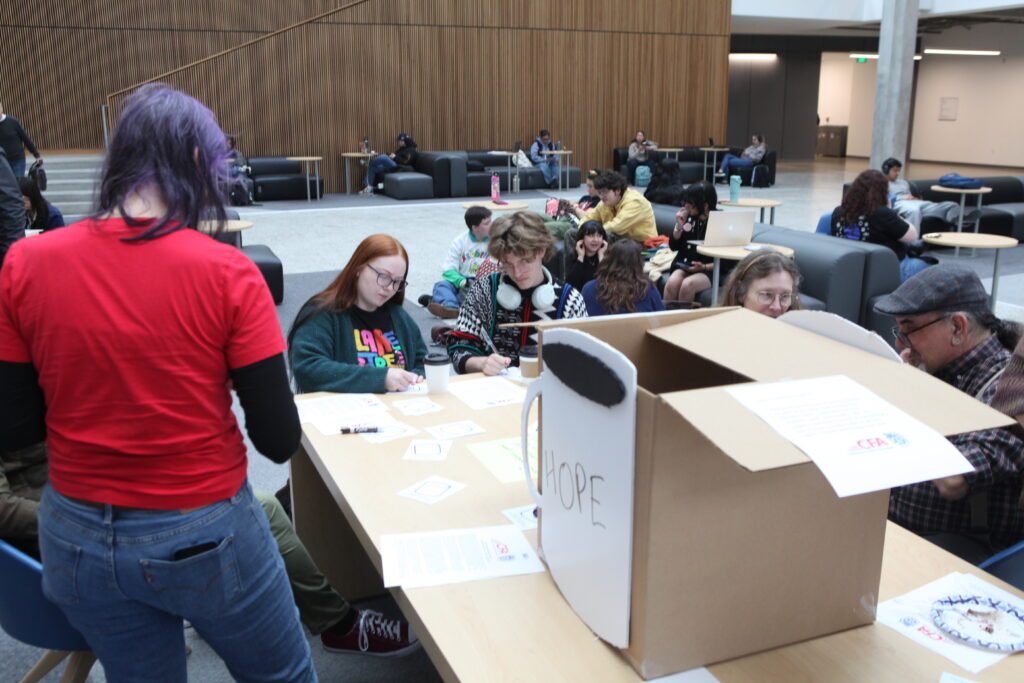
The California Faculty Association, a key stakeholder, recently organized an event titled “Hopes and Losses.” This gathering served as a vital platform for students and faculty to reflect on the profound impacts of these changes, share their personal experiences, and engage with the university's new president.
This initiative underscored the deep emotional and academic toll these fiscal adjustments can take on a university's core constituents.
Voices of Experience: Faculty and Student Perspectives
The “Hopes and Losses” event highlighted the ongoing sense of grief and uncertainty experienced by many.Scott Horstein, the membership and organizing chair for the campus chapter of the CFA, articulated this sentiment, stating, "We wanted to create an event that can honor the fact that a lot of us are still in grief.
We don’t want to just pretend that we’re going to move on. … It’s affected us and affects everybody on campus in different ways." This statement emphasizes the importance of acknowledging and processing loss before attempting to move forward.
However, Horstein also expressed a sense of cautious optimism, noting, "But at the same time, we can recognize that there’s a new opportunity for the university with a new president coming in who so far seems very engaged and hopefully can be a chance to rebuild." This highlights the critical role of leadership in fostering a climate of recovery and renewal following periods of significant institutional change.
The student population at Sonoma State has seen a notable decline of 13% in the wake of these fiscal measures.
Despite this challenge, a sense of hope persists, fueled by the arrival of the new president and the allocation of $45 million in one-time funding from state legislators.
This financial infusion offers a potential avenue to mitigate some of the damage and support the university's recovery efforts.
Victoria Weidhase, a senior studying political science, shared her personal experience, noting that friends had to transfer due to the discontinuation of their majors, and several beloved professors had departed.
Reflecting on the leadership transition, she expressed a common sentiment: "My hope for him is really that we’re going to stabilize and we’re going to stop spiraling down.
It's a bit weird being a senior here and going through four years with four different presidents." This observation underscores the detrimental impact of leadership instability on the student experience and the university's overall trajectory.
Scott Horstein, as the sole remaining faculty member in the theater arts and dance department, offered a poignant illustration of the cuts' impact.
His department was designated a "teachout" program, meaning one professor was retained to guide existing students through their majors before the department's closure.
He described the experience as surreal: "In some ways, it’s been no different.
But it is combined with an awareness that this could be the last time for any of this.
I don’t have any new students this year, which is really strange." His concern about job security and his hope for the continued offering of theater arts courses reflect the anxieties faced by faculty in affected departments.
Charting a Path Forward: Proposals and Potential
In response to the financial challenges and the influx of new funding, the University Budget Advisory Committee (UBAC) has put forth a report detailing potential uses for the allocated resources.This report, delivered to President Spagna, aims to guide the university's strategic reinvestment, with a particular focus on re-establishing general education courses in areas previously impacted by budget cuts, and potentially offering minors in these fields.
Horstein expressed a degree of optimism regarding the committee's proposals, particularly concerning the theater arts.
He stated, "In terms of the theater proposal, I'm very much in support of it.
I would love for there to be a department and a major as there was before, but if there can’t be a department, I think what’s in the UBAC proposal is a good way forward to still have the arts be present on campus." This sentiment highlights a pragmatic approach to rebuilding, acknowledging that while a full restoration might not be immediately feasible, preserving the presence and accessibility of vital academic disciplines is a crucial step.
However, not all faculty members share the same level of enthusiasm for the UBAC's recommendations.
Charlene Tung, a professor in the women's and gender studies department, voiced skepticism regarding the proposal for her department.
She commented, "The UBAC recommendations for a new WGS minor with so little funding attached does nothing for the department, though likely helps the university save face." This critique points to a potential disconnect between the proposed solutions and the actual needs of the departments, suggesting that superficial changes may not address the underlying issues.
Tung also shared her disheartening experience, despite the strong support from her students. "The students have been wonderful," she said. "It is a privilege to be here for them and to see them through not only their degrees, but to co-create an academic space to examine and discuss the myriad of current challenges facing LGBTQ communities and BIPOC folks." Her words underscore the profound value of departments like women's and gender studies in fostering critical thinking and providing essential academic spaces for marginalized communities.
The challenges of operating without adequate departmental support are significant.
Tung elaborated, "What we teach in WGS are heavy topics.
So, to not have a team to work with, supporting each other in our teaching and activism, has been difficult.
The faculty remaining (in other departments) are demoralized or ducking and covering — hoping they are not next.
That's just my assessment.
I hope I'm wrong." This candid assessment reveals the psychological toll of departmental isolation and the pervasive fear of further cuts, impacting faculty morale and the overall academic climate.
Despite these difficulties, Tung expressed hope that the new administration will genuinely listen to the concerns of students, faculty, and staff. "Having a new president on board, however, is an opportunity to correct past wrongs and rebuild trust." This statement encapsulates the prevailing sentiment: while the damage from past decisions is evident, the arrival of new leadership offers a critical juncture for healing, reconciliation, and strategic rebuilding.
The Role of State Funding and Institutional Vision
The allocation of $45 million in one-time funding from state legislators represents a significant opportunity for Sonoma State University.This influx of capital, when strategically deployed, can serve as a catalyst for recovery and innovation.
The UBAC's report offers a framework for how these funds might be utilized, but the ultimate success will depend on the university's ability to translate these proposals into tangible improvements that benefit students and faculty.
Research consistently shows that robust investment in academic programs, faculty development, and student support services is crucial for institutional vitality.
For universities like Sonoma State, navigating periods of fiscal constraint requires a clear vision and a commitment to prioritizing academic excellence.
This involves not only addressing immediate budgetary needs but also investing in long-term strategies that foster growth and sustainability.
The concept of "teachout" programs, while enabling students to complete their degrees, also highlights the challenges of maintaining academic continuity and departmental expertise.
Moving forward, universities must consider how to preserve specialized knowledge and ensure that critical disciplines remain accessible to future generations of students.
This might involve exploring interdisciplinary collaborations, innovative program delivery models, and strategic partnerships.
Furthermore, the experience at Sonoma State underscores the importance of transparent communication and collaborative decision-making.
When significant institutional changes are implemented, engaging faculty, students, and staff in the process can foster greater understanding, build trust, and lead to more effective solutions.
The "Hopes and Losses" event, for instance, served as a vital mechanism for dialogue and shared reflection.
The state university system, in general, faces ongoing pressures to adapt to evolving economic conditions and societal needs.
The decisions made at institutions like Sonoma State can serve as valuable case studies for other universities grappling with similar challenges.
The key takeaway is that while budget cuts can be devastating, proactive planning, strategic reinvestment, and strong leadership can pave the way for a more resilient and vibrant future.
Conclusion: Rebuilding Trust and Fostering Academic Resilience
The journey of Sonoma State University through its recent budgetary challenges and leadership transitions offers a compelling narrative of resilience, adaptation, and the enduring spirit of its academic community.The impact of significant budget cuts has been deeply felt, leading to the discontinuation of programs and the departure of valued faculty.
However, the emergence of new leadership, coupled with crucial state funding, presents a pivotal moment for the university to embark on a path of recovery and renewal.
The insights shared by faculty and students at events like "Hopes and Losses" are invaluable, highlighting the emotional and academic toll of these changes while also expressing a collective desire for stability and growth.
The proposals from the University Budget Advisory Committee, though met with mixed reactions, represent a tangible effort to address the lingering effects of fiscal restructuring and to reinvest in key academic areas.
For any university, navigating such periods requires a multifaceted approach that prioritizes transparent communication, collaborative decision-making, and a clear, forward-looking vision.
The experience at Sonoma State underscores the critical importance of supporting faculty, fostering student success, and preserving the integrity of academic disciplines.
By learning from these challenges and embracing opportunities for strategic reinvestment, Sonoma State, like any university facing similar circumstances, can work towards rebuilding trust, strengthening its academic foundation, and emerging as a more resilient and dynamic institution for its students and the broader community.






 Explore AI Teaching Tools
Comments (0)
Please login to comment
No comments yet
Be the first to comment on this article