
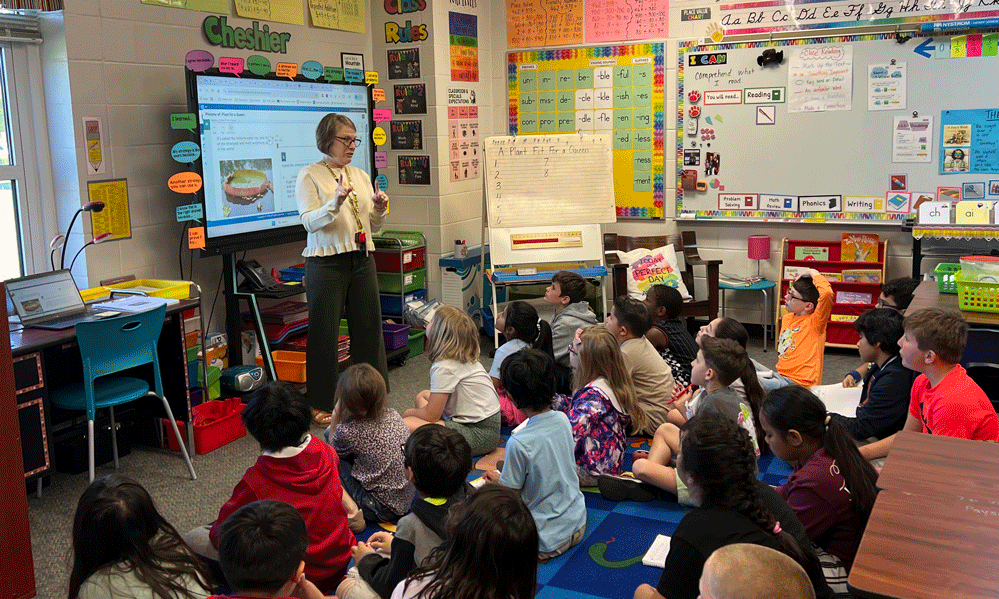
In a state where third grade reading proficiency dipped to a concerning 37% for the 2024-25 school year, educators are facing an unprecedented challenge. Yet, at Hunt Elementary School in Springdale, Arkansas, a team of third grade teachers is defying the trend, achieving remarkably high educator growth scores. Their secret weapon? A radical commitment to sharing students, a strategy that is proving transformative for learning and collaboration.
Hunt Elementary's Third Grade Team Reimagines Student Ownership
The philosophy at Hunt Elementary has shifted dramatically. Gone is the notion of "my students" versus "your students." Instead, the four third grade teachers—Anna Gawf, Jami Cheshier, Robyn Hubbard, and Lindsay Dees—embrace a collective responsibility for every child's academic journey.
This shared ownership means students don't necessarily spend their entire day, or even their entire third grade year, within the confines of a single classroom. When a student needs targeted support in reading comprehension, for instance, they might move to a different teacher's classroom, one better equipped to address their specific skill gaps.
"We used to, I think, have the mindset of, ‘These are my little kiddos, or my 25 kids,’ and now it's, ‘They're all ours.’ We want to see them all grow." - Anna Gawf, Third Grade Teacher, Hunt Elementary
This fluid approach allows teachers to leverage each other's strengths and cater to diverse learning needs. A student excelling in reading might join a more advanced group, while another struggling with foundational skills could receive specialized instruction from a teacher with deep expertise in early literacy.
A Collaborative Ecosystem for Student Growth
The success of this model hinges on constant communication and data-driven decision-making. The third grade team meets regularly to dissect student performance data, identify areas for improvement, and strategically reassign students to the most beneficial learning environments.
This collaborative spirit extends beyond academic planning. Teachers actively foster relationships between students and all members of the third grade team. It's not uncommon for students to create artwork for another teacher or share anecdotes about a lesson they experienced in a different classroom.
Principal Michelle Doshier, who has been with Hunt Elementary for over two decades, credits this unified approach for the team's exceptional educator growth scores. These scores, a measure of how effectively students meet or exceed academic growth benchmarks, consistently place Hunt's third grade teachers among the state's highest performers.
Leveraging Diverse Expertise for Targeted Instruction
Each teacher brings a unique background and skillset to the third grade team, creating a rich tapestry of instructional expertise. Anna Gawf's experience in both second and third grade provides a deep understanding of the developmental continuum, while Robyn Hubbard's tenure across multiple grade levels offers a panoramic view of student progression.
Jami Cheshier, with her extensive experience from kindergarten through second grade, excels at building foundational literacy skills, making her a vital resource for students needing intensive intervention. Lindsay Dees, having previously worked with adults in a family literacy program, brings fresh perspectives and innovative strategies to the team.
This collective wisdom allows them to pinpoint precisely where a student is in their learning journey and where they need to go. It’s a sophisticated, yet intuitively effective, system for ensuring no student falls through the cracks.
Navigating Shifting Demographics and Post-Pandemic Challenges
The collaborative model at Hunt Elementary has evolved in response to significant demographic shifts and the lingering impact of the COVID-19 pandemic. Over the years, the school has seen a dramatic increase in English learners and immigrant students arriving with limited prior reading instruction.
Simultaneously, the poverty level at the school has risen substantially, presenting additional challenges for students and educators alike. The pandemic further exacerbated these issues, with students entering third grade having missed crucial developmental and academic periods.
"My first year that Hunt was open, I taught third grade. Back in those days, it was all about comprehension. And I never had taught a child how to read from the beginning until our population changed as drastically as it did." - Robyn Hubbard, Third Grade Teacher, Hunt Elementary
The third grade cohort that entered in 2024-25, having begun their academic careers during the pandemic, exhibited particularly low reading proficiency rates. This reality underscores the urgency and importance of innovative teaching strategies like those employed at Hunt.
The Power of Data and Collaboration in Action
The Hunt Elementary third grade teachers' commitment to data-driven instruction is evident in their regular team meetings. Here, they meticulously review student progress, identifying specific reading skills that require reinforcement, such as understanding main ideas or decoding complex word sounds.
This collaborative analysis informs their decisions about which students would benefit most from instruction in a particular teacher's classroom. It's a dynamic process, ensuring that students receive the right support at the right time.
The tangible results of this approach are reflected in their state-mandated educator growth scores. Teachers Gawf, Hubbard, and Cheshier boast a three-year average growth score of 90 points or higher, significantly exceeding the state average. This metric demonstrates that their students are growing academically at a rate far exceeding expectations.
Actionable Insights for Educators Seeking to Enhance Collaboration
The success at Hunt Elementary offers valuable lessons for educators everywhere. Implementing a similar collaborative framework, even on a smaller scale, can yield significant benefits for student learning and teacher morale.
- Foster a "Whole Team" Mentality: Encourage teachers to view all students as part of a collective responsibility, rather than belonging solely to an individual classroom.
- Establish Regular Data Review Sessions: Dedicate time for teachers to collaboratively analyze student performance data and identify trends and individual needs. Tools like Mentofy AI teaching tools can streamline this process by providing insights into student performance across various assessments.
- Develop Flexible Grouping Strategies: Be willing to move students between classrooms or groups based on their current skill levels and learning needs. This might involve creating targeted intervention groups or enrichment opportunities.
- Promote Cross-Classroom Relationships: Encourage students to interact with and build connections with all teachers on the team. Simple gestures like cross-classroom "show and tell" or joint projects can foster this sense of community.
- Leverage Technology for Collaboration: Explore platforms that facilitate shared planning, communication, and resource sharing among educators. While not explicitly used by the Hunt team in the provided context, tools that support shared lesson planning or student grouping could be beneficial.
The journey to this level of collaboration wasn't without its challenges. As Cheshier notes, "Don't think we don't have really hard days." However, the commitment to shared success and student well-being has created a resilient and effective teaching environment.
The Future of Collaborative Education
The innovative practices at Hunt Elementary School in Arkansas are a beacon of hope for educators facing similar challenges. By prioritizing student sharing and fostering a deeply collaborative environment, these third grade teachers are not only boosting academic growth but also cultivating a powerful sense of community and shared purpose.
This model demonstrates that when educators unite under a common goal—the success of every student—remarkable achievements are possible. The ripple effect of such dedication can inspire broader systemic changes, proving that innovative approaches to teaching and learning are essential for navigating the evolving landscape of education.







 Explore AI Teaching Tools
Comments (0)
Please login to comment
No comments yet
Be the first to comment on this article