
Legislators Rethink the Digital Classroom: Is a Screen-Free Future on the Horizon?
A seismic shift is underway in how schools approach technology. Once hailed as the silver bullet for modernizing education, the ubiquitous presence of digital devices in classrooms is now facing intense scrutiny, prompting a wave of legislative action and a deep re-evaluation of the role of screens in student learning.
The Unforeseen Consequences of the Digital Rush
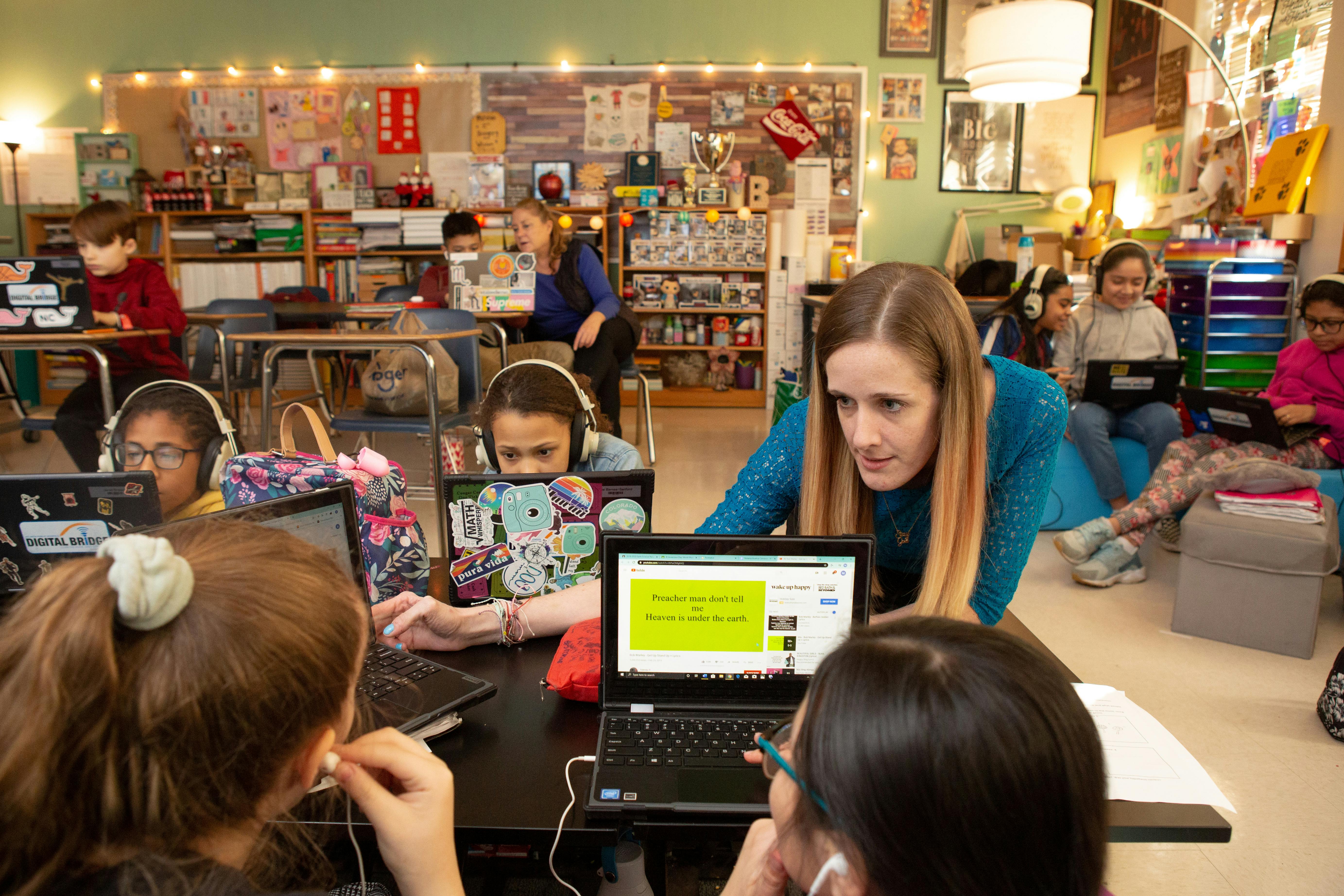
The push for one-to-one device programs, where every student receives a personal school-issued device, has been a defining feature of American education for nearly a decade. This trend accelerated dramatically during the COVID-19 pandemic, fueled by federal funding and the urgent need to transition to virtual learning environments.
However, this rapid adoption, often driven by necessity, has led to what some experts describe as a "toothpaste-out-of-the-tube" scenario. Decisions were made quickly, without a full understanding of the long-term implications for student engagement and academic outcomes.
“For a lot of logistical reasons and necessity through the pandemic, we sort of went all in — we had to,” explains Kate Blocker, director of research and programs at Children and Screens: Institute of Digital Media and Child Development. “Digital programs and edtech broadly has come with a lot of promise, including improving student learning and improving teacher and administration efficiency. The question people are starting to ask themselves is, ‘Are we seeing those benefits?’”
The Growing Tide of Distraction
As parents become more attuned to their children's screen time, a palpable concern is emerging about the impact of personal devices within educational settings. Data reveals a staggering adoption rate, with an estimated 9 in 10 public schools implementing one-to-one device programs for the current academic year.
While comprehensive research on the overall effects of devices like laptops and tablets in schools is still developing, their potential as classroom distractions is becoming increasingly evident. A recent study, led by Angela Duckworth, a professor at the University of Pennsylvania and a prominent figure in educational psychology, found that teachers estimate one in three students use laptops for non-academic purposes during class time. These activities range from texting and social media scrolling to more covert diversions.
“It was becoming clear to us, from our previous open-ended responses to the survey, that phones are not the only digital distraction in the classroom,” Duckworth notes. She herself has implemented a "no technology" rule in her own lecture hall, a decision prompted by observing students engaging in activities like watching movies, online shopping, or studying for other courses on their laptops.
“If you see a kid with a phone, you know they're not supposed to be doing something,” she says. “With a laptop, kids become Oscar-winning actors and actresses: They look up and down and seem like they’re doing something they’re supposed to be doing.”
The Shadow of Data Collection
Beyond direct distractions, a significant concern revolves around the vast amounts of student data being collected by edtech companies. The lack of clear guardrails and transparency surrounding this data management is raising alarms among educators and policymakers.
“I’m aware of pressure around data and data management, with questions around appropriate guardrails in place,” Blocker states. “So many companies hold an immense amount of student data. Is that being managed properly and held to the same standards as the curriculum?”
The AI Effect: A New Catalyst for Concern
The rapid ascent of artificial intelligence has added another layer of complexity to the ongoing debate about educational technology. The pervasive nature of generative AI, accessible on personal devices, has forced schools to confront its implications in ways they may not have anticipated.
“There’s the larger techno-panic happening around devices in schools especially now that AI has arrived,” says Carrie James, co-director of the Center for Digital Thriving at the Harvard Graduate School of Education. “In the past, schools have been very intentional: They have a school committee meeting and make very clear decisions about which pieces of technology they’re going to adopt. The challenge around generative AI is it arrived on everyone's devices, and now schools have to reckon with it. I think that piece is exacerbating it.”
Legislative Efforts to Rein in Edtech
In response to these growing concerns, a movement is gaining momentum to curb the unchecked proliferation of digital devices and edtech tools in schools. Approximately nine states have introduced legislation aimed at creating "Safe Schools Technology" policies, driven by advocacy groups like the Distraction-Free Schools Policy Project.
Kim Whitman, a co-lead for the project, emphasizes that the goal is not to eliminate technology entirely but to establish sensible limits. “We believe in tech education,” Whitman asserts. “You need education on technology — how to use Excel, how to type — these are all really important skills for students to have. But it doesn’t mean we have to teach everything through the device.”
A Patchwork of Policy Approaches
State policymakers are exploring a variety of strategies to regulate educational technology:
- Screen Time Limitations: Several states, including Oklahoma, West Virginia, and Missouri, have introduced bills that aim to limit screen time while still allowing access to technology. This approach is particularly favored for elementary schools.
- Parental Opt-Out Options: Vermont has proposed legislation that would grant parents the right to opt their children out of using electronic devices in the classroom.
- Hardware Restrictions and Shared Models: Leaders in Kansas are considering a ban on individual hardware devices in elementary schools, advocating for a shared-device model, such as computer labs, in middle schools. They also propose limiting classroom screen time to one hour daily for elementary and middle school students, and 90 minutes for high school students.
The Edtech Certification Conundrum
A critical aspect of this legislative push involves ensuring that edtech products meet rigorous standards, similar to how other curricula are evaluated and certified. This includes establishing clear processes for product evaluation, selection, and transparent communication with parents.
However, determining who bears the responsibility for this verification—whether it's the school, the company, or a third party—remains a complex challenge. Currently, there is no universal system to easily validate the claims made by edtech companies.
Whitman advocates for third-party oversight, arguing, “There is nobody right now that is confirming these products are safe, effective and legal. It should not fall on the district’s IT director; it would be impossible for them to do it. And the companies should not be tasked with doing it — that would be like nicotine companies vetting their own cigarettes.”
Navigating Equity and Access
For many school districts, particularly those serving low-income and minority populations, mitigating edtech usage presents a significant challenge. These schools often lack the financial resources to purchase traditional textbooks, which can be more expensive than their digital counterparts. Furthermore, substantial investments have already been made in digital devices, often through grants and federal funding.
“That is in fact the conundrum: School administrators are in a tug of war,” Blocker observes. “They’ve invested in so much, and a lot of the products came with promise. It’s not like they grabbed a brick and said, ‘I’m going to make this work.’ They were told they were going to have all these benefits.”
Carrie James also highlights the importance of recognizing that for certain student populations, such as neurodivergent children, digital products can offer crucial benefits. “Edtech and assistant technology are key for her learning,” James states, cautioning against broad bans. “That’s where the decision has to be school-community specific. Educators know their community best, and these regulations have to be designed for their students.”
Beyond Bans: Towards Intentional Integration
The current legislative efforts to regulate laptops and edtech tools follow a broader trend of states banning student cellphones in classrooms. While cellphone bans have often garnered bipartisan support, experts suggest that a complete move away from devices in schools is a far more intricate issue.
“School phone bans are less about technology for learning’s sake and more about technology interfering with learning,” Blocker explains. “I think it was clearer for everyone to see why [banning phones] might have a good outcome. It is much harder with edtech; there is evidence, particularly for older students, that when used well it can be beneficial.”
Whitman, however, believes that edtech restrictions will eventually gain similar traction to phone bans, albeit at a slower pace. “Parents are becoming aware and coming together with collective action,” she predicts. “I think this will be similar to phone-free schools eventually. It will, but we’re on the cusp of it right now.”
James advocates for a nuanced approach, urging schools and districts to move beyond simplistic solutions like outright bans. Instead, she emphasizes the need for multifaceted strategies that promote the intentional and effective integration of technology. “Bans might feel like they can be a starting point for better learning, but they can’t really be the finish line,” she concludes. “For the sake of children and teens, we have to build agency and intentionality for using technology well, because as soon as they walk out of school, you typically have pretty incredible access to technology.”






 Explore AI Teaching Tools
Comments (0)
Please login to comment
No comments yet
Be the first to comment on this article