
Cal State's Unraveling: Sonoma State Faces Existential Cuts as Programs Vanish, Futures Hang in Balance
A chilling silence is descending upon the halls of Sonoma State University, a stark contrast to the vibrant intellectual and athletic pursuits that once defined its campus. Students, once brimming with aspirations fueled by cutting-edge physics, passionate soccer drills, and insightful gender studies discussions, now find themselves grappling with a demoralizing reality: the potential eradication of their academic dreams.
A Campus on the Brink: The Scale of the Crisis
Sonoma State, a beacon of higher education nestled 50 miles north of San Francisco, is confronting a staggering $24 million budget deficit. The proposed solution is drastic: the complete elimination of six academic departments, the axing of approximately two dozen degree programs, and the dissolution of all NCAA Division II sports. This isn't an isolated incident; it's the most severe manifestation of cost-reduction measures rippling through the 23-campus California State University system, which educates over 450,000 students across the state.
University leaders cite a confluence of factors, including anticipated reductions in state funding, escalating operational costs, and, in some instances, declining student enrollment. At Sonoma State, the numbers paint a stark picture: a precipitous drop from 9,400 students in 2015 to a low of roughly 5,800 in 2024, a trend that has amplified the financial pressures.
Geology's Last Stand: A Student's Fight for His Field
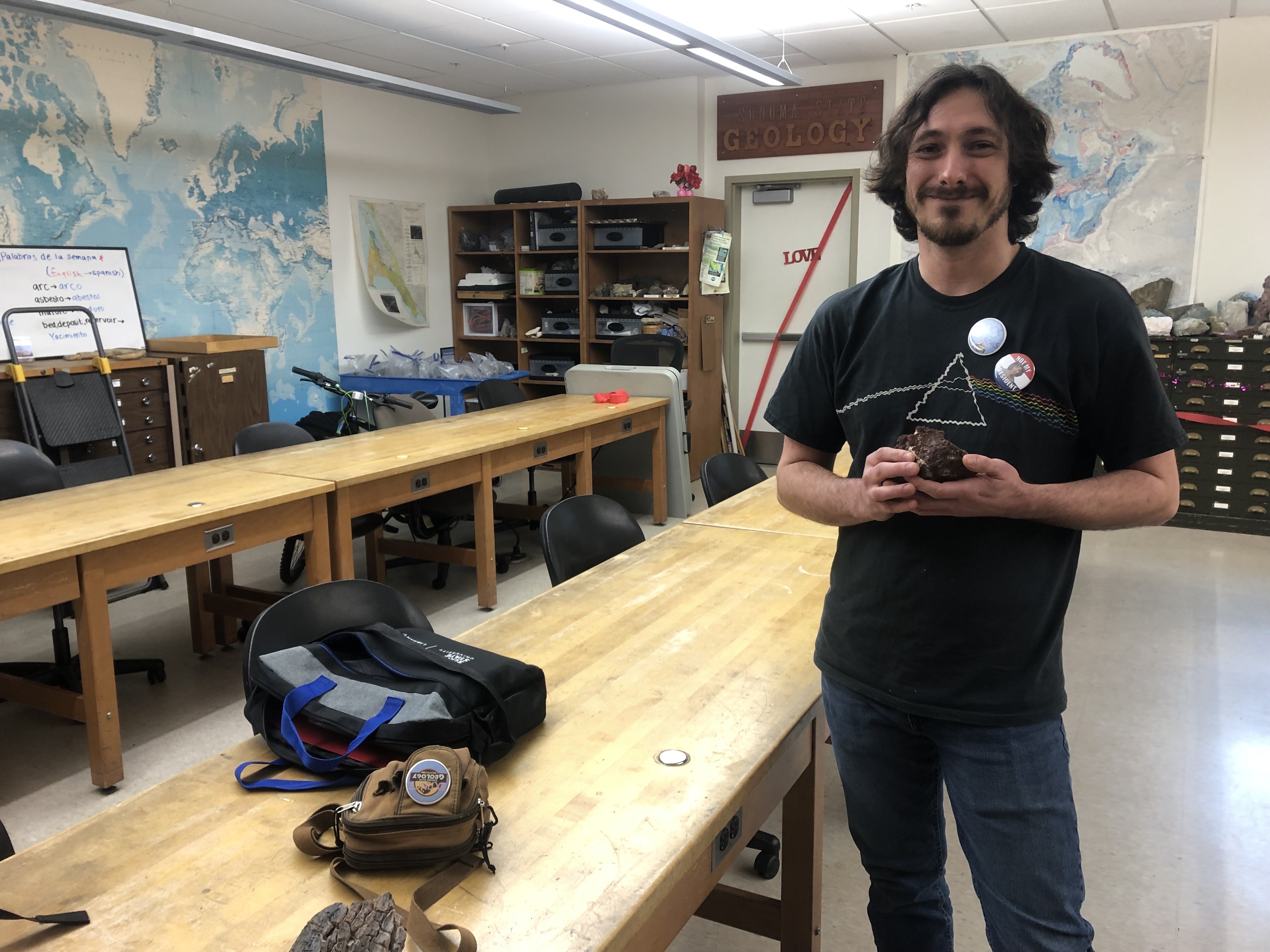
Jackson Kaiser, a student whose fascination with the volcanic landscapes of his native Lake County ignited a passion for geology, embodies the profound loss these cuts represent. He found his intellectual home at Sonoma State, a place where his burgeoning curiosity could be nurtured into a promising career. Now, his chosen department, a cornerstone of his academic journey, faces an uncertain future.
Kaiser could be among the final cohort of approximately 40 geology majors if the university's proposed eliminations are enacted. Tenured and tenure-track geology faculty have reportedly received layoff notices, though some may be retained for temporary teaching roles. The thought of his alma mater disappearing, of a place that has shaped his understanding of the earth, leaves him feeling adrift.
At 36, Kaiser's path to higher education was unconventional. He transitioned from a career in a grocery store produce department, captivated by the intricate geometric beauty of mineral structures. The decision to pursue geology at Sonoma State, alongside his partner, involved a significant commute from Lake County, with their two young children attending the campus's Children's School. He now lodges with classmates during the week, a testament to his unwavering commitment to a better future.
His chosen field carries significant weight, as demonstrated by a crucial geological study in the 1960s that halted plans for a nuclear power plant near a major fault line. In an era of climate change-fueled wildfires and the increasing importance of geological assessments for construction, the demand for geologists is growing. Yet, the very departments that cultivate these essential skills are under threat, leaving experts concerned about a dwindling pipeline of talent.
Kaiser, who will graduate this summer, has been diligently collecting business cards from potential employers in geologic consulting firms. The department's emphasis on frequent field trips has provided him with invaluable hands-on experience in mapping, sample collection, and paleontology. He cherishes the department's traditions, from celebratory watermelon feasts atop mountains to the excavation of a mammoth fossil in 1981. The prospect of these experiences vanishing is a source of deep sorrow.
On the Pitch and Off the Field: Soccer's Uncertain Future
The relentless drizzle did little to dampen the spirits of the Sonoma State University men's soccer team as they gathered for an early morning practice. Players, some traveling from as far as Hawaii, are united by a shared passion for the sport and a looming uncertainty: this could be their final season, regardless of their performance.
Among them is freshman center back Carson Sterling, whose parents were also Sonoma State soccer players, a legacy now hanging precariously in the balance. Junior defender Cameron Fisk, a business marketing major who overcame injuries to play this fall, also faces an ambiguous future. Guiding them is head coach Marcus Ziemer, a veteran of 34 years with the Seawolves, whose own contract is set to expire.
Since Ziemer took the helm in 1991, the men's soccer team has achieved remarkable success, securing eight conference championships and a national title in 2002. However, the university's announcement to eliminate all NCAA sports, including men's soccer, has plunged the program into a state of limbo. Coach Ziemer describes the situation as "a very difficult kind of limbo," with ongoing efforts to advocate for the program's survival.
In the interim, Ziemer and his coaching staff are advising players seeking to continue their collegiate careers to explore transfer opportunities through the NCAA portal. While some players have already received offers, the team's immediate focus remains on preparing for a challenging spring season, which includes matchups against NCAA Division I and semi-professional teams. The camaraderie and dedication on the field remain palpable, a testament to the players' resilience.
During a scrimmage, an assistant coach's impassioned plea for communication and forward-thinking strategy echoed across the slick turf. "So because we’re struggling, should we say, ‘Ehh, f— it, move on.’? Or should we grow through it? Let’s grow through it — let’s grow through it together!" This sentiment of collective growth and perseverance underscores the team's determination to play with pride, even in the face of adversity.
Beyond the Classroom Walls: The Impact on Women's and Gender Studies
In the hushed confines of a basement classroom, students in Sonoma State's Women's and Gender Studies Department were poised to delve into complex theories of queer and trans identity. Their academic pursuits, however, were overshadowed by the imminent threat to their department, a program with a rich history dating back to the early 1970s.
The potential dismantling of the department amplifies concerns among students that historically marginalized groups are facing increased pressure. For Xochilt Martinez Balladares, a major in Women's and Gender Studies and a minor in Chicano and Latino Studies, the department has been a vital source of community and skill-building, crucial for her aspirations in immigration law or social work.
Martinez, who is 32, candidly shared her struggles with feeling out of place on campus, a sentiment that was alleviated by the personalized support she received from a Women's and Gender Studies instructor. "I didn’t get that anywhere else," she stated, highlighting the profound impact of the department's nurturing environment.
While the department typically attracts 25 to 35 majors annually, its courses are a valuable resource for a much larger student body. University officials have confirmed that all professors in the department have been laid off, though they assert a commitment to continuing the teaching of courses supporting women's rights and the LGBTQIA+ community. This assurance, however, does little to assuage the concerns of students and faculty.
Janis Phillips, a 46-year-old education graduate student, questions whether the university's actions align with a commitment to students' social and emotional well-being. She argues that creating an environment where students feel "safe and seen and heard" is a critical predictor of academic success, and the proposed cuts risk undermining this foundation.
The skills cultivated within the department are directly applicable to careers in psychology, marriage and family therapy, and healthcare. A mandatory community service requirement connects students with local organizations addressing issues such as homelessness, sexual assault prevention, and support for LGBTQ youth, underscoring the department's real-world impact.
Despite the looming uncertainty, students are actively engaging with the material, driven by a desire to preserve the legacy of their program for future generations. Professor Don Romesburg notes their dedication to project-based learning, where they generate ideas and reflections, demonstrating a deep commitment to their studies.
The Fading Light of Physics: A Major's Demise
The arrival of a sturdy wooden crate filled with professional-grade laboratory hardware brought a flicker of excitement to Scott Severson's optics class. "It's Christmas in our labs," Severson remarked, a poignant reminder of "better days" for the Sonoma State Physics and Astronomy Department.
The department, which has produced alumni who have led companies and earned advanced degrees, boasts a notable achievement: Professor Lynn Cominsky's involvement in the 2016 documentation of gravitational waves, a discovery that earned her collaborators a Nobel Prize. Cominsky has been instrumental in securing over $43 million in grants for the university.
Despite this legacy of excellence, the Physics and Astronomy Department is slated to phase out its physics major, even though the department itself will not be entirely eliminated. Thirty current majors will be given two years to complete their degrees, while ten first-year students will need to find alternative programs or transfer. Moving forward, physics faculty will focus on teaching courses for students in other disciplines, such as biology and engineering.
One lecturer has already received a layoff notice, and Severson, along with three other tenured faculty members, will absorb the increased teaching load. While tenured faculty are not expected to lose their positions, some may seek opportunities elsewhere or opt for retirement.
The discontinuation of the physics major could significantly impact Cominsky's EdEon STEM Learning program, which develops educational materials to inspire young students in science, technology, engineering, and mathematics. The program relies heavily on Sonoma State undergraduates, including those in physics, for its operations. "None of the research grants I write would have been possible without physics majors," Cominsky stated.
Students like Madison Ambriz, who plans to graduate in the fall of 2025, have been deeply involved in research, including a collaboration to upgrade the Large Hadron Collider. Despite her enthusiasm for physics, she expresses a profound sense of disappointment and helplessness. "It doesn’t matter what we say, doesn’t matter how heartbroken we are, doesn’t matter what the numbers say, they’re still going to cut the [major]," Ambriz lamented. "And it’s just watching something that you love die, and it’s horrible."






 Explore AI Teaching Tools
Comments (0)
Please login to comment
No comments yet
Be the first to comment on this article