
Restorative Justice's Unintended Fallout: Teachers Bear the Brunt as Classrooms Struggle with Discipline
A decade-long experiment in school discipline, designed to foster equity and mend harm, is now facing intense scrutiny. While restorative justice promised a more compassionate approach, educators across the nation report a stark reality: classrooms are more challenging to manage than ever, and teachers are shouldering an unprecedented level of stress. The very strategies intended to improve school climate have, for many, led to a decline in order and accountability, leaving educators feeling unsupported and students without the structure they need to thrive.
The Promise and the Peril of a New Discipline Paradigm
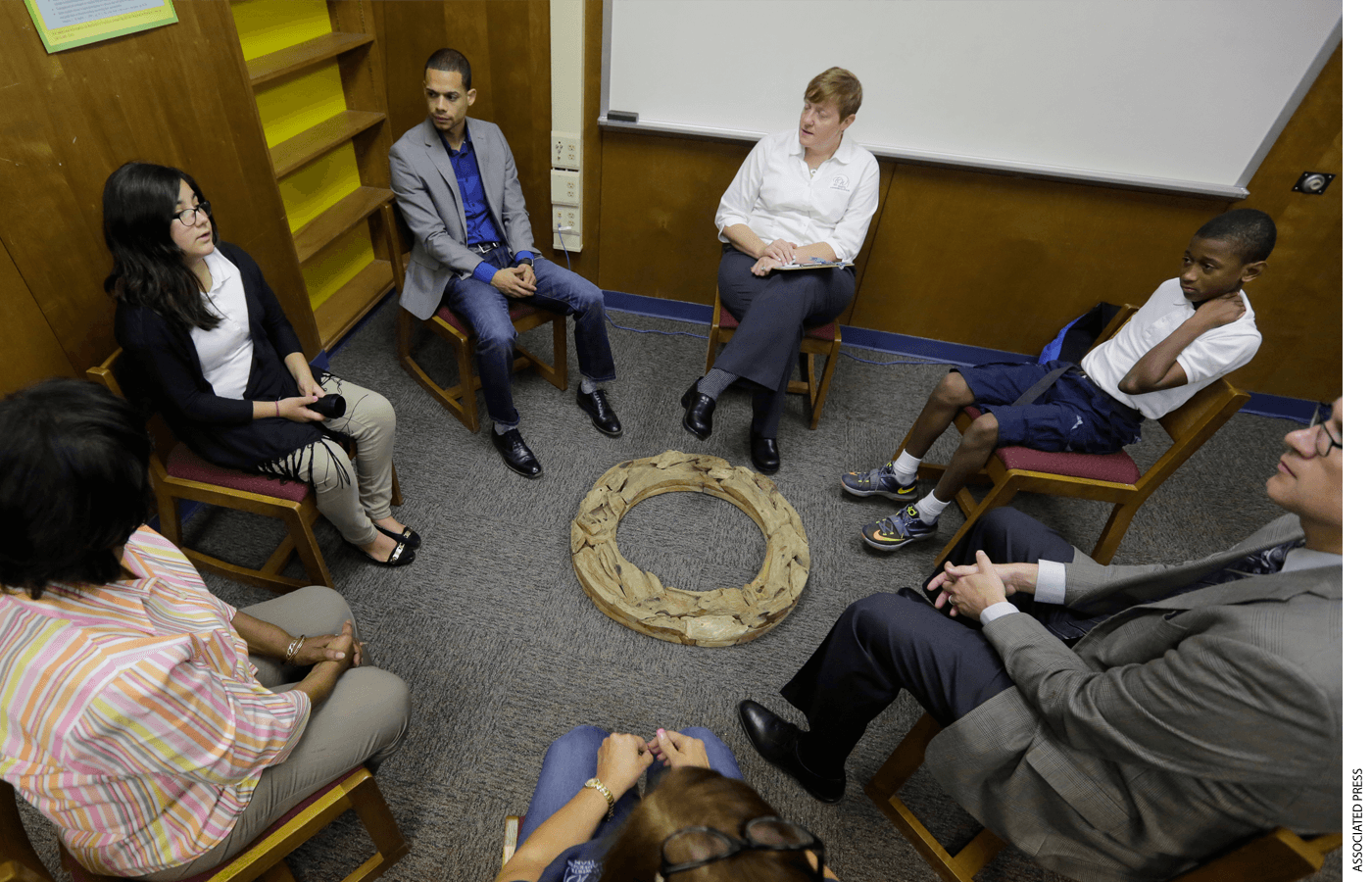
In the mid-2010s, a significant shift began in how schools approached student discipline. The prevailing punitive models, often criticized for their disproportionate impact on certain student populations, gave way to restorative justice (RJ). This philosophy centered on repairing harm, fostering accountability, and strengthening the school community through dialogue and understanding.
The federal government, through guidance in 2014, actively encouraged schools to reduce suspensions and embrace alternatives like RJ. This directive spurred a nationwide movement, with major cities like New York and Los Angeles leading the charge. The aim was to cultivate social-emotional skills and create a more positive and equitable learning environment for all students.
However, the widespread adoption of RJ has yielded complex and often troubling outcomes. Recent surveys reveal a significant increase in teacher stress, with many citing student misbehavior as a primary driver. Educators express a growing sentiment that current discipline policies are failing to adequately support them in managing classrooms, leading to frustration and a sense of diminished authority.
When Equity Trumps Order: The Unraveling of Classroom Management
The push for equity in school discipline, while well-intentioned, appears to have inadvertently created an environment where consistent consequences for misbehavior have become elusive. Many districts implemented policies that made traditional disciplinary actions, such as suspensions, significantly more difficult to enact.
In New York City, for instance, the Department of Education invested millions in RJ programs and simultaneously restricted principals' ability to suspend students. By 2016, suspensions for younger grades were nearly eliminated, and overall suspension lengths were capped. Administrators were often required to seek central office approval for student removals, effectively limiting exclusionary discipline.
This top-down approach, driven by federal and state-level mandates, often dismantled established systems of structure and clear expectations. While the goal was to address racial disparities, the unintended consequence for many schools was a weakening of classroom order, leaving teachers struggling to maintain a productive learning environment.
The Erosion of Teacher Authority
Educators frequently report that the emphasis on restorative conversations, while valuable in some contexts, has replaced meaningful consequences. This shift has led to a perception among students that misbehavior can be addressed with minimal repercussions, fostering a cycle of repeated disruptions.
One common sentiment expressed by teachers is that their administrative support has waned. They feel caught between the expectation to manage student behavior and the limitations imposed by discipline policies that seem to prioritize avoiding suspensions over addressing the root causes of misconduct. This has left many feeling unsupported and questioning the effectiveness of the implemented strategies.
A National Experiment with Mixed Results
The implementation of restorative justice across the country has been far from uniform. While some schools have reported positive impacts on relationships and conflict resolution, broader data suggests a more complex picture, with significant variations in how RJ is practiced and the outcomes it achieves.
A key issue has been the lack of standardized training and accountability systems. Districts often rolled out RJ programs without providing adequate professional development for teachers or establishing clear metrics for success. This led to inconsistent application, with some schools embracing the philosophy wholeheartedly while others struggled to integrate it effectively.
The result has been a national experiment where the effectiveness of restorative justice varies widely, leaving many educators questioning whether the promised benefits have materialized or if the approach has, in fact, exacerbated existing challenges within the school system.
The New York City Case Study: A Microcosm of National Trends
New York City's extensive implementation of restorative justice serves as a significant case study for understanding the broader implications of this disciplinary shift. The city's commitment to RJ, backed by substantial financial investment, aimed to create a more equitable disciplinary landscape.
However, evaluations of the New York City Department of Education's approach revealed critical shortcomings. While the guidance provided a framework for adopting RJ, it lacked essential components like teacher training standards, accountability mechanisms, and robust support systems for students with high needs. This gap in infrastructure contributed to inconsistent implementation and difficulty in measuring tangible outcomes.
Research, including a randomized controlled trial, found no statistically significant differences in school climate, suspension rates, or academic achievement between schools that implemented RJ and those that did not. This suggests that even with significant investment, the intended transformative effects of RJ were not consistently realized.
The Unforeseen Costs: Financial and Educational
The financial investment in restorative justice programs has been substantial, particularly with the influx of federal relief funds following the COVID-19 pandemic. However, the allocation of these funds has often lacked transparency, making it difficult to ascertain the precise amount spent on RJ initiatives or their specific impact.
Many districts included RJ training and climate initiatives within broader budget categories, obscuring a clear accounting of resources. This lack of specificity has made it challenging to evaluate the return on investment and has raised concerns that funds could have been directed toward more evidence-based interventions.
Beyond direct financial costs, there is a significant opportunity cost. Resources diverted to programs lacking demonstrable effectiveness could have been used to bolster classroom management training, provide targeted academic support, or invest in other proven strategies for improving student outcomes. The long-term financial burden now rests on districts managing initiatives that have not demonstrably improved school safety or academic learning.
When Structure Disappears: The Impact on Vulnerable Students
The shift away from consistent, predictable consequences has had a particularly detrimental effect on students who need structure the most. In high-poverty schools, where students often face significant challenges outside of the classroom, the absence of clear rules and reliable enforcement can be deeply destabilizing.
Teachers in these settings report that instruction time is frequently consumed by managing disruptions, as a small number of students with chronic behavior issues can effectively hold classrooms hostage. When consequences are inconsistent or absent, and parental responsibility is not reinforced, the learning environment deteriorates, disproportionately harming students who rely on school for stability.
Research from districts like Pittsburgh and Oakland has highlighted similar patterns of inconsistent implementation and a lack of meaningful accountability. In some cases, evaluations have even indicated negative impacts on academic achievement, particularly for Black students, suggesting that the pursuit of equity through restorative practices has, in some instances, led to unintended negative consequences for the very students it aimed to serve.
A Call for Reset: Rebalancing Discipline and Accountability
As federal directives begin to pivot back towards behavior-based discipline, school districts face a critical juncture. The past decade has provided a valuable, albeit challenging, lesson: restorative justice, when implemented without a robust framework of accountability and adult authority, can undermine the very order necessary for effective education.
The path forward requires a rebalancing of discipline strategies. This involves restoring a degree of authority to educators, ensuring that discipline codes affirm the necessity of consequences, including suspensions, when warranted. A full continuum of behavior-based responses, allowing educators to match interventions to specific behaviors, is crucial.
Districts must also critically re-evaluate how resources are allocated. Instead of investing in broad training sessions with questionable impact, funds should be directed toward building internal behavioral expertise, enhancing classroom management skills for teachers, and providing leaders with the tools to respond swiftly to student needs.
Transparency and Evidence: The Pillars of Effective Reform
For any future investments in school discipline initiatives, transparency and a commitment to evidence-based practices are paramount. Funding should be directly tied to clear metrics, such as reductions in repeat incidents, demonstrable increases in school safety, and improvements in instructional time.
Public reporting and independent evaluations are essential to ensure that programs are delivering on their promises. This accountability will drive a focus on measurable outcomes rather than aspirational goals. The goal must be to create safe and predictable learning environments where every student has the opportunity to succeed.
Ultimately, the national experiment with restorative justice has underscored a fundamental truth: discipline is not an optional add-on to education; it is a prerequisite. For true equity and improved student outcomes to be realized, schools must prioritize restoring order in classrooms, empowering teachers, and ensuring that accountability is a cornerstone of the educational experience.







 Explore AI Teaching Tools
Comments (0)
Please login to comment
No comments yet
Be the first to comment on this article