
Beyond the Bell: Students Demand Deeper Safety, Uncovering a Crisis of Trust in LA Schools
A chilling statistic often dominates discussions of school safety: the number of physical security measures in place. Yet, a growing chorus of students and families in Los Angeles is sounding an alarm that points to a far more insidious threat lurking within school walls – a profound lack of emotional support and a crumbling foundation of trust. This isn't just about preventing external dangers; it's about cultivating an environment where every student feels seen, heard, and truly safe to learn and grow.
From Sidewalks to Support Systems: A Call for Holistic Safety
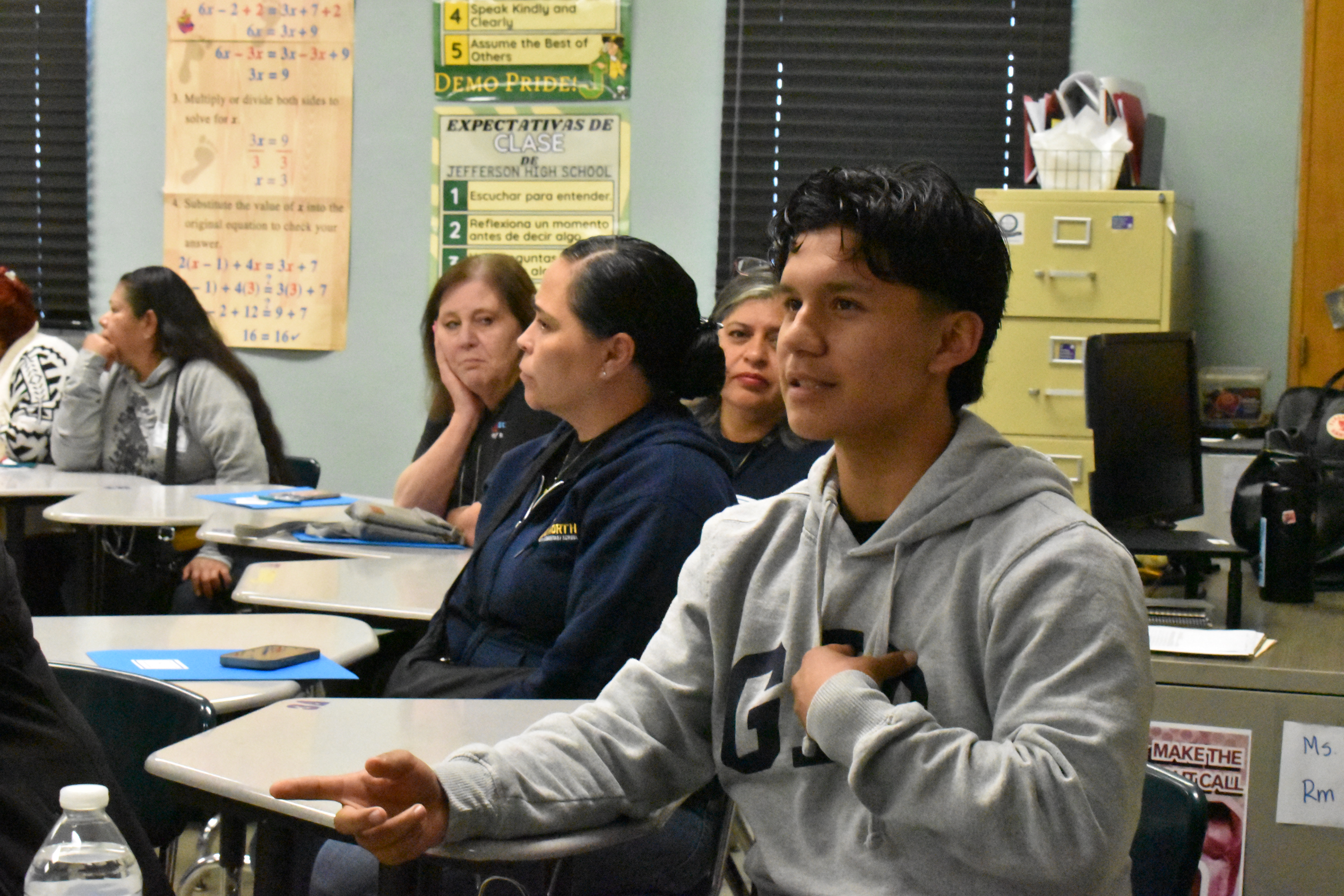
Gustavo Rangel, now a freshman at Abraham Lincoln High School, remembers the day a classmate was struck and killed by a speeding car near Carver Middle School. The tragedy ignited a firestorm of advocacy, culminating in the installation of a much-needed streetlight. "We advocated, and we got a streetlight, and with community power, it wasn’t for just one school," Gustavo shared, highlighting the potent force of collective action. His overarching goal, however, extends far beyond traffic signals.
Gustavo’s vision is for students to "feel more supported inside school." This sentiment echoed powerfully at a recent community event at Jefferson High School, hosted by Los Angeles Unified School District (LAUSD) board member Karla Griego. Here, students and families laid bare the chasm between physical security and emotional well-being, articulating a pervasive sense of unease stemming from mental health struggles and a perceived disconnect with school staff.
While Gustavo initially engaged with the district's Safe Passage program, designed to ensure safe commutes, he quickly recognized a more pressing issue. In a district where a staggering 8,400 students were identified as at risk of suicide last year alone, the greatest threats often originate from within. This reality leaves many students feeling isolated and adrift on campus.
“What’s not working is trust,” Gustavo explained. “Some kids don’t have that bond with teachers, staff members, administrators, and they’re not able to open up.” He stressed the critical need for educators and administrators who can genuinely acknowledge students' circumstances, fostering a sense of belonging and welcome.
The Unseen Scars: Mental Health as the Forefront of Safety
LAUSD officials have openly described the post-pandemic landscape as a youth mental health crisis, marked by a sharp surge in students seeking help for anxiety, post-traumatic stress, depression, and other conditions. While a new contract with the teachers union promises the hiring of over 450 school social workers and pupil services and attendance counselors, this influx will still fall short of the district's estimated needs.
In response to these escalating concerns, Board Member Griego has championed a resolution titled "Wellness Without Silos." This initiative proposes the creation of Integrated Wellness Teams, bringing together educators, administrators, and mental health professionals to collaboratively support students. "Everybody plays a role, and when you work together, and you divide the labor, then you have support in problem-solving," Griego stated, emphasizing the event's purpose: to gather direct input from students and families on the district's vision for community-based safety.
When School Becomes a Source of Fear
For Eloisa Galindo, the definition of student safety is inextricably linked to the support provided by administrators, teachers, and mental health counselors. Her daughter, a senior at Garfield High School, faced a difficult period after experiencing prolonged symptoms from multiple COVID-19 infections, leading to significant school absences.
“She was sent to the principal, who yelled at her and made her cry,” Galindo recounted, detailing how the encounter left her daughter too apprehensive to even approach a pupil services and attendance counselor. This counselor typically assists students and families dealing with chronic absenteeism.
Adding to this sense of vulnerability, Galindo described how encounters with police issuing citations and ongoing immigration raids have made her family feel "criminalized" within their own community. "Students don’t need police, they need resources for mental health," she asserted, drawing a clear line between punitive measures and essential support.
Navigating the Complexities of Support
The district's Safe Passage program, expanded in 2021 following widespread calls to reduce school policing, has shown promise. By deploying trained staff and community partners along student routes, the program has reportedly improved perceptions of safety at approximately 77 participating schools. However, fewer than two-thirds of high school students report feeling safe on campus, and instances of fights and aggression remain elevated since the pandemic.
Teresa Gaines, a parent with two children attending a community school within LAUSD, acknowledged the positive impact of the Safe Passage program on her family's sense of campus security. She and other parents actively volunteer during student drop-off, managing traffic and assisting students. Yet, Gaines lamented that many safety initiatives could be more effective if parents felt more welcomed and less "pushed out" of school processes.
Her children's middle school lacks a parent resource center, a feature present at their elementary school. Gaines noted that many families abandon efforts to navigate the complex paperwork required for volunteering. She recalled an incident where a parent, after submitting incomplete forms, was reprimanded by an office assistant. "She was crying to us, telling two other parents how upset she is, and she’s saying, ‘I feel like taking my kids out of this school,’" Gaines shared.
Research consistently underscores the strong correlation between parent involvement, reduced school violence, enhanced feelings of safety, and improved student retention. With LAUSD experiencing a 4.5% enrollment decline, prioritizing parent engagement becomes not just beneficial, but essential. "The district is worried about enrollment falling, and how do we attract and keep the students and families we have," Gaines observed. "Well, they need to feel safe.”
When Adults Fail: The Devastating Impact of Unsupportive Staff
Antania Barker, an eighth-grader at Audubon Middle School, vividly described a turning point where her sense of safety at school evaporated after a distressing encounter with an academic counselor. Having recently begun intensive group therapy for anxiety, Antania's mother had informed the school of her need to leave an hour early for sessions.
Soon after, Antania recounted, the counselor began suggesting she was a danger to other students, mocked her need for supervision, and publicly disclosed details about her therapy participation. "Instead of rubbing it in my face, she could have come up to me and said something like, ‘Hey, I know what you’re going through. It’s OK. You’re OK here,’" Antania shared. "Instead, she broke me down, tore me apart, talked about how I looked, and said a bunch of other stuff out loud so everybody can hear.”
While U.S. schools collectively invest billions annually in physical safety measures, a report by the Learning Policy Institute highlights that positive school climate and trusting relationships yield the most significant returns on safety. Schools that equip their staff with training in social-emotional learning and mental health foster more respectful environments, leading to fewer fights and less aggression among students.
Despite this evidence, many educators report feeling ill-equipped to address students' mental health needs. Griego's resolution aims to make training in social-emotional learning and positive school climate more accessible to teachers and staff. "Sensitivity training is a good place to start," Antania’s mother, Paula Barker, stated. "I do expect counselors and school staff to have more empathy and less judgment.”
Antania noted that she didn't feel judged by her peers, many of whom also navigate mental health challenges. "It was the adult staff who didn’t know how to handle it," she concluded. "Now, I don’t really want to be at school or be around the adults.”
A Ripple Effect: From Individual Trauma to Community Well-being
Gustavo recalled the profound silence that descended upon his school after his classmate's tragic death. His younger brother, still attending Carver Middle, continues to grapple with feelings of insecurity. "I felt safe because I was able to open up, I was able to speak up for myself, and I was able to create bonds," Gustavo reflected, contrasting his experience with his brother's ongoing struggles.
He sees a glimmer of hope in the increasing availability of resources like therapy and mental health support, which enable some students to open up. The journey toward truly safe schools in Los Angeles is clearly one that demands a fundamental shift, moving beyond bricks and mortar to cultivate environments where every student's mental and emotional health is prioritized, fostering a community where trust and support are not exceptions, but the norm.






 Explore AI Teaching Tools
Comments (0)
Please login to comment
No comments yet
Be the first to comment on this article