
The College Degree is Facing an Identity Crisis: Is the Future an Apprenticeship?
For decades, the pursuit of a four-year college degree has been presented as the golden ticket to a successful future. Yet, a growing wave of skepticism is challenging this long-held assumption. Enrollments are ticking up, but the percentage of high school graduates opting for college has seen a significant decline, raising urgent questions about the value, cost, and relevance of traditional higher education.
This isn't the first time the American education landscape has grappled with such fundamental doubts. The current disquiet echoes a similar period of introspection decades ago, hinting at the possibility of a profound transformation rather than a mere adjustment.
Echoes of the Past: When the Computer Was a Question, Not a Given
In 1976, a prominent magazine cover famously asked, "Who Needs College?" The article detailed growing concerns about the diminishing returns on a degree amidst economic uncertainty and a challenging job market for graduates. The narrative was clear: the singular path of college for every student was being questioned.
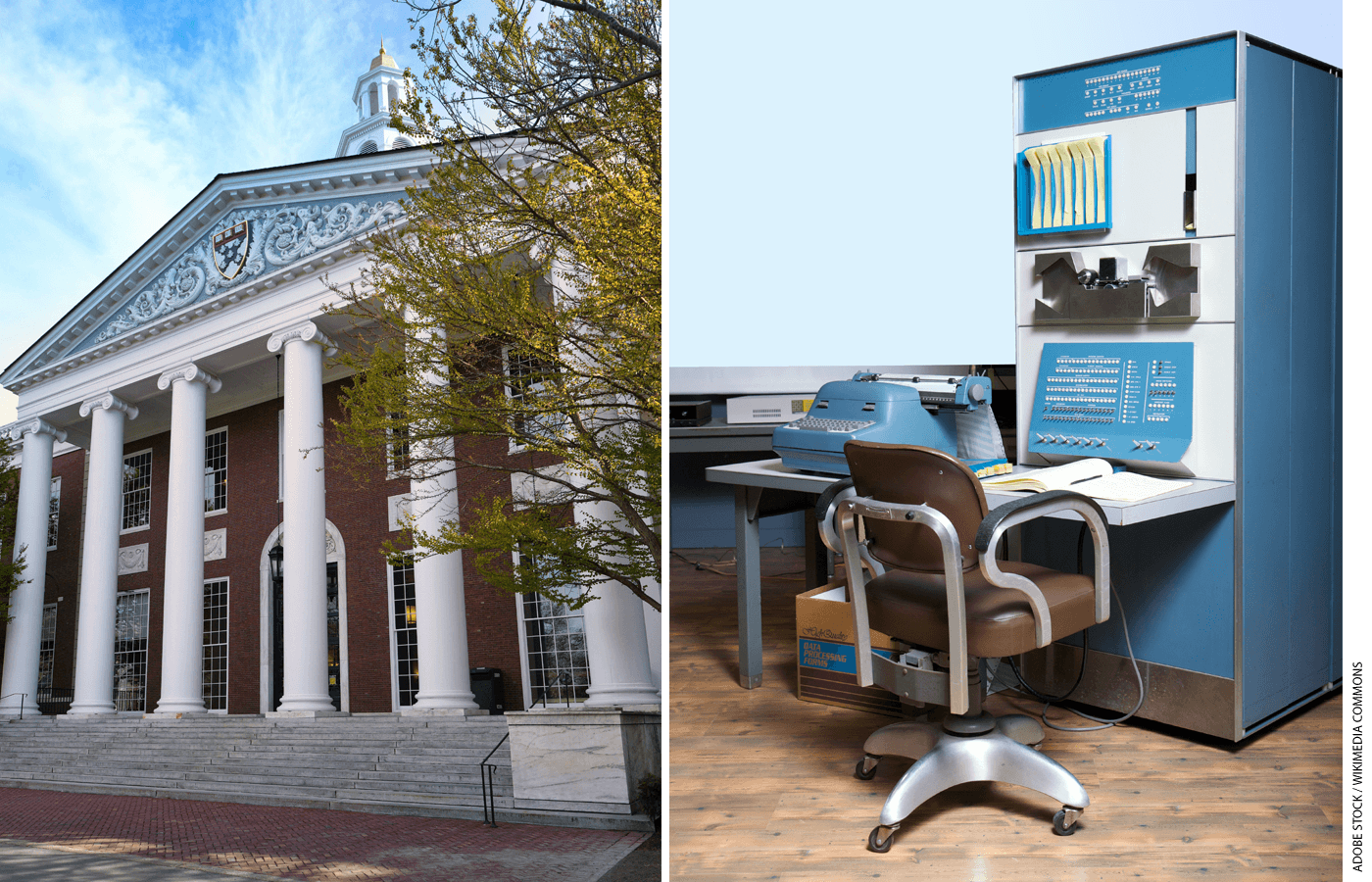
Interestingly, the same year saw a parallel debate unfolding in the burgeoning world of technology. Ken Olsen, the influential leader of a pioneering computer company, declared there was "no reason for any individual to have a computer in their home." His company, a giant in the minicomputer era, was about to be blindsided by a revolution that would eventually lead to "Computers for All."
The shift from skepticism to ubiquity for computers was gradual. Even in 1989, the year a major computer company's fortunes began to decline, the idea of a personal computer in every household was far from settled. A promotional pamphlet from a leading tech firm that year, featuring a cartoon character, humorously posed the question, "Who Needs a Computer Anyway?"
Today, that question sounds almost absurd, a relic of a bygone era. 1989 marked a pivotal moment for both higher education and personal computing. That year, 21 percent of Americans held a bachelor's degree, while only 15 percent of households owned a computer. The subsequent three decades witnessed a dramatic expansion of both, with degree attainment nearly doubling and computer ownership skyrocketing.
The journey of the computer, from a niche, expensive, and complex machine to an indispensable, affordable, and ubiquitous tool, offers a powerful blueprint. It’s a story of disruptive innovation, a concept that could hold the key to reinventing higher education.
The "College for All" Dilemma: Shifting Tides and Lingering Doubts
The "College for All" mantra, once a guiding principle for educational policy, is now facing significant headwinds. Data reveals a stark reality: between 2009 and 2023, the proportion of high school graduates enrolling in college dropped by nearly 10 percentage points, from 70.1% to 60.4%.
This decline isn't just a statistical blip; it reflects a deep-seated skepticism about the return on investment for a college degree. The escalating cost of tuition, coupled with concerns about the time commitment and the perceived disconnect between academic learning and career readiness, are fueling this disillusionment.
States are increasingly re-evaluating the "College for All" objective, recognizing the value of career and technical education as a viable and often more direct pathway to fulfilling careers. This shift signals a potential recalibration of what constitutes valuable post-secondary education.
Some prominent voices in the education sector, who were once champions of the universal college path, now advocate for a future where degrees hold less sway. The question "Who Needs College Anymore?" is being revisited, not as an act of defiance, but as a serious inquiry into the evolving needs of students and the economy.
However, the data still suggests that, on average, the long-term financial benefits of a four-year degree continue to outweigh those of many shorter-term credentials. Yet, even some of the alternative pathways, once hailed as more accessible and affordable, are beginning to exhibit the very problems that have plagued traditional college, such as rising costs and limited capacity.
Disruptive Innovation: A New Framework for Higher Education
The concept of disruptive innovation, famously applied to industries like computing, offers a compelling lens through which to examine the future of higher education. This model describes how complex, expensive, and inaccessible products and services can be transformed into simpler, more convenient, and affordable alternatives that serve a much broader audience.
Consider the evolution of the computer. The early minicomputers, costing hundreds of thousands of dollars and requiring specialized knowledge to operate, were a far cry from the personal computers that would later revolutionize homes and workplaces. Companies that embraced affordability and user-friendliness, like Apple, democratized access to technology.
This disruptive approach contrasts sharply with the traditional education model, which has largely relied on subsidies, grants, and loans to make existing, often expensive, educational products accessible. While these measures have helped students afford college, they haven't fundamentally altered the underlying cost structure or improved completion rates, which remain a concern.
The education sector's response to rising demand has often involved adapting existing models rather than fundamentally reinventing them. Even the advent of online learning, while expanding access, didn't always translate into a significant reduction in cost or a more flexible structure for many traditional institutions.
The current landscape, marked by widespread disillusionment with the traditional college path and a growing demand for practical, career-aligned learning, presents a fertile ground for disruptive innovation. The question is no longer whether college needs to change, but how it will be reinvented.
The Apprenticeship Degree: Bridging Work and Learning
A truly disruptive approach to higher education would focus on creating something simpler, more affordable, and more convenient, directly addressing the core concerns about cost and relevance. This is where the concept of the apprenticeship degree emerges as a powerful alternative.
These programs represent a radical reimagining of undergraduate study, built on the principle of "ABC": Affordable, Based in the workplace, and Credit-conferring for learning at work. In this model, students are employees, earning a salary while simultaneously gaining academic credit for their on-the-job learning.
This structure effectively eliminates the opportunity cost associated with traditional college, where students often forgo income for several years. By integrating academic coursework with paid employment, apprenticeship degrees offer a direct pathway to both career advancement and a recognized degree.
Institutions pioneering this model often focus on a limited number of career pathways, mirroring the strategic product focus seen in successful tech companies. This streamlined approach helps control expenditures and ensures a clear connection between learning and employment.
Instead of relying on broad government subsidies to lower tuition, these apprenticeship programs are designed with inherently low tuitions and a built-in earning potential for students. This model prioritizes student success by ensuring they are financially supported as they acquire valuable skills and knowledge.
For these innovative programs to thrive, the higher education sector must establish clear standards and guardrails. The challenge lies in defining what constitutes "higher" education within an apprenticeship framework and ensuring that these programs offer durable, long-term benefits beyond immediate job placement.
Accrediting bodies will play a crucial role in developing these definitions and measurement standards, a process that should ideally be applied to all degree programs. The federal government's encouragement of innovation among accreditors suggests a more open environment for new types of colleges to emerge.
These future institutions will need to prioritize demonstrable outcomes and tangible value for learners, moving away from the "College for All" mindset towards a "Career-Connected Learning for All" approach. They must be disruptive models that dismantle the opportunity cost of attendance through accessible, straightforward pathways that clearly lead to meaningful careers.
Ultimately, these reinvented colleges must retain the core value proposition that draws individuals to higher education in the first place, offering a pathway to personal and professional growth. Just as the personal computer was not just a cheaper version of a minicomputer but a fundamentally different and more accessible device, the future of higher education may lie in a radical reinvention from within.
The pressure for such transformation is immense. It's time to shift the conversation from questioning the necessity of college to defining what college should be in the 21st century—a question that the apprenticeship degree model is poised to answer.






 Explore AI Teaching Tools
Comments (0)
Please login to comment
No comments yet
Be the first to comment on this article