
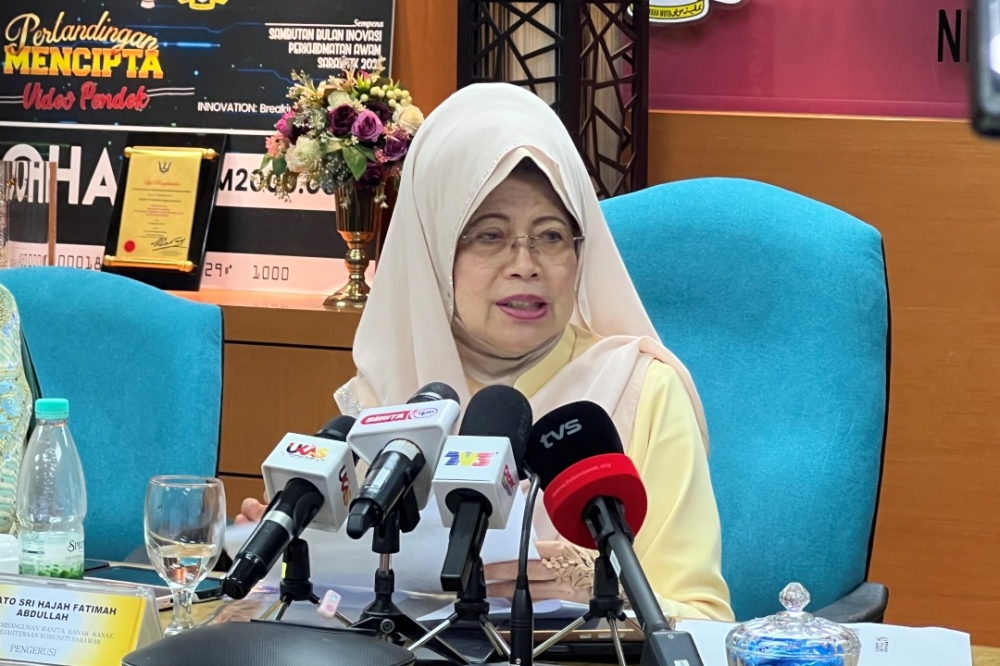
New Law for Elder Care: Sarawak Minister Urges Holistic Approach, Citing Family Support Gaps
A proposed federal law mandating children's care for aging parents is drawing scrutiny, with a prominent Sarawak minister emphasizing the need for policies that acknowledge the complex realities faced by families across Malaysia. The intention behind the legislation is welcomed, but its practical application requires a nuanced understanding of diverse societal structures and economic pressures.
Beyond Obligation: The Need for a Supportive Framework
State Minister of Women, Childhood and Community Wellbeing Development Sarawak, Datuk Seri Fatimah Abdullah, has voiced a crucial perspective on the federal government's contemplation of a new law concerning the care of elderly parents. While the principle aligns with cherished cultural and religious values, she stresses that the implementation must be far-reaching and adaptable.
“We hope it would be very holistic, very extensive, taking into account the Sarawak context as well: what it is like in longhouses, in villages, and in urban areas,” Fatimah stated, highlighting the vast differences in living arrangements and community support systems within the state.
This call for comprehensiveness stems from a deep understanding of the varied capacities of families. The minister pointed out that many children tasked with elder care are themselves struggling with financial instability and the demands of supporting their own dependents.
“When we come up with the policy later, we also need to look at the situation of the children who need to care for their parents, and what support systems need to be in place,” she elaborated, referencing research indicating a strong preference among senior citizens to age in their own homes.
Data from the Welfare Department reveals that senior citizens constitute a significant portion of those seeking welfare assistance. This trend underscores the economic challenges many families face, even when they have children available to provide care.
“It is stated that although they have children, their children often do not have stable incomes and have their own families to support. That is commonly mentioned,” Fatimah observed, painting a clear picture of the financial tightrope many families walk.
Fatimah's advocacy extends to ensuring Sarawak's unique circumstances are thoroughly considered during the policy-making process. Her proactive engagement aims to prevent a one-size-fits-all approach that could inadvertently disadvantage communities within the state.
Citizenship Applications: A Closer Look at Sarawak's Cases
Beyond the discussions on elder care, the minister also provided an update on citizenship matters in Sarawak, specifically focusing on applications made under Article 15A. These applications, which often involve complex family situations, continue to be a significant area of focus for the state.
The Special Committee on Citizenship Status (JKKSK) Article 15A Sarawak Level No. 2/2026 monthly meeting provided a platform to review these cases. A total of 32 applications were tabled during the recent session.
A striking pattern emerged: applications involving illegitimate children, those born before their parents' marriage was formally registered, constitute the largest category. Of the 32 applications reviewed, 21 fell into this classification.
Following closely were cases involving foster children, where individuals other than biological parents are providing care. Ten such applications were discussed. A single application for an adopted child was also part of the proceedings.
Looking at a broader timeframe, between 2024 and May 8 of this year, Sarawak has received 314 citizenship applications under Article 15A. The overwhelming majority, 191 cases, involved illegitimate children.
Guardianship cases accounted for 98 applications, while 25 applications were related to adopted children during the same period. These figures highlight the diverse pathways through which children seek citizenship.
Streamlining the Process for Families
The committee plays a vital role in facilitating and verifying these applications before making recommendations. Minister Fatimah stressed the importance of applicants submitting all required documentation to avoid potential rejections.
“There are cases where birth certificates are not included, making the applications incomplete. We need applicants to complete the forms because we do not want their applications to be rejected,” she urged, emphasizing the need for thoroughness from the applicants' side.
It is crucial to remember that the final decision on all citizenship applications rests with the Home Ministry, adhering to established regulations and policies. The committee's role is advisory, aiming to present well-prepared cases.
The success stories are also notable. Between 2023 and 2024, 141 applications have been approved, and these individuals are currently in the process of obtaining their citizenship certificates. Furthermore, from 2023 to April 2026, a remarkable 1,037 applicants have successfully received their citizenship certificates.
These figures underscore the ongoing efforts to address citizenship applications, particularly for children facing unique circumstances. The minister's insights offer a vital perspective on how policy, whether for elder care or citizenship, must be grounded in the lived experiences of the people it aims to serve.




 Explore AI Teaching Tools
Comments (0)
Please login to comment
No comments yet
Be the first to comment on this article