
Beyond Silos: How Middle School Science is Forging the Next Generation of Problem-Solvers
As Earth Day approaches, the urgent questions about our planet's future echo louder than ever. We ponder how to heal our environment, safeguard delicate ecosystems, and accelerate crucial innovations. While policy and cutting-edge technology often dominate these discussions, a more fundamental question is frequently overlooked: are we truly equipping the next generation to confront challenges that defy single-discipline solutions?
The defining crises of our era—from climate change and biodiversity loss to water scarcity and global health—are not confined to biology, physics, or earth science alone. They are intricate webs of interconnected phenomena. Preparing the innovators and leaders of tomorrow demands more than rote memorization of scientific facts; it requires cultivating the ability to forge connections across diverse fields and to grasp complex systems as real-world scientists do.
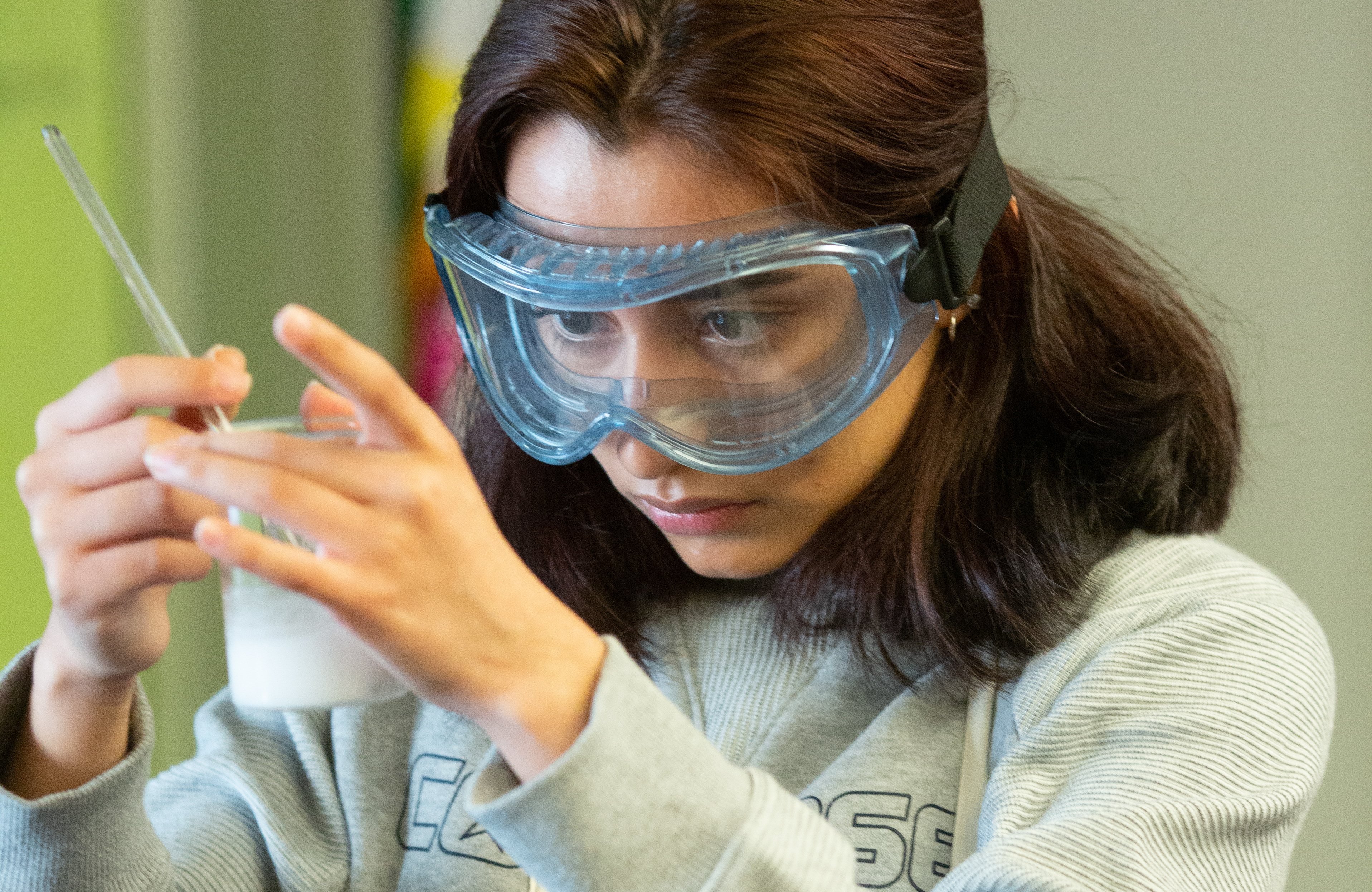
This vital skill development doesn't originate in graduate programs or sterile research labs. It often takes root much earlier, in surprisingly fertile ground: the middle school science classroom. This period is pivotal for students to nurture their burgeoning interests and solidify their identity as capable individuals who can engage with science.
The Integrated Science Imperative
Schools face a critical choice: they can perpetuate the outdated notion that science exists in isolated boxes, teaching biology one year and chemistry the next. Or, they can embrace an integrated approach that mirrors the collaborative, real-world practice of science, grounded in pressing contemporary questions.
National standards, while not dictating specific year-by-year curricula, provide a strong framework for this integrated model. The Next Generation Science Standards, for instance, organize learning expectations across the sixth-through-eighth-grade band, rather than segmenting them annually. This structure emphasizes explaining phenomena observed in the natural world and fosters connections across life, physical, and earth and space sciences through shared core ideas and overarching concepts.
Many states are actively translating this flexibility into concrete educational design. Texas and Ohio, for example, now expect students to engage with all three scientific domains each year. California's preferred model for grades six through eight explicitly "interweaves science disciplines," a pedagogical approach deemed most effective for student learning by the state's expert panel.
Real-World Phenomena Demand Real-World Connections
This shift reflects a simple, undeniable reality: the most significant questions students encounter—about weather patterns, water resources, energy systems, and the intricate workings of ecosystems and human societies—do not arrive neatly sorted into disciplinary categories. When students explore every scientific domain annually, they become far better equipped to make sense of the complex world they inhabit.
The movement toward integrated, multidisciplinary science instruction is already gaining significant momentum. A recent analysis examining nearly 2,200 middle schools nationwide revealed that a substantial 83% now offer multidisciplinary science courses. An additional 14% provide a blend of integrated and single-discipline options, indicating a clear trend away from purely siloed instruction.
In some instances, discipline-specific courses may serve as enrichment opportunities, offering advanced learners a chance for deeper dives, mirroring the increasing specialization seen at the higher education level. However, even in these specialized contexts, the most formidable scientific challenges invariably require cross-disciplinary collaboration. All students, regardless of their chosen path, benefit immensely from opportunities to think and problem-solve across different scientific fields.
The Shifting Landscape of Science Education
The data suggests that instruction cutting across scientific domains is no longer a niche alternative; it is rapidly becoming the standard. This evolution is profoundly important because it more accurately reflects the authentic practice of science.
In an era where challenges like climate change, public health crises, and the pursuit of sustainability demonstrably transcend disciplinary boundaries, today's middle school science classrooms are quietly but effectively preparing students to think broadly, collaborate effectively, and apply their knowledge with adaptability.
This preparation offers a compelling reason for optimism, particularly as Earth Day prompts reflection on our planet's future. However, fully realizing the potential of this pedagogical shift requires sustained focus not only on what students learn but also on the robust systems that enable this learning to flourish.
Elevating Science in the Curriculum
At the state level, this means prioritizing science education with the same gravitas afforded to English language arts, literacy, and mathematics. California is leading by example, integrating science assessments into its statewide school dashboard, signaling a growing emphasis on science instruction from the early grades.
Yet, a dashboard alone cannot catalyze this transformation. Educators require high-quality instructional materials and meaningful professional development opportunities. These resources are essential to equip teachers with the confidence and skills needed to seamlessly connect concepts across disciplines.
Beyond fostering intentional integration across the sciences, deepening connections between science and other core subjects, such as literacy, can further align how students investigate phenomena with how they read, write, and reason about the world. Such investments are ultimately investments in the next generation of thinkers.
These future innovators will be tasked with navigating and responding to an increasingly complex global landscape, a task that necessitates working across disciplines. This Earth Day, let the conversation extend beyond identifying the solutions we need to critically examining how we prepare the individuals who will devise them.
The most pressing challenges facing our planet will not be conquered by a single field of study. Today's classrooms, by embracing integrated science learning, are already charting a powerful course forward, shaping the minds that will tackle the earth's most complex problems.







 Explore AI Teaching Tools
Comments (0)
Please login to comment
No comments yet
Be the first to comment on this article