
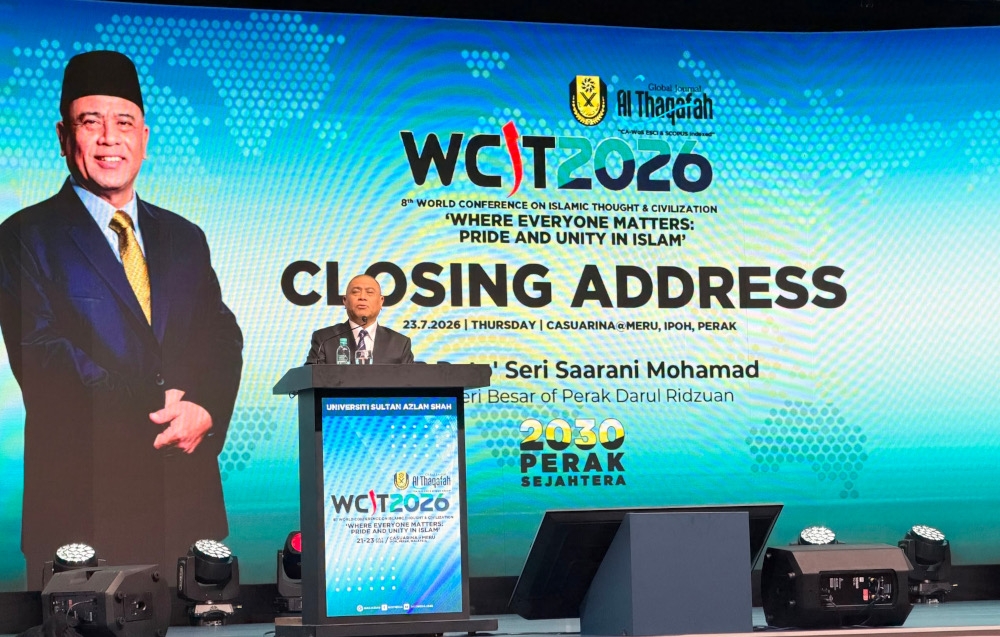
AI's Ascent: Perak Leader Calls for Critical Thinking and Ethics to Navigate Societal Shift
In an era defined by rapid technological advancement, a prominent leader in Perak is sounding a crucial call to action for the younger generation. The message is clear: as artificial intelligence and automation fundamentally reshape our world, the ability to think critically and act ethically must become paramount.
This isn't just about keeping pace with innovation; it's about ensuring that technology serves humanity, not the other way around. The future demands more than just digital literacy; it requires a deep understanding of responsibility and a commitment to human values.
Beyond the Algorithm: Cultivating Essential Human Skills
The traditional focus on academic achievement is no longer sufficient. Datuk Seri Saarani Mohamad, the Menteri Besar of Perak, emphasized that education must now prioritize equipping young people with robust critical thinking and problem-solving capabilities. These are the very skills that will allow them to navigate the complexities of a world increasingly influenced by AI and the digital economy.
The landscape of work and daily life is undergoing a profound transformation. From automation in industries to the rise of creative technologies, the skills needed to thrive are evolving at an unprecedented rate. Saarani's address at the 8th World Conference on Islamic Thought and Civilisation (WCIT) highlighted this urgent need for a redefined educational approach.
Harnessing Technology's Promise, Grounded in Ethics
Artificial intelligence and automation offer immense potential for increased productivity and the creation of new economic avenues. However, Saarani cautioned that this progress must be guided by a strong ethical compass. The pursuit of innovation cannot come at the expense of fundamental human values like privacy and security.
The challenge lies in ensuring that technology's benefits are realized without compromising the dignity and well-being of individuals. This requires a proactive approach to integrating ethical considerations into every stage of technological development and deployment.
Empowering Future Innovators
Young people are not just passive consumers of technology; they are its future architects. Saarani stressed the importance of providing them with the necessary knowledge, training, and opportunities to become creators and leaders. This empowerment is key to shaping a future where technology is a force for good.
When every young person has the chance to learn, innovate, and contribute, society truly embraces the principle that "Everyone Matters." This is not merely a conference theme but a collective responsibility that underpins a just and equitable future.
Safeguarding Human Dignity in a Changing World
The conversation around societal progress must extend beyond technological frontiers. Saarani underscored that fundamental rights such as cleanliness, sanitation, and access to healthcare are non-negotiable. These are essential components of human dignity, deeply rooted in the principles of preserving life.
This responsibility is a shared one, requiring concerted effort from governments, families, educational institutions, workplaces, and the broader community. A holistic approach is necessary to ensure that no one is left behind in the pursuit of societal advancement.
Navigating Complex Threats: Unity and Trust as Cornerstones
The modern world faces a complex array of threats, from extremism and organized crime to sophisticated cyberattacks and the manipulation of information. Saarani warned that even the most robust defense systems are vulnerable if public trust erodes and societal divisions deepen.
Building national security and resilience requires fostering a profound sense of belonging. Every citizen must feel respected, protected by the rule of law, and afforded fair opportunities to contribute to the nation's future. This unity is built on shared values and mutual respect.
The Wisdom of Diversity
True solidarity does not demand the erasure of differences but rather the wise management of diversity. Saarani emphasized that unity is forged not through empty slogans but through a deep-seated conviction that every individual is valued and has a rightful place in society.
This inclusive approach is essential for creating a cohesive and strong society capable of overcoming shared challenges. It acknowledges the richness that diversity brings and seeks to harness it for collective progress.
Global Cooperation: A Imperative for the Muslim World
Addressing pressing global challenges, from geopolitical tensions and humanitarian crises to climate change and economic instability, requires a strengthened culture of mutual cooperation. Saarani highlighted the critical need for the Muslim world to enhance its collaborative efforts.
Closer partnerships in areas such as economics, education, research, and human capital development are vital. These collaborations can unlock new solutions and foster greater stability and prosperity on a global scale.
From Ideas to Impact: The True Measure of Progress
The ultimate success of initiatives like the WCIT lies not just in the ideas generated but in their translation into tangible policies, research, and actionable programs. Saarani expressed hope that the recommendations from the conference would be developed into practical applications that can be evaluated for their impact.
The Perak government remains committed to supporting endeavors that cultivate a culture of knowledge, innovation, social harmony, and international cooperation. These efforts are crucial for the well-being of its people and the advancement of the nation, ensuring that the opportunities presented by technology and societal change are harnessed for the benefit of all.




 Explore AI Teaching Tools
Comments (0)
Please login to comment
No comments yet
Be the first to comment on this article