
Public Schools Face a Choice: Listen or Lose Families to a Shifting Educational Landscape
The educational landscape is undergoing a seismic shift, with an increasing number of families exploring alternatives to traditional public schooling. This exodus, amplified by recent global events, is sending a clear message to public school leaders: the status quo is no longer sufficient. The question remains whether these institutions will heed the call for change or continue to lose ground to a growing array of educational options.
The Rise of the "New" Homeschooler
The pandemic accelerated a trend that was already simmering: a growing dissatisfaction with the traditional public school model. For many families, the disruptions of remote learning and the perceived shortcomings of their local schools became a catalyst for exploring new educational avenues. This has led to a significant and sustained increase in homeschooling, transforming it from a niche choice to a mainstream consideration for a substantial segment of the population.
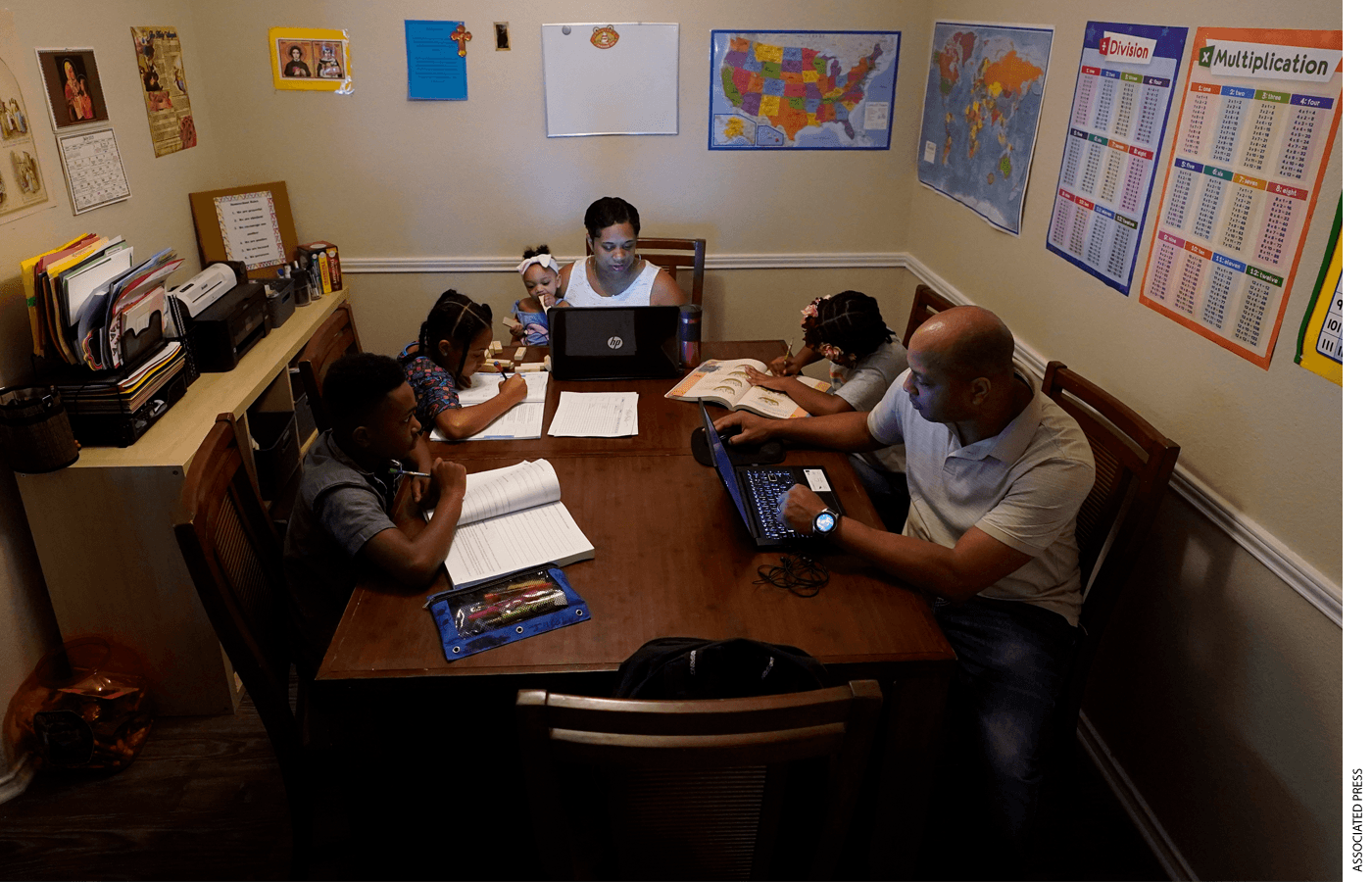
Consider the experience of families like the Browns. Once committed to brick-and-mortar public education, the pandemic prompted a pivot to homeschooling. This shift wasn't a temporary measure; it became a permanent reevaluation of their children's educational journey. The Browns' story is not isolated; it represents a broader movement of parents seeking more tailored and responsive educational environments for their children.
Innovative Public School Experiments
In response to this evolving demand, some forward-thinking public school leaders are beginning to view school choice not as a threat, but as a valuable source of insight. Instead of resisting the movement of families, they are actively seeking to understand the underlying motivations and to adapt their offerings accordingly.
Across the country, innovative models are emerging. In rural North Carolina, a public school district is piloting a microschool approach for middle schoolers. These students benefit from AI-supported learning and gain practical entrepreneurial skills by managing a real-world Airbnb venture. This hands-on, project-based learning offers a stark contrast to traditional classroom structures.
Similarly, in rural Indiana, a district leader was inspired to launch a nature-based public microschool. This initiative was a direct response to observing families who felt traditional schools were not a suitable fit for their children's unique needs and learning styles, leading them to consider homeschooling.
The Imperative to Understand "Different"
These experiments, though small and in their nascent stages, highlight a critical understanding gaining traction among educational leaders: families are actively seeking "different." This "different" encompasses a wide spectrum of desires, from greater flexibility and personalized instruction to specialized programs and stronger connections to real-world applications.
Paul Hardesty, President of the West Virginia Board of Education, articulated this new reality with stark clarity. He stated that public schools are "competing for enrollment, whether we want to believe it or not." His proposed solution is a call for public schools to become "more accommodating, more receptive and more accessible to parents and students." This mindset shift is crucial for survival and relevance in today's educational marketplace.
To truly become more responsive, public schools must move beyond assumptions and gather concrete data. Understanding precisely why families are choosing to leave and what they are seeking in alternative educational settings is paramount. This information is the bedrock upon which effective strategies for retention and innovation can be built.
Strategies for a Choice-Rich Environment
The response to this growing demand for choice does not need to be uniform across all districts. Instead, it should be tailored to the specific needs and resources of each community. Some districts are finding success by creating smaller, more agile learning environments that can adapt quickly to student needs.
Others are focusing on expanding career-connected pathways, equipping students with marketable skills and industry certifications before they even graduate. In Alabama, for instance, Jefferson County Superintendent Walter B. Gonsoulin Jr. spearheaded the creation of over 20 high school career academies, offering students valuable industry credentials.
Effective communication is also a vital component. In Des Moines, district leaders are proactively using enrollment data and direct parent outreach to understand departure trends and to clearly articulate the diverse range of options already available within their public school system. This proactive engagement helps to bridge the information gap that often leads families to look elsewhere.
Highlighting the Breadth of Public Options
North Carolina is embracing a similar strategy, actively working to showcase the rich tapestry of educational choices available within its public school system. The Department of Public Instruction's "Find Your Fit, Build Your Future" initiative aims to illuminate the diverse pathways available, from early college high schools and career and technical education credentials to gifted programs, magnet schools, charter schools, virtual learning, and specialized programs designed around community strengths.
This approach is a smart way to leverage the concept of choice competition. The goal is to demonstrate that "different" does not necessarily mean opting out of public education altogether. By highlighting existing and new public options, schools can retain families who are seeking specialized or alternative learning experiences.
These initiatives underscore a powerful truth: public schools are not powerless in the face of increased school choice. They possess the capacity to develop new programs, communicate their offerings more effectively, and cultivate stronger, more trusting relationships with families. However, the success of these efforts hinges on the quality of the information that informs them.
The Crucial Role of Data in Understanding Choice
For school leaders to respond effectively to the dynamics of school choice, they must possess a clear understanding of what families are choosing away from and, more importantly, what they are choosing toward. North Carolina provides a compelling case study, as it simultaneously works to promote intra-district choice while grappling with a significant and persistent rise in homeschooling.
In the 2025–26 school year, North Carolina reported an estimated 152,897 students ages 6 to 17 enrolled in 95,190 homeschools. While homeschool openings saw a dramatic surge during the pandemic, from 9,481 new openings in 2019–20 to 19,294 in 2020–21, the trend has remained elevated. In 2025–26, the state recorded 12,643 new homeschool openings, a figure substantially higher than pre-pandemic levels.
When a sector of education experiences such significant growth, public school leaders have a responsibility to investigate not just the numbers, but the underlying reasons. Understanding the "why" behind these choices is critical for developing targeted and effective strategies.
Unpacking the Motivations Behind Homeschooling
North Carolina's homeschool registration process offers a unique opportunity to gather this vital information. The state's system invites parents to select a primary reason for homeschooling from a provided list, including:
- Dissatisfied with the public school system
- The coronavirus pandemic
- Child is advanced and requires individualized and specialized instruction
- Child has special needs that require individualized and specialized instruction
- Dissatisfied with my child's current private school
Parents also have the option to provide an open-ended response. While a single-choice format necessarily simplifies complex motivations, these stated reasons offer a valuable snapshot of the most pressing concerns for families at the point of registration.
The most recent data reveal a striking pattern. Among homeschool registrations with a stated reason in 2025–26, a significant 51.5 percent cited dissatisfaction with the public school system. Another 20.6 percent indicated special needs, 6.4 percent sought to accommodate an advanced learner, and 4.1 percent expressed dissatisfaction with a private school.
Other reported reasons, though less frequent, include travel or flexibility needs, bullying or safety concerns, mental health or anxiety, health or medical reasons, religious beliefs, sports or athletic commitments, or a combination of overlapping factors.
A Shift in Parental Concerns
The stated reasons for homeschooling have evolved considerably over time. In the 2020–21 academic year, the coronavirus pandemic was the dominant factor, cited by 54.1 percent of respondents. However, by 2025–26, the pandemic had largely receded as a primary justification.
Instead, dissatisfaction with public schools and the need for specialized instruction for students with special needs have emerged as the two most commonly cited reasons for establishing a homeschool. While these categories are broad and likely overlap in practice, the shift suggests that parental concerns have moved from acute, pandemic-related disruptions to more enduring educational considerations.
This evolving pattern should prompt serious reflection among public school leaders. The percentage of parents citing public school dissatisfaction has surged from 25.6 percent in 2020–21 to 51.5 percent in 2025–26, making it the leading reason for homeschooling. This figure is more than twelve times higher than the rate of private school dissatisfaction.
Moving Beyond Simple Explanations
These findings challenge simplistic explanations for the rise in homeschooling, such as viewing it solely as a pandemic artifact, a lifestyle choice, or an ideologically driven movement. In North Carolina, and likely in many other states, a substantial number of parents are expressing a direct and clear message: the public school system is not meeting their child's needs.
To its credit, North Carolina is taking proactive steps to amplify parental voices. Superintendent Maurice "Mo" Green has launched a statewide Parent Advisory Council aimed at strengthening family engagement, elevating informed parental perspectives, fostering trust, and empowering parents to shape the future of public education.
Former Superintendent Catherine Truitt's earlier Parent Advisory Commission also recognized the importance of cross-sector dialogue, intentionally including representatives from traditional public, charter, private, and homeschool communities. Her rationale was clear: "If we're going to be the first choice for families, then we need to understand why some families are choosing not to send their kids to us."
Leveraging Homeschool Registration for Deeper Insights
Homeschool registration processes present another valuable opportunity for gathering crucial feedback. States that already require homeschool notification or registration should consider adding a few optional, carefully designed follow-up questions. These questions could probe deeper into the specific reasons for dissatisfaction or the unmet needs of advanced learners and students with special needs.
For instance, if a parent expresses dissatisfaction with a previous school, asking about the specific drivers—such as safety concerns, academic rigor, school culture, special education services, lack of flexibility, or limited program options—could provide invaluable data. Similarly, for families seeking specialized support for advanced or special needs students, understanding the nature of the desired customization is key.
This type of granular data could benefit the entire educational ecosystem. District leaders would gain precise insights into why families are leaving the public sector. Private schools could learn from parents who find their offerings unsatisfactory. Charter schools, microschools, and hybrid programs could better align their services with parental desires. Policymakers could identify broader trends by region, grade level, and student need.
The Path Forward: Learning from Choice
Enhanced data collection would significantly strengthen the constructive work already underway in many public school districts. The most effective public school leaders are not shying away from the reality of school choice; they are actively learning from it.
They are innovating by creating new public learning models, diligently highlighting pathways that families may not be aware of, and establishing more robust channels for parental input. Implementing better homeschool registration questions would serve as a powerful catalyst for these efforts.
When families articulate that the public school system is not the right fit for them, educational leaders have a critical opportunity. By seizing this moment to ask "why," meticulously analyze the responses, and translate those learnings into more accommodating, receptive, and accessible educational experiences, public schools can better serve the families they aim to educate and inspire.





 Explore AI Teaching Tools
Comments (0)
Please login to comment
No comments yet
Be the first to comment on this article