
Screens in Schools: Backlash is Justified, But Banning Tech Isn't the Solution
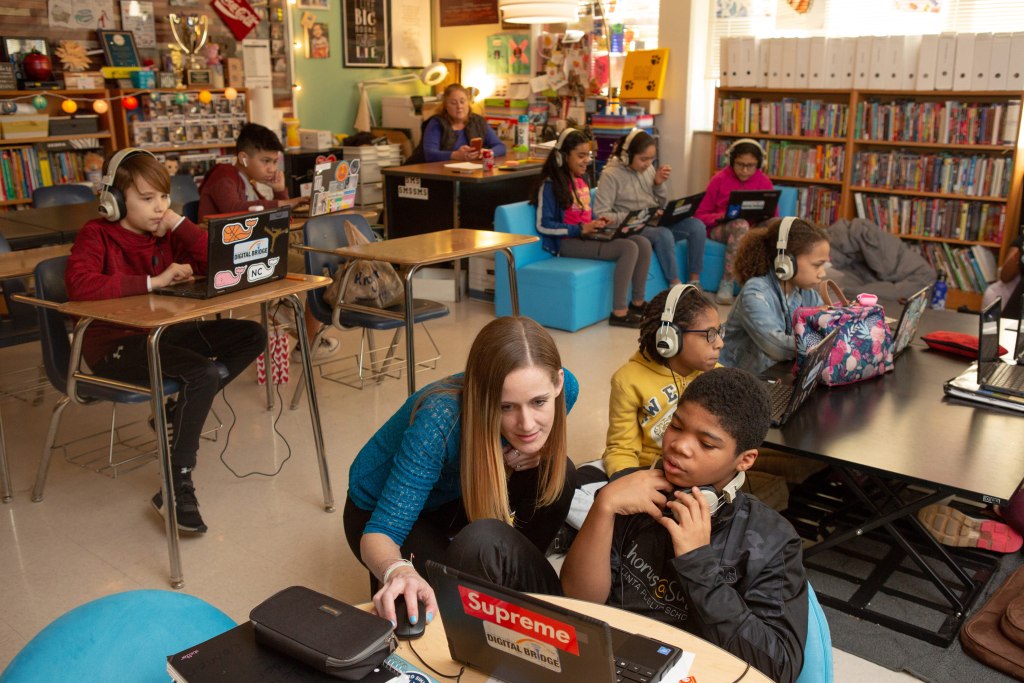
The familiar scene plays out in countless American classrooms: rows of students, heads bowed over glowing tablets, earbuds creating a bubble of isolation. Some navigate digital reading programs, others have already zipped through assignments and are seeking new digital diversions. The teacher, a solitary figure, circulates through this quiet digital sea. This is often presented as "personalized learning," a metric of engagement logged somewhere in the ether. Yet, ask anyone within those four walls, and you'll likely hear a different story.
The Uncomfortable Truth About Ed Tech's Promise
For over a decade, I've been immersed in the world of education technology, even contributing to the creation of tools that now find their way into classrooms. My journey has led me to a conclusion that might seem counterintuitive: the widespread backlash against educational technology is, in many ways, entirely warranted. However, the current discourse often misses a more fundamental point.
Parents are absolutely right to scrutinize whether the screens their children interact with daily are genuinely enhancing their learning. Policymakers are correct to demand concrete evidence of efficacy from the industry. And the nation's leading teacher union's call for caution regarding screen time and nascent AI in elementary education is a responsible stance.
These are not radical positions; they are earnest reflections of concerns educators and parents have voiced for years. The growing unease about the impact of screens on children's mental well-being, attention spans, and academic progress has transformed a quiet worry into a significant public debate.
Beyond Blanket Bans: Finding the Right Balance
Yet, when the response to these valid concerns devolves into sweeping prohibitions that fail to distinguish between genuine learning tools and mere distractions, we aren't solving the problem. We are, in essence, sidestepping it.
To abandon technology entirely is not an act of protection; it is an abdication of responsibility. Today's students are entering a world fundamentally shaped by digital forces, a world where digital fluency is not a luxury but a necessity. A middle schooler who cannot critically evaluate online information or grapple with the ethical implications of emerging technologies is not a student who has been shielded; they are a student who has been left unprepared.
The path forward is not to reject educational technology wholesale. Instead, the answer lies in demanding higher standards, cultivating superior tools, and championing a pedagogical philosophy that firmly places the teacher at the center of the learning experience.
Empowering Teachers, Elevating Learning
This philosophy draws a clear distinction. Teachers should have unfettered access to resources that amplify their reach, alleviate their workload, and provide them with real-time insights into each student's progress, enabling them to tailor instruction dynamically. However, any tool that a student directly engages with must meet an exceptionally high bar.
It must possess the power to ignite a passion for the subject matter in ways that traditional print or hands-on activities simply cannot achieve. As a leader in product development, I am committed to making evidence-based decisions about what belongs in print, what is best explored through tactile experiences, and what truly benefits from a digital format.
When technology doesn't offer a demonstrable advantage, the choice is clear: we opt for print. But there are moments when print alone is insufficient. Digital tools can unlock new dimensions for students, allowing them to visualize complex mathematical concepts as they manifest in the real world, receive immediate, targeted feedback that deepens comprehension, and conduct scientific simulations that a static page could never replicate.
The High Bar for Student-Facing Technology
High-quality, student-facing technology should transcend rote memorization. It should foster a deeper understanding of rigorous academic content, cultivate robust classroom communities, and empower students with authentic choices that nurture their sense of self-determination.
From preschool through the second grade, this standard must be even more stringent. Foundational skills are best built through rich human interaction, not passive screen time. When implemented thoughtfully, the resulting classroom environment is far from the silent, isolated scenes described earlier. It is vibrant, dynamic, and alive with collaborative exploration.
Consider a mathematics lesson where a teacher can instantly see that 20 students have approached a problem one way, while 10 have found a different solution. With the right technology, she can then prompt each group to articulate their reasoning to the other, fostering a richer, more nuanced understanding than any pre-written lesson plan could offer.
The Power of Immediate Feedback and the AI Conundrum
This kind of immediate, actionable feedback is not merely good teaching; it's transformative. Research consistently shows that students who receive timely digital feedback on their work can achieve significantly greater learning gains compared to those relying solely on traditional methods.
Artificial intelligence, like any other technological advancement, must earn its place in the classroom. It should not be viewed as an infallible solution or an existential threat, as the current debate often frames it. The evidence regarding the current application of AI with students is sobering: high school students who utilized a general-purpose AI chatbot for their studies performed 17 percent worse on their examinations.
A tool that performs the cognitive heavy lifting for students is not a tutor; it is a shortcut, undermining the very process of learning and critical thinking.
AI as a Teacher's Ally, Not a Student's Crutch
This is precisely why my focus, until we possess a clearer understanding of AI's impact, is on leveraging its capabilities to support teachers in their incredibly demanding roles. This means using AI not for direct student interaction, but to assist teachers in processing the vast volume of work generated by a class of 25 to 35 students, identifying emerging learning gaps before they become entrenched, and alleviating the administrative burdens that detract from their core mission of teaching.
Imagine a math lesson where each of the 35 students submits a unique solution. AI can swiftly analyze every response, pinpoint the answers that would spark the most productive classroom discussion, and present the teacher with precisely the information needed to guide a constructive conversation in mere seconds.
In this model, AI handles the analytical heavy lifting, while the teacher expertly navigates the classroom dynamics. The students, in turn, receive an education tailored to their actual needs and understanding.
A Call for Quality Over Quantity
To the legislators drafting legislation and the parents advocating for change, your drive for improvement is commendable. However, let that drive be directed toward establishing higher standards, not merely measuring screen time. The crucial questions are not about the quantity of minutes students spend on devices, but rather:
- Are the digital tools being used evidence-based and demonstrably effective?
- Do these tools serve to empower teachers, or do they aim to replace them?
- Is student data being treated with the utmost trust and security, rather than as a commercial asset?
These are the inquiries that cut to the heart of the issue, far more effectively than any arbitrary time limit ever could. Encouragingly, the conversation appears to be shifting. An increasing number of policymakers are beginning to prioritize the quality of educational technology over its mere presence.
The students caught in the crossfire of this debate deserve more than a narrow discussion about screen usage. They deserve a more honest and rigorous examination of which tools truly deepen learning and which inadvertently distract from it, ensuring their education is robust and future-ready.






 Explore AI Teaching Tools
Comments (0)
Please login to comment
No comments yet
Be the first to comment on this article