
Unlocking Potential: Empowering Black Children Beyond Test Scores to Achieve Their Dreams
In the pursuit of academic excellence, it's easy to get caught up in the numbers.
Standardized tests, while offering a snapshot of performance, often fail to capture the full spectrum of a child's capabilities.
For Black children, this narrow focus can create significant barriers, dimming their inherent brilliance and hindering their aspirations.
At Mentofy, we believe in a more holistic approach, one that recognizes every child as a budding innovator, a future leader, and a dreamer with boundless potential.
This article delves into why we must shift our perspective from solely evaluating test scores to actively fostering an environment where Black children can overcome academic hurdles and confidently chase their dreams.
The Pitfalls of Defining Children by Test Scores
Recent educational assessments across the nation have highlighted concerning trends in student performance, particularly in foundational skills like reading.
The data, often presented as a stark indicator of academic health, reveals that a significant portion of students are not meeting proficiency levels.
When these statistics are disaggregated, the challenges faced by Black children become particularly evident.
This disparity is not a reflection of inherent ability but rather a symptom of systemic issues and an overreliance on standardized metrics that can inadvertently label and limit young minds.
The danger lies in how these scores are interpreted.
When Black children are consistently presented with data that categorizes them as needing "skills development," it can inadvertently foster a narrative of deficit.
This can lead to educational practices that, while perhaps well-intentioned, stifle natural curiosity and enthusiasm for learning.
The joy of discovery, the thrill of intellectual exploration, and the confidence to tackle complex problems can be eroded when the primary lens through which a child is viewed is their performance on a single test.
This can have a profound impact on their long-term trajectory, leaving many feeling unsupported in their pursuit of personal and professional dreams.
It is a critical error to narrowly define any child, especially Black children, based solely on their test scores.
educators, mentors, and parents must cultivate a vision of children as advanced dreamers, individuals brimming with the inherent capacity to surmount academic challenges with the right guidance and encouragement.
The journey of learning is multifaceted, and true educational success lies in nurturing this inherent potential, not just measuring its current manifestation.
Cultivating a Supportive Learning Ecosystem
The educational landscape offers numerous avenues for fostering a more inclusive and empowering environment for Black children.
Drawing inspiration from impactful teaching methodologies and personal narratives, we can identify strategies that champion individual learning styles and ignite a passion for lifelong learning.
The goal is to create a space where every child feels seen, valued, and equipped to navigate their educational journey with confidence.
The Power of Relatable Role Models and Mentorship
Stories have an unparalleled ability to connect with young minds and illustrate complex ideas.
Consider the narrative of a gifted young boy who, due to his unique way of expressing himself through writing, felt embarrassed by his perceived imperfections.
Instead of reprimand, his educator offered understanding and shared his own similar struggles.
This act of empathy and shared experience transformed the boy's perception of his own abilities.
He realized that his dream of becoming a writer was not only attainable but that his individual approach to learning was valid.
This highlights a crucial element: the presence of an educator who not only acknowledges but actively supports a child's unique learning style.
This experience underscores the profound impact a supportive mentor can have.
When educators see children not just as students but as individuals with aspirations, they can unlock incredible potential.
This involves understanding that a child's journey might not always follow a conventional path.
For instance, a child who struggles with certain academic skills might excel in creative problem-solving or possess a unique perspective that can be leveraged for academic growth.
The key is to identify and nurture these strengths, providing tailored support that addresses areas of difficulty without diminishing their overall spirit.
personalized learning Journeys
The example of the young boy who struggled with his writing illustrates that learning is not a one-size-fits-all endeavor.
His educator's response was not to force him into a mold but to meet him where he was, fostering a sense of belonging and validating his efforts.
This personalized approach is vital for all children, but particularly for Black children who may face additional societal pressures or biases.
When educators demonstrate belief in a child's potential, even when their test scores might suggest otherwise, they empower that child to persevere and achieve their goals.
This belief system extends beyond the classroom.
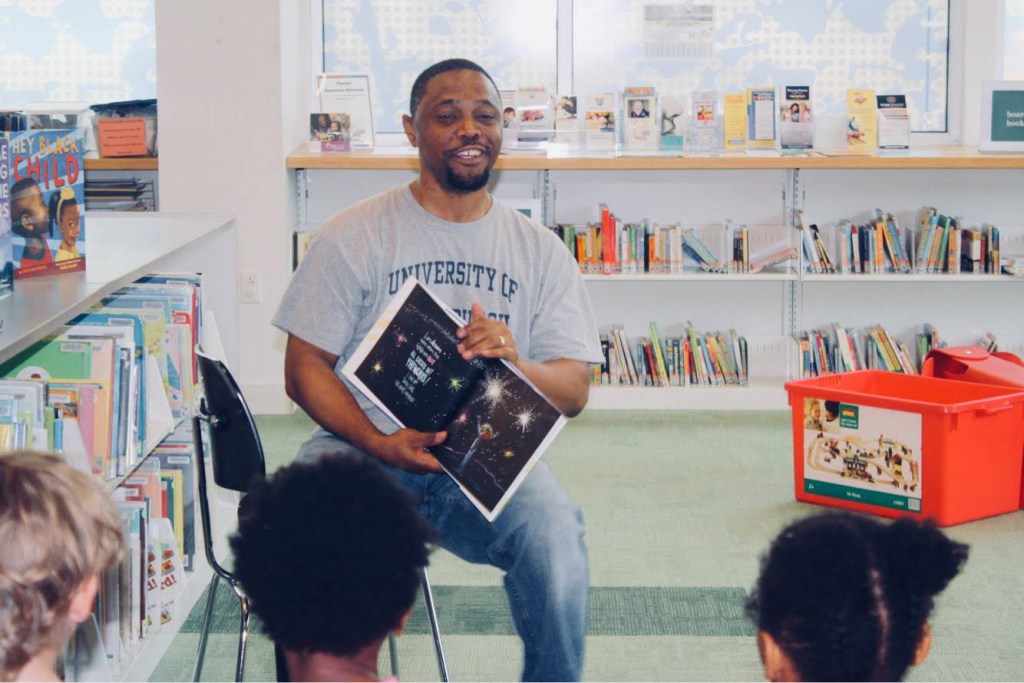
Community initiatives, such as organized reading tours or workshops, can play a significant role.
By connecting reading to tangible dreams, like building the "city of the future" or becoming an architect, educators can tap into a child's intrinsic motivation.
Even when encountering challenges, such as difficult pronunciation in a book about a famous architect, the supportive presence of a mentor who helps them navigate these obstacles can transform a potentially discouraging experience into a catalyst for continued engagement.
This consistent encouragement, rooted in seeing the child as an "advanced dreamer," is what fuels their desire to learn and grow.
Inspiring Future Innovators and Leaders
History is replete with examples of individuals who defied expectations and achieved greatness, often despite early academic struggles.
These stories serve as powerful reminders that test scores are not definitive predictors of future success.
Inventors, architects, and artists who have profoundly impacted the world often faced their own unique academic hurdles.
Overcoming Perceived Limitations
Consider the inventor of the Super Soaker water gun.
As a child, his test results indicated he might not be suited for engineering.
Imagine if he had accepted this assessment as his final verdict.
The world would have missed out on a beloved invention that has brought joy to countless individuals.
This narrative emphasizes that early academic assessments should not be viewed as immutable destinies.
Instead, they should be seen as starting points, opportunities for intervention and support to help children overcome any perceived limitations.
Similarly, a renowned architect whose work includes significant cultural landmarks, struggled with reading during his formative years.
Had he allowed these reading difficulties to define him, the world would not have experienced the beauty and cultural significance of his architectural masterpieces.
These instances highlight the importance of looking beyond the surface-level data and recognizing the underlying potential and resilience within each child.
The ability to persevere through challenges, fueled by passion and supported by mentors, is often a more accurate predictor of long-term achievement than a standardized test score.
The Ripple Effect of Encouragement
The impact of a single encouraging word or a supportive gesture can have a profound ripple effect.
When children, particularly Black children, are encouraged to pursue their passions and are given the tools and support to overcome academic barriers, they are not only empowered to achieve their personal dreams but also to contribute meaningfully to society.
The illustrator whose powerful picture book illustrations have inspired generations of children also faced reading challenges.
Had he internalized negative test results, the artistic landscape would be poorer for it.
These individuals, and countless others like them, demonstrate that a child's capacity for innovation, creativity, and leadership is not solely determined by their performance on a test.
It is cultivated through encouragement, mentorship, and the belief that they are capable of solving problems and making a difference in the world.
Creating an environment where Black children feel empowered to explore their interests, develop their talents, and pursue their ambitions is paramount to unlocking their full potential.
Fostering a Culture of Dream Pursuit
At Mentofy, we are committed to fostering a global learning community that celebrates the unique strengths of every child.
We understand that true education transcends the confines of standardized testing.
It is about igniting curiosity, building resilience, and empowering young minds to envision and achieve their most ambitious dreams.
By shifting our focus from mere evaluation to active cultivation, we can create a more equitable and inspiring future for all children.
Every child is a potential solution to a problem, a future innovator, a compassionate leader.
Our role as educators, mentors, and a global learning platform is to create the conditions that allow these potentials to flourish.
This means actively championing Black children, recognizing their inherent brilliance, and providing them with the unwavering support they need to walk boldly towards their dreams.
Let us move beyond the limitations of test scores and embrace the boundless possibilities that lie within each and every child.
Conclusion
The narrative surrounding Black children's academic performance often gets narrowly defined by test scores, overlooking their vast potential and inherent capabilities.
This approach can inadvertently create barriers, stifling their curiosity and hindering their aspirations.
At Mentofy, we advocate for a fundamental shift: from evaluating children based on their test scores to actively empowering them to overcome academic challenges and pursue their dreams.
By embracing personalized learning, fostering supportive mentorship, and celebrating unique talents, we can cultivate an environment where Black children, and indeed all children, are recognized as advanced dreamers with the capacity to achieve extraordinary things.
It is our collective responsibility to nurture their potential, ignite their passions, and ensure they have the confidence and resources to turn their dreams into reality.





 Explore AI Teaching Tools
Comments (0)
Please login to comment
No comments yet
Be the first to comment on this article