
California Schools Grapple with "Invisibility" of Indigenous Students: Lawmaker Pushes for Accurate Count
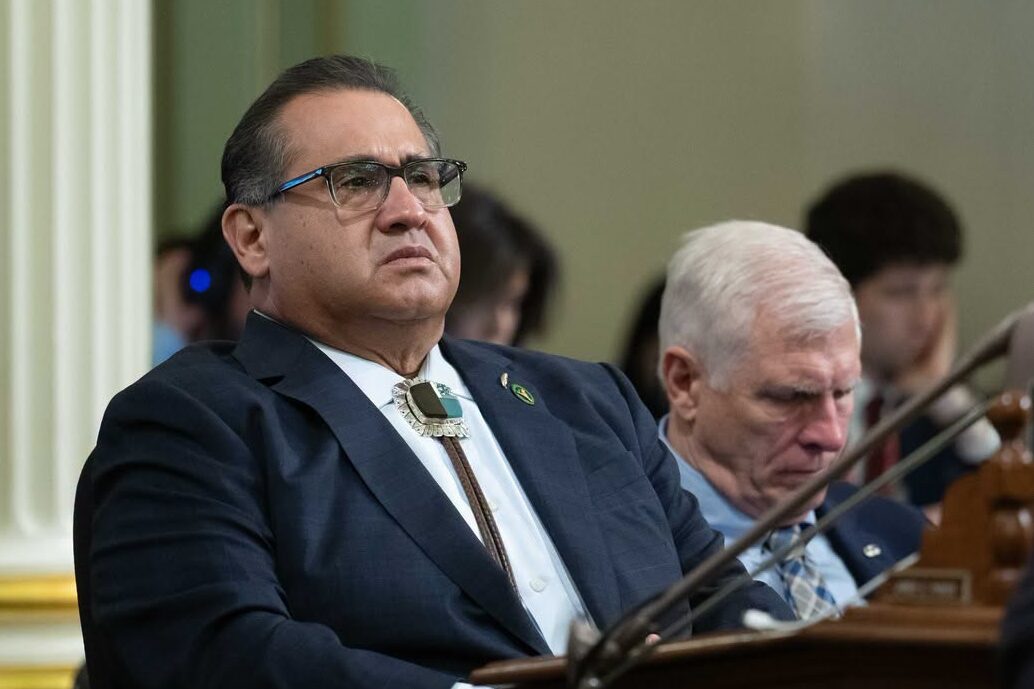
A stark childhood memory fuels a legislative push in California: a teacher asking young James Ramos to stand and interpret a song based on his Native American heritage, only to dismiss him when his tribe's traditions differed from the expected narrative. This moment of feeling "not Indian enough" encapsulates a pervasive issue within American schools, where the rich tapestry of Indigenous students and their diverse backgrounds often go unrecognized and uncounted.
Now, Assemblymember James Ramos, a member of the Serrano/Cahuilla tribe, is spearheading an effort to rectify this oversight. His proposed legislation aims to fundamentally change how California collects student enrollment data, ensuring that the state's Indigenous student population is accurately represented.
Unmasking the Undercount: A Silent Crisis in Education
The challenge Ramos is tackling is not unique to his personal experience; it's a systemic problem with significant implications for Native American students across the nation. Reports indicate a staggering undercount of Indigenous students, leaving their educational needs and cultural identities obscured.
A 2023 analysis revealed that Native American students are undercounted by a staggering 70% nationwide. In California, this deficit is even more pronounced, with an estimated 89.8% of Indigenous students not being accurately identified in state records. This means tens of thousands of American Indian and Alaska Native students are effectively invisible within the educational system.
Current state data paints a picture of a small Native American presence in California schools. For the 2025-2026 academic year, the California Department of Education reported just over 24,000 American Indian or Alaska Native students, representing a mere 0.4% of the total student body. However, based on the aforementioned report's estimates, the true number could be closer to 180,000, a substantial 3% of all students.
The Flawed Framework: How Current Data Fails Indigenous Students
The root of this undercount lies in the current, rigid methodology California employs for student data collection. The system, as it stands, struggles to capture the nuanced identities of many Native American students.
For instance, all students identifying as Hispanic or Latino are grouped together, regardless of their specific ethnic backgrounds. Similarly, students who identify with multiple racial or ethnic categories, such as American Indian and white, or American Indian and Black, are categorized under a broad "Two or more races" designation. Only those who identify exclusively as American Indian or Alaska Native are counted in that specific category.
Assembly Bill 1581, championed by Ramos, seeks to dismantle this restrictive approach. The bill mandates that schools and the state actively collect and report the specific tribal affiliations of every student who identifies as American Indian or Alaska Native. This includes students who also hold other racial or ethnic identities, ensuring a more comprehensive and accurate representation.
The Ripple Effect: Funding, Support, and Recognition at Stake
The consequences of this undercount extend far beyond mere statistics; they directly impact the resources and support available to Indigenous students. When a significant portion of the Native American student population remains uncounted, schools may fail to receive crucial federal and state funding earmarked for these communities.
This lost funding can hinder the implementation of vital programs, such as Native American language immersion classes, specialized tutoring services, and initiatives like Title VII, which are designed to enhance academic achievement and ensure high-quality educational experiences for Indigenous students. The lack of accurate data creates a barrier to accessing these essential resources.
Furthermore, an undercount makes it exceedingly difficult to track the academic progress and well-being of Native American students. State reports on standardized test performance, graduation rates, and suspension rates for American Indian and Alaska Native students may be inherently inaccurate, masking potential disparities and hindering targeted interventions.
Beyond the Numbers: Illuminating the Diversity of Indigenous Cultures
Beyond the critical issues of funding and academic tracking, accurately counting Indigenous students offers a profound opportunity to recognize and celebrate the immense diversity within these communities. California is a vibrant hub for Indigenous cultures, home to 109 federally recognized tribes, with many more actively seeking recognition.
The state also hosts thousands of students whose families hail from Indigenous communities in Mexico and Central America. These students bring a rich heritage of languages, traditions, and worldviews that are often overlooked in a monolithic approach to data collection.
Marcos Aguilar, project director of the American Indian Resurgence Initiative and co-founder of a Los Angeles charter school that offers instruction in Nahuatl and Spanish alongside English, highlights the extent of this invisibility. He notes that in major school districts like Los Angeles Unified, college counselors often report having no American Indian students, a statement that starkly contrasts with the lived realities of many families.
A School Rooted in Indigenous Identity
Aguilar's own institution, Anahuacalmecac International University Preparatory of North America, serves as a powerful example of how a school can embrace and nurture Indigenous identity. At this school, over 65% of students identify as American Indian, representing a diverse array of Indigenous peoples, including Nahua, Zapotec, Wixarika, Cherokee, and Kanaka, among others.
This demonstrates that the Indigenous student population is not a single, homogenous group but a mosaic of distinct cultural heritages, each deserving of specific recognition and support within the educational landscape.
Shifting Perspectives: From Deficit to Assets
The push for accurate data collection is not just about counting heads; it's about fundamentally shifting how Indigenous students and their communities are perceived within the education system. Rafael Vasquez, co-author of "Culturally Responsive Schooling for Indigenous Mexican Students," believes this initiative can move away from a deficit-based view towards one that acknowledges the strengths and assets Indigenous students bring.
By understanding the true scope of Indigenous students, schools can be better equipped to provide essential services, such as translation support in Indigenous languages for parents, and to meaningfully integrate Indigenous cultural practices into the curriculum. This approach can foster a more inclusive and supportive learning environment for all students.
Data as a Catalyst for Change
Vasquez emphasizes the transformative power of data in informing educational policies and practices. While schools may be aware of Indigenous students, their actions are often guided by the available data, or lack thereof.
He shares an example of his work with the Lynwood Unified School District, where interviews with parents from a Zapotec Indigenous community in Oaxaca provided crucial insights. This data allowed the school district to incorporate Zapotec brass band music into an after-school program and feature it in school events, creating a tangible connection to students' cultural heritage.
The correlation between a student's connection to their Indigenous identity and their academic success is a powerful motivator. Vasquez asserts that fostering this sense of belonging and cultural pride is not merely an extracurricular activity but can serve as a significant driver of academic achievement. By recognizing and valuing Indigenous identities, schools can unlock new pathways to student success.






 Explore AI Teaching Tools
Comments (0)
Please login to comment
No comments yet
Be the first to comment on this article