
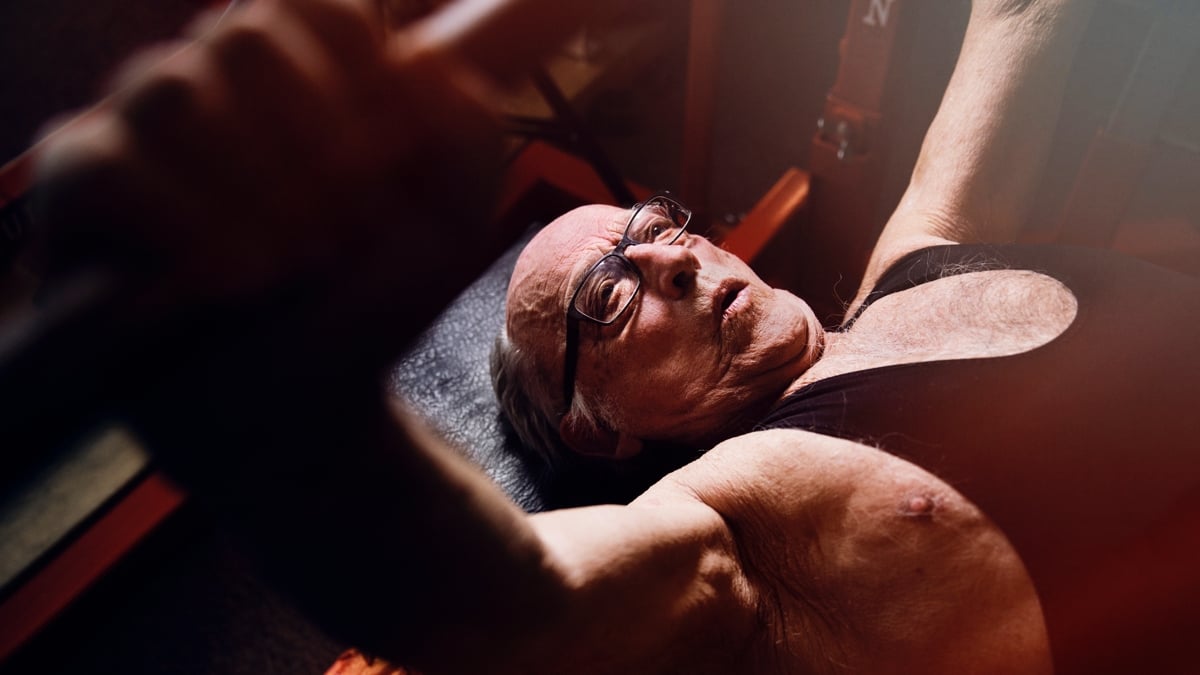
It’s a common refrain in education: practice makes perfect. But what if that adage holds a deeper biological truth? Recent scientific understanding reveals that our muscles possess a form of 'memory' independent of the brain, a phenomenon that has profound implications for how we approach skill acquisition and retention in the classroom. This isn't just about rote memorization; it's about embedding knowledge and ability into the very fabric of our physical selves, a concept educators can leverage to foster more durable learning.
The Silent Learners: Unpacking Muscular 'Memory'
For decades, we've largely attributed learning and memory to the intricate neural networks within our brains. However, emerging research suggests a parallel system at play, one residing within the cellular architecture of our muscles. This muscular 'memory' is not about recalling facts or concepts, but about the body's ability to remember and efficiently execute physical tasks.
Think of it like this: when you learn to ride a bike, your brain is certainly involved in understanding balance and steering. But the smooth, almost automatic coordination of your limbs, the subtle adjustments you make without conscious thought, that's where muscular memory begins to take hold. It’s a physical imprint, a cellular adaptation that streamlines movement and reduces cognitive load.
"Our muscles don't just respond to commands; they seem to learn and adapt independently, storing information about movement patterns that can be recalled with remarkable efficiency."
This phenomenon is rooted in epigenetics – changes in gene expression that don't alter the underlying DNA sequence. When muscles are trained, they undergo structural and molecular changes. These changes can persist even after training stops, making it easier to regain lost skills or perform them more effectively upon re-engagement.
Why This Matters for Educators Today
The concept of muscular 'memory' offers a powerful lens through which educators can re-evaluate pedagogical strategies, particularly for subjects that involve physical skills or procedural knowledge. It suggests that consistent, deliberate practice is not merely reinforcing neural pathways but is actively conditioning the body’s physical apparatus for optimal performance.
This understanding is especially relevant in fields like physical education, the arts, vocational training, and even STEM subjects where hands-on experimentation or complex procedural steps are involved. It highlights the importance of kinesthetic learning and the integration of physical activity into broader educational contexts.
For instance, mastering a musical instrument or executing a complex scientific procedure involves more than just intellectual understanding. It requires the body to develop its own kind of 'memory,' enabling fluid and accurate execution. This is where the principle of 'practice makes perfect' truly shines, as each repetition helps build this deeper, physical form of learning.
Translating Science into Classroom Practice
So, how can educators harness this understanding of muscular 'memory' to enhance student learning? It's about creating opportunities for repetition, varied practice, and mindful engagement with physical skills.
The Power of Deliberate Practice
Deliberate practice is key. This isn't just mindless repetition; it involves focused effort on specific skills, with feedback and opportunities for refinement. When students engage in deliberate practice, they are not only strengthening their neural connections but also building the physical scaffolding of muscular 'memory.' This works to solidify learning in a way that passive reception of information cannot.
Consider a physical education class learning a new sport. Instead of just playing a game, breaking down the fundamental movements – a proper dribble, a correct throw – and providing structured opportunities to practice these elements repeatedly will foster deeper retention. This approach ensures that the physical mechanics are ingrained, making the overall game play more successful and enjoyable.
Integrating Movement and Learning
The implications extend beyond explicitly physical subjects. Even in academic settings, incorporating movement can aid learning. Activities that involve physical manipulation, role-playing, or even simple gestures associated with concepts can tap into this muscular 'memory.' This can make abstract ideas more concrete and memorable.
For subjects like history, students could physically act out key events or create timelines using movement. In science, building models or performing experiments provides hands-on experience that reinforces understanding. This multi-sensory approach leverages both cognitive and physical learning, creating a more robust learning experience.
Leveraging Technology for Enhanced Practice
Modern educational technology can play a significant role in facilitating effective practice. Tools that allow for repeated skill-building and provide immediate feedback are invaluable.
- Structured Drills: Platforms offering customizable drills for specific skills, allowing students to practice at their own pace.
- Interactive Simulations: Virtual environments that mimic real-world tasks, enabling safe and repeatable practice.
- Gamified Learning: Engaging MentofyCove classroom games like trivia or word search can make repetitive practice feel less like a chore and more like a challenge.
- AI-Powered Feedback: Tools that can analyze student performance and offer targeted suggestions for improvement.
The idea that practice makes perfect is scientifically grounded in more ways than we might have previously imagined. By understanding and actively engaging with the concept of muscular 'memory,' educators can design more effective, engaging, and enduring learning experiences for their students. This isn't just about making learning easier; it's about making it more deeply ingrained and readily accessible when needed.
The Long-Term Impact of Embodied Learning
When students develop muscular 'memory' for a skill, it becomes a part of their embodied knowledge. This means that even after periods of inactivity, the ability to perform the skill can be recalled more quickly and with less effort than if it were purely a cognitive construct. This is particularly beneficial for skills that require ongoing application, such as mathematical procedures, language fluency, or athletic prowess.
The efficiency gained through muscular 'memory' frees up cognitive resources. Instead of struggling with the basic mechanics of a task, students can focus on higher-order thinking, problem-solving, and creativity. This is where true mastery and innovation begin to flourish.
For educators, this underscores the importance of providing ample opportunities for students to engage in hands-on activities, skill-based practice, and movement-integrated learning. It’s about building a strong foundation that students can rely on throughout their academic journey and beyond.
Making Learning Stick: Actionable Strategies
Here's how educators can actively cultivate muscular 'memory' in their students:
- Break Down Complex Skills: Deconstruct tasks into their fundamental physical components.
- Prioritize Repetition with Purpose: Ensure practice sessions are focused and provide opportunities for refinement.
- Incorporate Varied Practice: Present skills in different contexts to promote adaptability.
- Provide Immediate and Constructive Feedback: Help students identify and correct errors efficiently.
- Embrace Movement-Based Learning: Integrate physical activity and kinesthetic elements into lessons across subjects.
- Utilize Technology Wisely: Employ tools that facilitate targeted practice and engagement, such as Mentofy AI lesson plan tools for structuring practice or MentofyCove classroom games for fun repetition.
The science behind muscular 'memory' is a compelling reminder that learning is a holistic process, engaging both mind and body. By recognizing and actively nurturing this physical dimension of learning, educators can empower students to develop skills that are not only acquired but deeply ingrained, truly embodying the principle that practice makes perfect.





 Explore AI Teaching Tools
Comments (0)
Please login to comment
No comments yet
Be the first to comment on this article