
Boys Lag in Traditional Schools: Can a Surge in Technical High Schools Bridge the Gap?
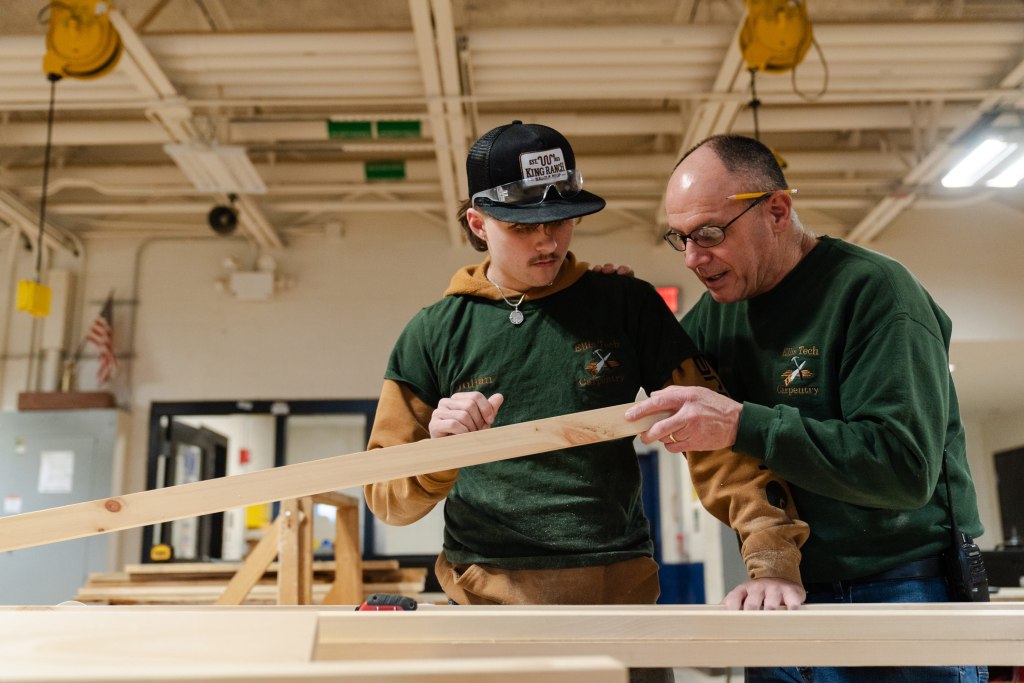
In the bustling carpentry workshop at Harvard H. Ellis Technical High School in eastern Connecticut, the air hums with the sound of saws and hammers. Amidst the organized chaos, 16-year-old Julian Lawrence, once a disengaged middle schooler, now thrives, earning straight A's and eagerly anticipating each school day. "In middle school, I hated sitting at a desk every day," Lawrence shares. "This gets my mind moving more."
This hands-on, career-focused approach is proving particularly impactful for many boys, yet a significant barrier remains: limited access. Across Connecticut, technical high schools, which offer specialized training in skilled trades and technical fields, are highly sought after, but seats are scarce.
The Technical Advantage: A Boon for Boys?
The gender ratio in many technical classrooms, like the carpentry shop with only two girls among three dozen students, often mirrors the demographics of the trades themselves. While some programs at Ellis Tech, such as hairdressing and health care technology, attract more female students, the school's overall enrollment leans heavily male, with 70 percent of students being boys. This trend is national, with over 60 percent of students in Connecticut's technical high schools being male.
Research suggests that these technical schools offer a distinct advantage for boys. A notable study in Connecticut found that boys admitted to technical high schools exhibited better attendance, higher test scores, improved graduation rates, and ultimately, greater earnings compared to their peers who narrowly missed admission. While girls admitted to these programs also performed well, they did not see the same comparative boost over their rejected counterparts.
This disparity raises a critical question: if technical education demonstrably benefits many boys, why are so many still unable to access it?
A System Under Strain: Demand Outstrips Supply
The popularity of technical high schools is undeniable, leading to intense competition for limited spots. This year alone, a staggering 7,850 students applied to Connecticut's 17 technical schools, but only 44 percent secured admission. This shortfall means that thousands of students, many of whom might flourish in such an environment, are left without a place.
The high demand has even led to contentious debates and policy shifts. Both Connecticut and neighboring Massachusetts have recently transitioned from competitive admissions systems to lotteries, partly in response to concerns that their previous methods were inadvertently excluding at-risk students.
However, some education advocates argue that reallocating existing seats isn't enough. They propose a more expansive solution: building more technical high schools.
The Case for Expansion: Addressing a National Trend
Nationally, boys are falling behind girls in several key educational metrics, from early childhood readiness to college completion rates. Proponents of expanding technical education believe these schools can play a crucial role in narrowing this achievement gap.
"We could add 1,000 more and it would be good for boys, not bad for girls, and give parents more choices," suggests Richard Reeves, president of a nonprofit research and policy group focused on boys and men. This vision, however, comes with a significant price tag, with estimates for running new schools reaching billions annually, not including construction costs.
Skeptics question the financial feasibility, especially for districts already facing budgetary constraints. They suggest exploring less costly alternatives, such as utilizing existing spaces or offering vocational classes outside of regular school hours.
A Shifting Perception: From "Dumping Ground" to Pathway
Once viewed as a fallback option for students struggling in traditional academic settings, career and technical education (CTE) is now increasingly recognized as a viable and debt-free route to stable, well-paying careers. Policymakers and industry leaders champion these programs as essential for developing a skilled workforce, particularly as automation reshapes the job market.
While full-time, standalone technical high schools are less common than integrated programs within comprehensive schools or community college courses, they offer a unique advantage for research. As Shaun Dougherty, a professor of education and policy, notes, these distinct institutions allow for clearer comparisons between students who are admitted and those who are not, providing valuable data on program effectiveness.
Evidence and Theories: Why the Boost for Boys?
Despite the growing interest, the research landscape for technical high schools is still developing. While a handful of rigorous studies exist, long-term follow-up data is limited, and direct comparisons between different models of career education are scarce.
Nevertheless, advocates point to encouraging findings. The Connecticut study, along with an evaluation of New York City's P-TECH schools, indicated that male students in vocationally oriented programs were more likely to achieve higher educational milestones than their peers who were not admitted. These studies, however, did not find similar significant gains for female students.
Researchers are exploring various theories to explain why boys seem to benefit more. One prominent idea is that boys may have more "room to grow" academically compared to girls, who often perform well in traditional high school settings. Another theory suggests that the hands-on, applied nature of technical education resonates more strongly with boys, fostering greater motivation and engagement.
"They see the purpose in what they’re doing," explains Michael Crocco, superintendent of the Connecticut Technical Education and Career System. "They can take what they learn in the classroom and put it into practice immediately."
Smaller class sizes and increased teacher-student interaction also likely contribute. When students spend an entire day immersed in a specific trade, instructors can develop a deeper understanding of individual needs and learning styles.
Furthermore, peer influence plays a role. Being surrounded by classmates who share similar interests and enthusiasm for learning can create a more supportive and motivating educational environment.
Beyond Gender Parity: A Focus on Student Success
The discussion around technical education also touches upon long-standing efforts to encourage more girls to enter traditionally male-dominated, high-wage trades. While progress has been made, societal expectations and concerns about workplace culture continue to influence career choices.
Some vocational schools have expanded their offerings to attract a broader range of students, and enrollment figures for girls are increasing in some areas. However, Richard Reeves argues that perhaps the focus should shift. Given the evidence that technical education provides a greater boost for boys and that boys face greater challenges in traditional schooling, he suggests that a male-leaning demographic in these schools might be a positive outcome.
While Reeves emphasizes that new schools would not exclude females, he believes their primary marketing and design should cater to the needs of boys.
Navigating the Hurdles: Cost, Teachers, and Admissions
The most significant obstacle to expanding technical education is financial. Building and maintaining these specialized schools requires substantial investment in equipment and maintaining low student-to-teacher ratios.
Teacher shortages also present a challenge. Many states report difficulties in filling CTE positions, particularly in high-demand fields like manufacturing, information technology, and health sciences. This scarcity can limit the capacity of existing programs and hinder the establishment of new ones.
The debate over admissions policies further complicates the issue. For years, technical schools in states like Connecticut and Massachusetts used selective criteria, such as grades and attendance, to admit students. However, critics argued that these systems disproportionately excluded low-income students, students of color, and students with disabilities.
Civil rights complaints and state investigations led to the elimination of these selective panels and the adoption of lottery systems. While intended to create a more equitable process, some educators worry that lotteries may admit students who are not genuinely committed to a trade, potentially diluting the program's effectiveness.
Innovative Solutions: Expanding Access Through Annexes and Partnerships
In response to capacity constraints, some regions are exploring innovative models to increase access to technical education. In Fitchburg, Massachusetts, a renovated warehouse has been transformed into a satellite campus, offering carpentry, electrical, and plumbing programs at a significantly lower cost than constructing a new building.
This "annex" model allows students who were waitlisted for the main vocational school to gain hands-on training. It also enables comprehensive high schools to retain their per-student funding while vocational schools receive state supplements for educating CTE students.
State Senator John Cronin, a proponent of these annexes, believes they are a more scalable solution than building entirely new schools. "We don’t need more cafeterias and gyms," he states. "We need more shops where kids can get relevant workforce training."
Other states are investing in programs that allow students enrolled in traditional high schools to attend vocational classes after regular school hours or on weekends. Non-profit organizations are also stepping in, offering pre-apprenticeship training and certifications to young adults through after-school and summer programs at technical schools.
The Future of Learning: Integrating Technical Skills into Mainstream Education
Ultimately, the most effective way to address gender gaps in education and ensure more students, particularly boys, benefit from career-focused learning may not solely lie in building more specialized schools. It may involve integrating key elements of technical education into traditional classrooms.
Expanding opportunities for career exploration and hands-on, project-based learning within comprehensive high schools could reach a far greater number of students. This could involve programs that offer substantial work experience in high-demand fields or partnerships that provide technical training during the school day.
"I don’t think we necessarily have to build brand new technical high schools," says Alisha Hyslop, chief policy, research and content officer at the Association for Career and Technical Education. "But how can we increase opportunities for these types of in-depth career experiences?"
As the educational landscape continues to evolve, the focus remains on creating pathways that engage all students, equipping them with the skills and knowledge they need to succeed in a rapidly changing world.







 Explore AI Teaching Tools
Comments (0)
Please login to comment
No comments yet
Be the first to comment on this article