
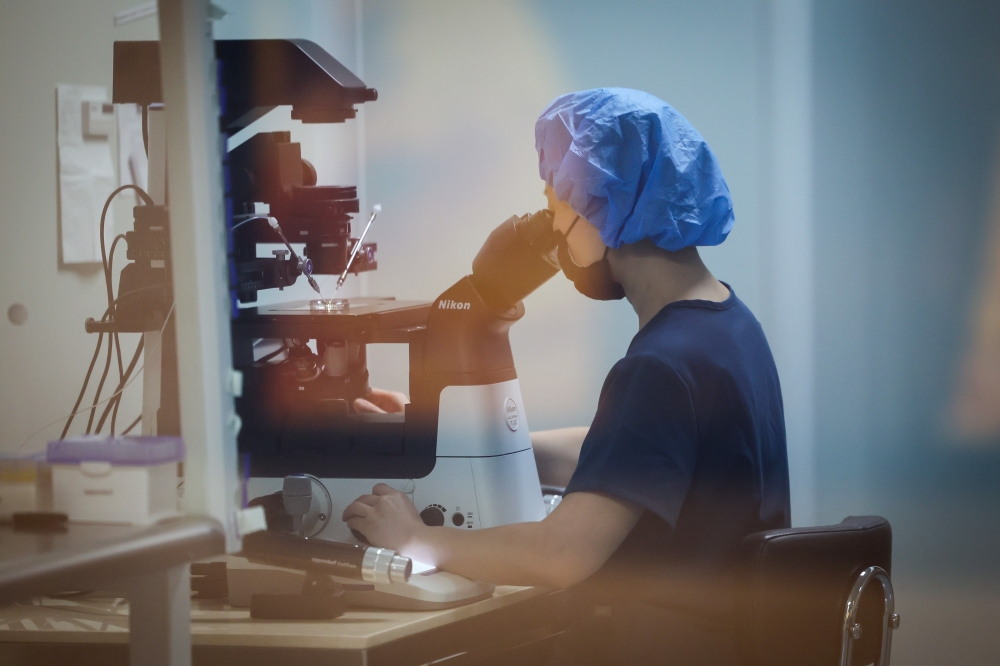
Malaysia Ascends as Fertility Treatment Powerhouse: High Success Rates and Affordability Draw Global Patients
In a surprising shift, Malaysia is rapidly emerging as a premier destination for fertility treatments, attracting a growing number of international patients seeking advanced care at a fraction of the cost found elsewhere. This burgeoning sector is not only bolstering the nation's medical tourism industry but also offering hope to countless individuals and couples navigating the complex journey of conception.
The Shifting Landscape of Parenthood
For many women today, the path to parenthood looks different than it did for previous generations. Career ambitions, delayed marriages, and evolving life priorities mean that the decision to start a family often comes later in life. This reality has spurred a significant increase in the demand for fertility preservation and treatment options.
Actress and wellness entrepreneur Sarah Lian, now in her early 40s, candidly shared her personal experience with fertility preservation, specifically egg freezing. "Like many women today, I didn’t prioritise fertility in my 20s… it is not something you think about at that age," she admitted. "But when you start to feel the window slowly closing, it becomes very real."
Lian's journey highlights a common sentiment: a desire to maintain the possibility of parenthood even as biological timelines advance. Her proactive approach underscores a growing awareness among women about their reproductive health and the available treatments.
Navigating the Emotional Terrain of IVF
Beyond preservation, many are now embarking on the more intensive journey of In Vitro Fertilisation (IVF). Lian described her current IVF experience as "emotional, uncertain and deeply personal." She emphasized that the process is far more than just a series of medical procedures; it's an uncharted and often daunting territory.
The path to pregnancy through IVF is rarely linear. Moments of profound hope are often interspersed with periods of uncertainty. Not every embryo develops as hoped, not every pregnancy is sustained, and not every patient's journey culminates in the desired outcome.
Initially, Lian found her IVF experience to be isolating. However, she soon discovered a powerful sense of community among fellow patients. "I’ve had women reach out to me saying, ‘We’ve seen you at the (fertility) clinic. We’re going through the same thing,’" she shared. "I found comfort and a sense of community in those connections."
A crucial aspect of her positive experience was the approach taken by her medical team. They focused on exploring various options rather than rushing into treatment cycles, a testament to patient-centered care in Malaysia's fertility sector.
Malaysia's Rise as a Regional Fertility Hub
The growing success and accessibility of fertility treatments in Malaysia have not gone unnoticed. Lian herself is now an advocate, actively encouraging friends overseas to consider the country for their fertility needs. "I always encourage my friends to seek fertility treatment in Malaysia because we have excellent facilities and treatments, and at affordable prices too," she stated.
This sentiment is echoed by medical professionals. Dr. Mathi Arasu, Medical Director at GenPrime Everlink Fertility Centre, confidently asserts that Malaysia is on par with, if not superior to, many top IVF clinics globally. "From integrated lab services to cross-border clinical networks, Malaysia is increasingly positioning itself as a competitive player in fertility treatment," he noted.
Indeed, Malaysia has become a regional hub for those seeking IVF and other advanced fertility treatments. Approximately 40 percent of patients at Dr. Arasu's centre are international, a statistic that underscores the nation's growing appeal.
Understanding Infertility: More Than a Statistic
Infertility is a widespread issue, defined generally as the inability to conceive after 12 months of regular, unprotected intercourse. The World Health Organisation estimates that one in six individuals will experience infertility in their lifetime, a figure that highlights the global need for effective treatments.
Modern fertility centres offer a range of options to address these challenges. These include established techniques such as IVF, Gamete Intrafallopian Transfer (GIFT), Intrauterine Insemination (IUI), and Intracytoplasmic Sperm Injection (ICSI). For women concerned about their biological clock, procedures like egg freezing provide a crucial window to preserve fertility.
Furthermore, advanced techniques like Preimplantation Genetic Testing (PGT) are enhancing the success rates of fertility treatments by ensuring that embryos selected for transfer are chromosomally healthy, thereby increasing the chances of a successful pregnancy.
The Pillars of Success: Technology and Expertise
The high success rates reported by Malaysian fertility centres, some approaching 80 percent, are a significant draw for international patients. This success is attributed to a combination of factors, including cutting-edge technology, highly skilled medical professionals, and a cost-effective healthcare system.
Dr. Arasu explained that while a woman's age, sperm quality, and uterine condition are fundamental to successful implantation and pregnancy, technological advancements play a vital role in optimizing outcomes. "Technological advancements serve as adjuncts (not replacements) to these three factors, helping to improve success rates," he clarified.
These advancements include AI-assisted selection of sperm, eggs, and embryos, as well as genetic testing for chromosomal and genetic abnormalities. Emerging techniques, such as those aimed at improving egg quality through stem cells and scientific interventions, are also becoming increasingly available in Malaysia.
The integration of these technologies can significantly boost success rates, potentially increasing them from 40-60 percent to 70-80 percent in certain cases. This leap in efficacy, coupled with the nation's competitive pricing, makes Malaysia an exceptionally attractive option for fertility treatment.
Debunking Fertility Myths
Misconceptions surrounding fertility are common, and addressing them is crucial for patients. Dr. Arasu pointed out a significant misunderstanding: that fertility is primarily a woman's issue. "In fact, it affects men too," he stated, emphasizing the need for comprehensive evaluation for both partners.
Another prevalent myth is that being healthy automatically equates to being fertile. "Just because you’re healthy does not mean you’re fertile. This is something that often surprises patients, especially those who lead active lifestyles and assume everything is fine," Dr. Arasu explained. This highlights the importance of specialized fertility assessments, regardless of general health status.
He also stressed the critical importance of seeking fertility treatment early. Nearly 40 percent of patients at his centre are aged 40 and above, placing them in the category of advanced maternal age, which can significantly impact fertility outcomes. "Age is one factor we cannot reverse. The later patients come in, the more limited their options may become," he cautioned.
Lian echoed this sentiment, encouraging individuals and couples to seek early consultations. "Even if you are not ready to have children, going for a check-up gives you clarity and allows you to make an informed decision," she advised.
Addressing Underlying Reproductive Health Issues
For women, identifying and treating underlying reproductive health conditions is paramount to successful conception. Dr. Debbie Teh, a consultant gynaecologist, emphasized the necessity of comprehensive reproductive health check-ups before embarking on fertility treatments.
Conditions such as endometriosis and fibroids are frequently identified as common causes of infertility in women. These conditions can disrupt the fundamental requirements for conception, including healthy ovulation, open fallopian tubes, and a receptive uterine environment.
The Impact of Fibroids on Pregnancy
Fibroids, which are non-cancerous growths in the uterus, can pose significant challenges to fertility. "When they distort the uterine cavity, they can make implantation more difficult," Dr. Teh explained. "The embryo may not be able to attach properly, especially if the fibroid affects the inner lining where pregnancy begins."
In some instances, fibroids can also be located near the fallopian tubes, potentially obstructing the pathway for egg and sperm to meet. Furthermore, there is emerging evidence suggesting that substances produced by fibroids might negatively influence the conception environment.
The encouraging news is that many women can achieve pregnancy after appropriate treatment, particularly when fibroids distorting the uterine cavity are surgically removed. Restoring the uterus to a more normal structure can significantly improve the chances of a successful pregnancy.
Malaysia's Competitive Edge: Advanced Care at Affordable Prices
The availability of advanced technologies for treating conditions like endometriosis and fibroids, followed by specialized fertility treatments, is a key factor driving regional patients to Malaysia. The nation offers a compelling combination of cost-effectiveness and medical advancement.
"Malaysia stands out in the region because we are both cost-effective and medically advanced," Dr. Teh stated. "Whether it’s IVF, surgery, or other interventions, patients are often paying a fraction of what they would in countries like Singapore, but still receiving comparable standards of care."
Minimally invasive procedures, such as robotic surgeries for endometriosis and fibroids, are widely available in Malaysia. These techniques offer faster recovery times and improved patient outcomes, further enhancing the country's appeal for complex reproductive health needs.
A Growing Global Reputation in Healthcare
Malaysia's success in the fertility sector is part of a broader narrative of its growing international reputation in medical disciplines. Dr. Sharifa Shahreen Syed Sultan Ahmed, Vice President of Healthcare at the Malaysia Healthcare Travel Council, highlighted the nation's strong foundation of clinical expertise, modern infrastructure, and consistently high standards of care.
This is reflected in the robust growth of the healthcare travel industry. In 2025, the industry recorded approximately RM3.34 billion in revenue, surpassing earlier targets and indicating a strong recovery and sustained demand. This growth is underpinned by significant regional confidence, particularly from Indonesia, which remains the largest source market, alongside increasing interest from countries like China and India.
As Malaysia continues to invest in advanced medical technologies and cultivate a highly skilled workforce, its position as a leading destination for fertility treatments and comprehensive reproductive healthcare is set to solidify further, offering hope and opportunity to a global patient base.







 Explore AI Teaching Tools
Comments (0)
Please login to comment
No comments yet
Be the first to comment on this article