
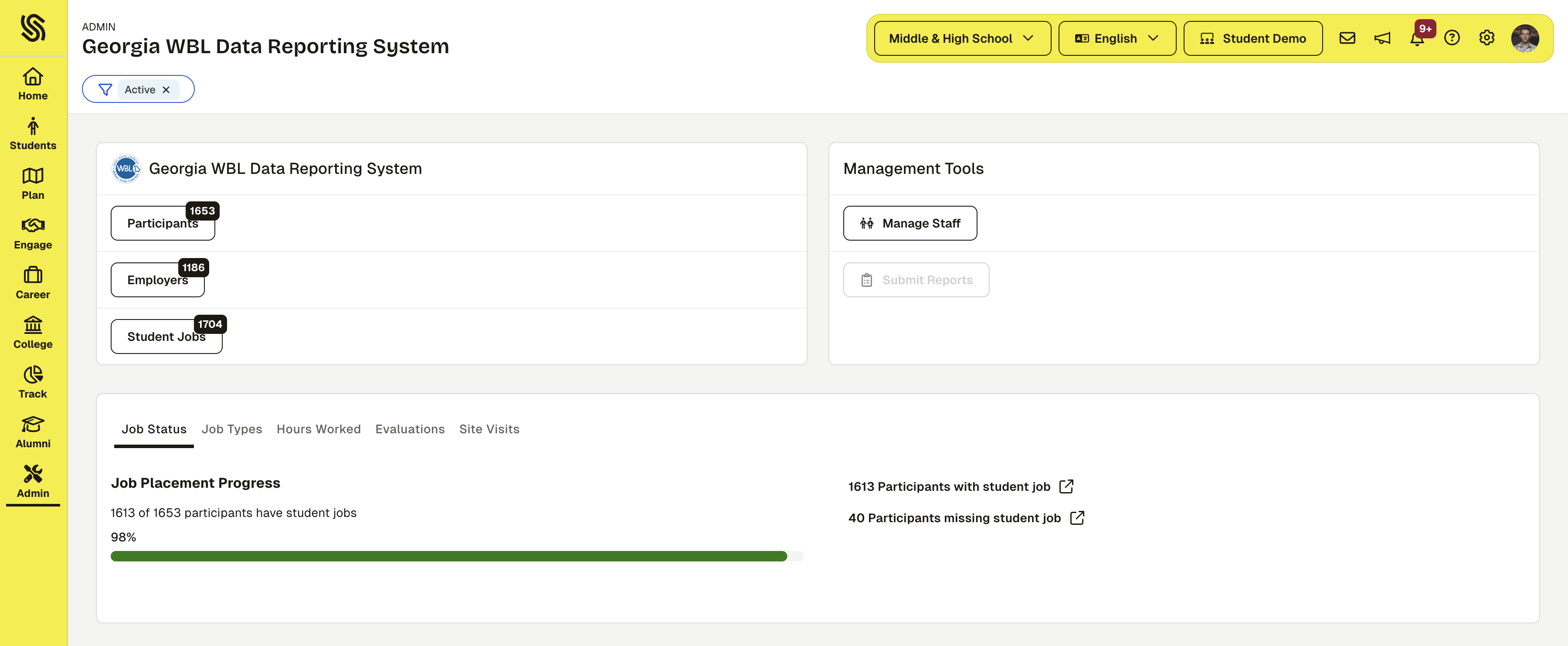
Georgia Forges Data-Driven Blueprint for Real-World Skills, Elevating Work-Based Learning Beyond a Resume Line
For too long, the value of work-based learning has been a whispered promise, often reduced to a mere line item on a student's resume. Internships and apprenticeships, while valuable, have frequently lacked the rigorous, verifiable evidence of skills acquired, risking their status as a genuine launchpad for careers. Instead, they often become footnotes, overshadowed by traditional academic achievements. However, one state is actively rewriting this narrative, building a robust model for how to authentically measure and showcase student capabilities gained through real-world experiences.
A State Mandate Ignites a Data Revolution in Skill Verification
The Georgia Department of Education's Career, Technical, and Agricultural Education (CTAE) division implemented a bold policy shift: students engaged in work-based learning would not simply log hours. They would undergo structured evaluations, at least three times annually, benchmarked against nationally recognized O*NET competencies relevant to their specific work placements. This deliberate policy choice, requiring participation and data submission, proved to be the catalyst for an unprecedented data goldmine.
This mandate transformed data collection from a sporadic, voluntary effort into a consistent, state-wide initiative. The impact has been profound, with over 33,000 students participating and nearly 270,000 skill evaluations generated across the state's work-based learning programs. This volume of structured assessments provides a longitudinal, employer-informed record of skill development at scale, moving far beyond anecdotal evidence of learning.
The strategic importance of this data extends beyond K-12 education, directly informing economic development initiatives. A striking 38% of students who have completed the evaluation process have demonstrated proficiency in at least one skill identified on Georgia's High-Demand Career List. This list, curated by the governor's office, targets careers that offer high wages, sustained demand, and require advanced skills, thereby guiding educational pathways toward economic prosperity and sustainable growth.
The data reveals a clear trajectory of skill enhancement. Between the initial and subsequent evaluations, the average rating for high-demand, career-aligned skills saw a notable increase, climbing from 4.24 to 4.52 on a five-point scale. This progress is particularly evident in digital and technical skills, where students showed the most significant competency gains as they accumulated more experience through their work-based learning roles.
Deconstructing the Evaluation Engine: How Trustworthy Data Takes Shape
The integrity of the data hinges on the meticulous design of the evaluation system. Understanding the mechanics of this process is crucial to appreciating its trustworthiness and scalability for measuring student learning.
Mapping Competencies to Real-World Work
The process begins with districts meticulously identifying and compiling a list of competencies that directly align with each specific work-based learning placement. These lists are anchored in established frameworks like O*NET, ensuring a standardized and relevant set of skills are assessed. For instance, a student interning in welding would be evaluated against a defined set of welding competencies, while a healthcare placement would draw from a corresponding healthcare competency framework.
Consistent, Quarterly Skill Assessments
Students are then evaluated against these pre-defined competencies on a quarterly basis, directly correlating with the duration of their internship or apprenticeship. This regular cadence ensures continuous monitoring and feedback on skill development throughout the work-based learning experience.
Collaborative Evaluation with Employer Input
Crucially, these evaluations are completed by designated staff members in close consultation with the student's on-site employer. This collaborative approach ensures that the assessment reflects both the student's performance and the employer's perspective on their demonstrated capabilities. The same competency list established at the outset of the placement remains the consistent benchmark for all subsequent evaluations, preventing any drift between planned learning objectives and actual measurement.
This structured approach directly addresses common pitfalls in work-based learning data collection. It avoids the issue where the competencies used for evaluation diverge from the actual scope of work performed. Furthermore, it prevents evaluations from remaining informal and undocumented, ensuring that all assessments are captured in a structured, quantifiable manner.
The system provides clear pathways for staff to identify, set up, and assign relevant competencies to students. The evaluation process itself is designed for clarity, with staff conducting assessments in direct consultation with the students' supervisors. This integrated approach ensures that the data collected is not only comprehensive but also highly relevant to the specific work experiences of each student.
The Next Horizon: Transforming Data into Portable, Verifiable Credentials
While Georgia's current system represents a significant leap forward in high-fidelity work-based learning tracking, a key opportunity for further advancement lies in enhancing the portability and articulation of these acquired skills.
Bridging the Gap Between Evaluation and Credentialing
In its current iteration, students completing youth apprenticeships receive a PDF certificate. While this document confirms completion and logs hours, it doesn't fully encapsulate the richness of the underlying data – the 270,000 competency-level assessments that truly tell the story of what a student learned and demonstrated on the job. Moreover, a PDF is not as readily portable or machine-readable as modern credentialing standards require.
This challenge highlights a broader issue facing work-based learning programs nationwide: data collection and credential issuance are often managed through separate systems, sometimes with no connection between them. Consequently, the most compelling evidence of a student's skills – employer-validated, competency-mapped, and longitudinal – resides within reporting portals that students themselves may not be able to easily access or share.
Unlocking the Potential of Digital Credentials
The logical next step for Georgia, and indeed for any program committed to authentic skill verification, is to seamlessly integrate evaluation data with credential issuance. This involves several critical components:
- Converting the detailed competency evaluation data into verifiable digital credentials that students can easily store and manage.
- Ensuring these digital credentials are portable, allowing employers and postsecondary institutions to readily access and understand the specific skills a student has demonstrated, rather than just noting the completion of an internship.
- Empowering students with agency over their own records, enabling them to manage their placement data directly, rather than having it exist solely within a district-administered reporting system.
These advancements are technically feasible, with the necessary infrastructure already existing within platforms designed for this purpose. Georgia's progression in this area is vital for transforming raw data into tangible assets that students can leverage for future job applications, college admissions, and further training opportunities.
Lessons for the Nation: Building Scalable Work-Based Learning Ecosystems
Georgia's model offers a compelling set of actionable insights for any state or program seeking to build or expand its work-based learning initiatives. These lessons underscore the importance of strategic design and a commitment to data integrity.
Interoperability as a Foundational Principle
The adoption of Learner and Employment Record (LER) compliant standards, such as Open Badges 3.0, and the representation of competencies using standards like CASE, are crucial. This approach fosters consensus around a universally understood and portable representation of student work and skills, facilitating broader recognition and acceptance.
Strategic Investment in Connected Tooling
Georgia's broader investment in interoperable tooling, leveraging standards from organizations like 1EdTech and Ed-Fi, has laid the essential groundwork. This creates the interconnected and cohesive system necessary for skills-based learning and hiring to function effectively at a large scale.
The Power of a Mandate for Data Volume and Quality
A state-level mandate for evaluation and reporting is a critical driver of both data quantity and quality. Voluntary reporting often results in sparse and inconsistent data, whereas a requirement, tied to state reporting obligations, dramatically improves the comprehensiveness and reliability of the collected information.
Framework Alignment for Meaningful Comparisons
Tying evaluations to established competency frameworks like O*NET imbues the data with meaning that transcends individual placements. This alignment enables comparability across different work sites, districts, and programs, providing a standardized measure of skill attainment.
Employer Involvement: The Cornerstone of Credibility
The active involvement of employers is the defining factor in the credibility of work-based learning data. Whether employers directly conduct evaluations, consult on assessments, or provide input for self-assessments, their perspective is indispensable for validating the data for future employers in a student's career journey.
Designing for Articulation from Inception
The integration of data collection and credential issuance must be a primary consideration from the outset of program design. While retrofitting credentialing capabilities onto existing data systems is possible, it is a more challenging and time-consuming endeavor than building these components concurrently from the beginning.
As highlighted in recent discussions on the significance of practical experience, work-based learning is far more than a simple checkbox. It is an iterative journey rich with evidence of capability and the development of durable skills. With all stakeholders dedicating effort to designing, participating in, and evaluating these experiences, ensuring that the acquired skills are demonstrably recognized and transferable is paramount.







 Explore AI Teaching Tools
Comments (0)
Please login to comment
No comments yet
Be the first to comment on this article