
America's Vanishing Coastline: LSU's Groundbreaking Graduate Programs Tackle the Crisis Head-On
Every year, a tangible piece of Louisiana slips into the Gulf of Mexico. Land that once anchored communities, sustained vital fisheries, and provided a crucial buffer against powerful storms is disappearing at an alarming rate – faster than anywhere else on the continental United States. While this stark reality might be a headline elsewhere, at Louisiana State University's College of the Coast & Environment (CC&E), it's the very foundation of groundbreaking research and hands-on graduate work.
Situated along the mighty Mississippi River in Baton Rouge, a mere 160 kilometers from the river's dynamic delta, CC&E places students at the epicenter of one of the planet's most environmentally significant and challenged regions. The Louisiana coast is a battleground, facing relentless pressure from land loss, pollution, rising sea levels, and increasingly ferocious storms.
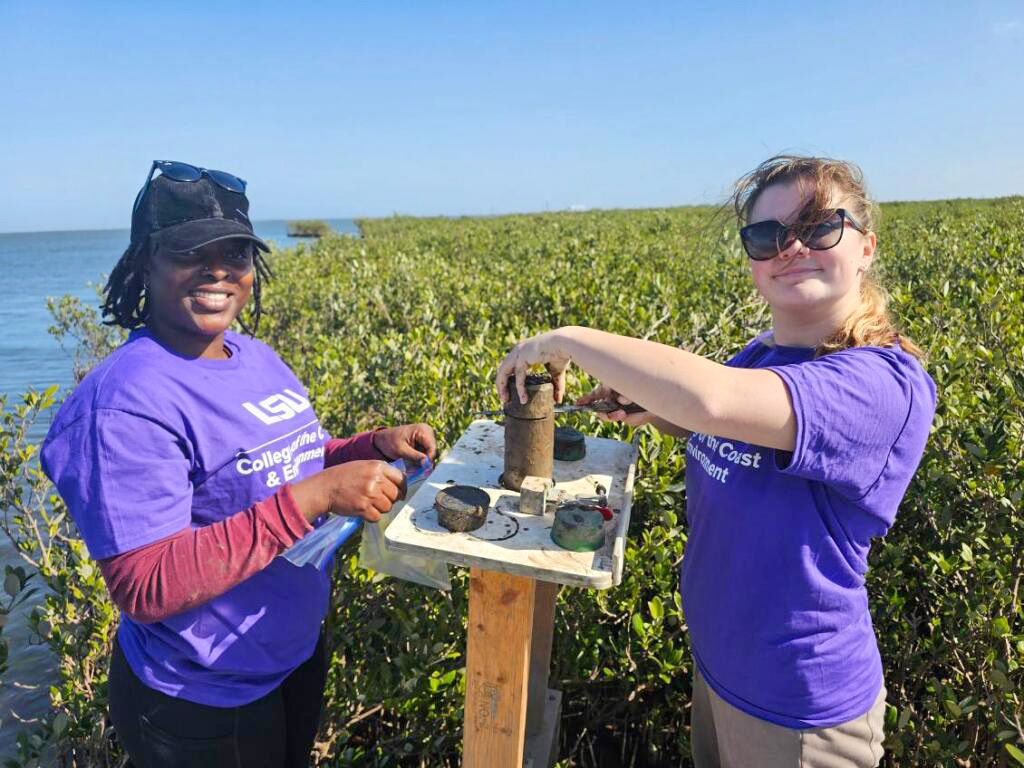
Most students encounter such complex environmental challenges within the pages of textbooks. At CC&E, however, the experience is profoundly different. Here, graduate students engage directly with these pressing issues in the field, collaborating with seasoned researchers who have dedicated their careers to finding solutions. This potent combination of unparalleled location and urgent necessity creates an exceptionally compelling environment for both academic study and the launch of a impactful career.
A Research Powerhouse Rooted in a Critical Landscape
Louisiana State University stands as a Carnegie R-1 institution, signifying the highest echelon of research activity in the nation. Furthermore, it holds the rare distinction of being a land-, sea-, and space-grant university, a testament to its broad scientific reach and commitment to public service.
Since the mid-20th century, CC&E scientists have fundamentally reshaped global understanding of coastal systems. Their pioneering work has illuminated the intricate processes driving deltaic growth and decline, established the critical role of hurricanes in coastal erosion, and built comprehensive global delta databases that now serve as the international standard for deltaic science.
Techniques developed within these halls, such as 137Cs dating for wetland studies, have become indispensable tools for researchers worldwide. Today, the college is at the forefront of innovative projects, including AI-driven wildfire prediction, advanced hypoxia forecasting, large-scale ecosystem restoration initiatives, and the development of the world's first model designed to pinpoint regions most vulnerable to compound flooding events.
With an impressive annual research expenditure exceeding $14 million, the vast majority of graduate students at CC&E are supported through active, sponsored projects. This means that from day one, students are not just learning, but actively contributing to meaningful, real-world scientific endeavors.
Baton Rouge: A Hub for Collaborative Coastal Innovation
The research ecosystem is further amplified by Baton Rouge's strategic importance. As the capital of Louisiana, the city is home to the Water Campus, a dynamic nexus where scientists, engineers, and policymakers converge to address the complex water and coastal challenges facing both the state and the global community.
This proximity fosters an environment where research findings can rapidly translate from the laboratory to policy decisions that have a tangible impact on communities. The health of Louisiana's coast is intrinsically linked to the state's culture, economy, and public well-being, and there is a profound, collective investment in its protection.
This deep-seated sense of purpose is woven into the fabric of CC&E's operations, imbuing graduate work with a significance that is difficult to find elsewhere. Faculty members at the College of the Coast & Environment have garnered prestigious national and international accolades, underscoring their global leadership in the vital fields of coastal and environmental research.
Two Distinct Paths, One Shared Mission: Shaping Future Coastal Leaders
CC&E offers two distinct graduate programs, each meticulously designed around funded, hands-on research that prepares students for leadership roles at the vanguard of coastal and environmental science. These programs are not merely academic pursuits; they are launchpads for careers dedicated to understanding and safeguarding our planet's most vulnerable environments.
Oceanography & Coastal Sciences: A Unique Louisiana Specialization
The Oceanography & Coastal Sciences program is the sole offering of its kind within Louisiana. It distinguishes itself nationally by seamlessly integrating the study of oceanographic principles with the complexities of coastal systems. This interdisciplinary approach provides students with a holistic understanding of the forces shaping our shorelines.
Environmental Sciences: A Broad Spectrum of Impact
The Environmental Sciences program adopts a broader perspective, exploring the critical intersections between ecosystems, human health, and environmental policy. Faculty expertise within this program is extensive, encompassing areas such as water and air quality, environmental health, toxicology, environmental law and policy, and advanced remote sensing techniques.
Tailoring Your Graduate Journey
At the master's level within both programs, students have the flexibility to choose between two distinct tracks. The research-focused thesis track is ideal for those aspiring to pursue doctoral studies or engage in in-depth scientific inquiry.
Alternatively, the professional track is designed for individuals targeting careers in sectors such as regulatory agencies and resource management. This pathway emphasizes a comprehensive understanding of the field, equipping graduates with the broad knowledge base required for impactful professional roles.
For those committed to advancing scientific frontiers, the PhD program offers an immersive research experience. PhD candidates work directly with faculty on impactful projects, aiming to publish peer-reviewed work prior to graduation. This rigorous training not only builds a robust academic portfolio but also cultivates a professional network that extends far beyond their time in Baton Rouge.
A master's degree typically requires two years of dedicated study, while a PhD program generally takes four years to complete. Recognizing the evolving needs of the professional landscape, the Environmental Sciences program also features a fully online master's track. This option is specifically tailored for working professionals who require a non-thesis route to advanced education without necessitating a departure from their current careers.
The LSU Advantage: Securing Your Place in Cutting-Edge Research
Gaining admission to these esteemed programs begins with a proactive approach: a conversation. The most effective initial step for prospective students is to identify faculty members whose research interests align with their own and to initiate direct contact. This personalized approach is crucial because most students are admitted to work on specific, funded research projects.
Once a faculty member confirms the availability of a position, the formal application process through the LSU Graduate School can commence. While the administrative steps are straightforward, the key to a successful application lies in finding the right research fit before embarking on the formal application.
When students find themselves in the right program, they are empowered to become leading voices in their respective fields. Graduates from LSU's College of the Coast & Environment embark on diverse and impactful careers. They serve as marine data specialists, research scientists, environmental advisors, university professors, regulatory affairs specialists, and project managers.
These alumni contribute their expertise across a wide spectrum of sectors, including government agencies, academic institutions, private industry, and non-profit organizations, both within the United States and on the international stage. Their work directly addresses the critical environmental and coastal challenges of our time, driven by the rigorous research and unique fieldwork opportunities provided by Louisiana State University.


 Explore AI Teaching Tools
Comments (0)
Please login to comment
No comments yet
Be the first to comment on this article