
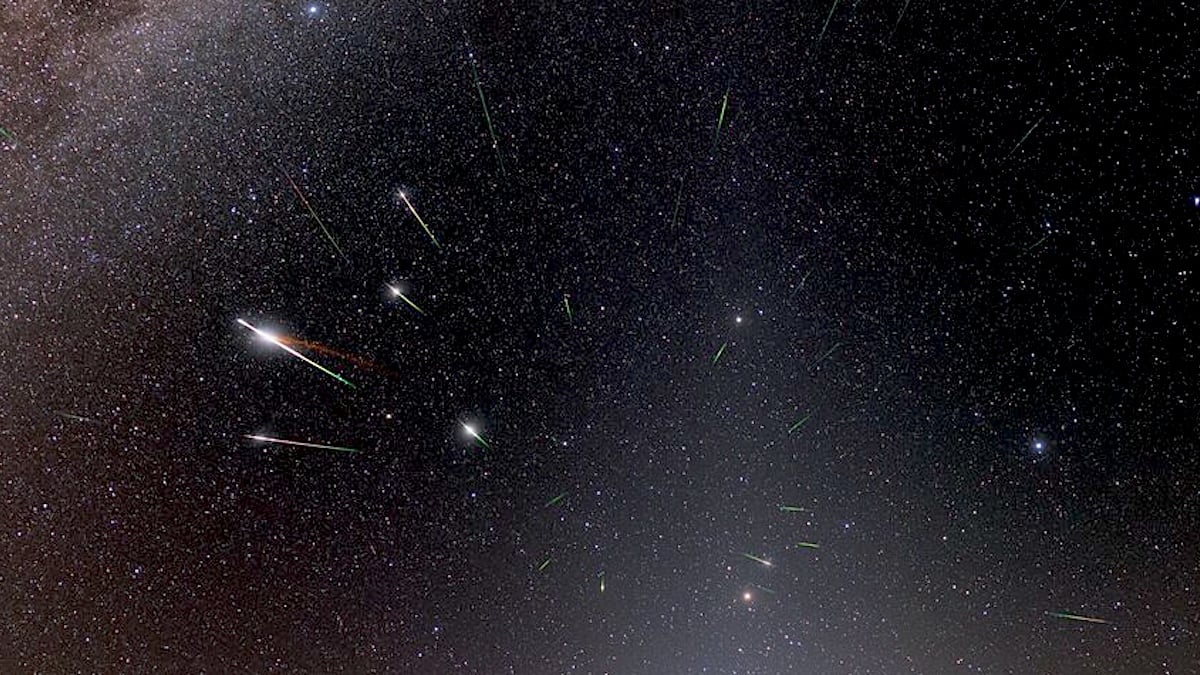
Did you know that a celestial event, visible roughly every 75 years, is about to put on a dazzling display? The Halley's Comet meteor shower, a breathtaking spectacle born from the icy debris of its namesake, is nearing its peak. For educators, this isn't just a chance to gaze skyward; it's a golden opportunity to ignite curiosity, foster scientific inquiry, and bring abstract concepts to life in the classroom.
Turning Celestial Spectacle into Classroom Engagement
The upcoming Halley's Comet meteor shower offers a unique, timely hook for educators across disciplines. While often associated with astronomy, the scientific principles behind meteor showers touch upon physics, geology, and even history. This natural phenomenon provides a tangible, awe-inspiring entry point for complex learning.
Imagine students, buzzing with excitement about the impending shower, eager to understand the science behind it. This intrinsic motivation is a powerful tool, far more impactful than any mandated lesson. It's about harnessing wonder to drive deeper understanding.
The Science Behind the Sparkle
Meteor showers occur when Earth passes through a stream of cosmic debris left behind by comets or asteroids. In the case of the Halley's Comet shower, the particles are tiny remnants of the famous comet itself, shed over centuries.
As these particles, often no larger than a grain of sand, enter Earth's atmosphere at incredible speeds, they heat up due to friction and vaporize, creating the streaks of light we call meteors. The intensity of the shower depends on how dense the debris stream is and how directly Earth passes through it.
A 2023 survey of science teachers revealed that 78% believe incorporating real-world phenomena significantly boosts student engagement and retention.
Harnessing the Shower for STEM Learning
The Halley's Comet shower is more than just a visual treat; it's a living laboratory. Educators can leverage this event to explore a multitude of scientific concepts.
Understanding Orbital Mechanics
Discussing Halley's Comet's orbit, its elliptical path around the sun, and the debris trail it leaves behind can introduce students to basic celestial mechanics. This can be a perfect segue into understanding gravity and planetary motion.
The Physics of Entry
The fiery trails of meteors are a direct result of atmospheric friction and kinetic energy. Explaining this process can be a hands-on way to teach about energy transformation, heat transfer, and the composition of Earth's atmosphere.
From Comet Dust to Classroom Games
To make the learning interactive and fun, consider incorporating elements of MentofyCove classroom games. A "Cosmic Debris" trivia game, for instance, could test students' knowledge about comets, meteors, and the science behind meteor showers. You could even design a word search game with terms like "comet," "orbit," "atmosphere," and "debris."
Beyond the Science Classroom
The educational applications extend beyond traditional science subjects. The historical significance of Halley's Comet, its observation by ancient civilizations, and its role in scientific discovery can be explored in history and social studies classes.
Historical Observations and Scientific Milestones
Halley's Comet has been observed for centuries, with notable sightings recorded by astronomers like Edmond Halley, who first predicted its return. This narrative can highlight the evolution of scientific thought and the importance of meticulous observation and record-keeping.
Artistic and Literary Inspiration
The awe-inspiring nature of meteor showers has inspired countless artists and writers. Students can analyze poems, stories, or artworks that depict celestial events, exploring themes of wonder, the unknown, and humanity's place in the cosmos.
Preparing for the Peak: Practical Tips for Educators
Making the most of this celestial event requires a bit of planning. Here's how educators can prepare their students for the Halley's Comet meteor shower:
- Pre-Shower Education: Introduce the science behind meteor showers, the history of Halley's Comet, and what to expect during the shower.
- Observation Planning: If possible, organize an evening or night observation session for students and their families. Provide tips on the best viewing times and locations away from light pollution.
- Data Collection: Encourage students to observe and record the number of meteors they see, their apparent brightness, and any notable characteristics. This can be a simple yet effective citizen science project.
- Post-Shower Discussion: Debrief the observation experience, analyze collected data, and connect it back to the scientific principles learned.
For educators looking to streamline their preparation, tools like Mentofy AI teaching tools can be invaluable. An AI lesson plan generator can help craft engaging activities, while an exam creator can assess student understanding of the scientific concepts. Even simple tools like MentofyBoards can display a countdown timer to the peak or a scoreboard for observation challenges.
Maximizing the Viewing Experience
To get the best experience of the Halley's Comet meteor shower, several factors come into play. Educators can share these tips with students and their families:
- Timing is Key: The shower is expected to reach its peak over the next few nights. Check local astronomical calendars for the most precise timing for your region.
- Dark Skies are Essential: Light pollution from cities can obscure fainter meteors. Encourage viewing from rural areas or parks away from urban glow.
- Allow Your Eyes to Adjust: It takes about 20-30 minutes for your eyes to fully adapt to the darkness. Avoid looking at bright screens during this period.
- Comfort is Crucial: Dress warmly, bring blankets or chairs, and find a comfortable spot to lie back and watch the sky.
The Halley's Comet meteor shower is a reminder of our connection to the vast universe, offering a tangible link to cosmic processes that have shaped our planet and our understanding of it.
As the Halley's Comet meteor shower approaches its zenith, educators have a unique chance to transform a natural wonder into a catalyst for learning. By bridging the gap between celestial events and classroom inquiry, we can inspire the next generation of scientists, thinkers, and curious minds. This is more than just looking up at the sky; it's about opening up new worlds of understanding.





 Explore AI Teaching Tools
Comments (0)
Please login to comment
No comments yet
Be the first to comment on this article