
Beyond the Poster: Why Educators Must Live the "Portrait of a Graduate" to Make It Real
Imagine a school where the lofty goals of a "Portrait of a Graduate" – skills like critical thinking, communication, and collaboration – are more than just words on a wall. What if educators themselves were actively developing these very competencies, experiencing the learning journey alongside their students? This isn't a distant ideal; it's a powerful pedagogical shift gaining traction, one that argues for a fundamental truth: educators cannot effectively teach what they haven't personally experienced or deeply understood.
The daily dedication of educators is undeniable, yet the constant demand for new practices, unfamiliar subjects, and evolving technologies often outpaces the support structures available. Ironically, the very methods used to train these professionals can sometimes fall short of the innovative, student-centered approaches they are expected to implement. Many educators are still rooted in traditional educational models, meaning they may never have encountered the dynamic, skill-focused learning environments they are now tasked with creating for their students.
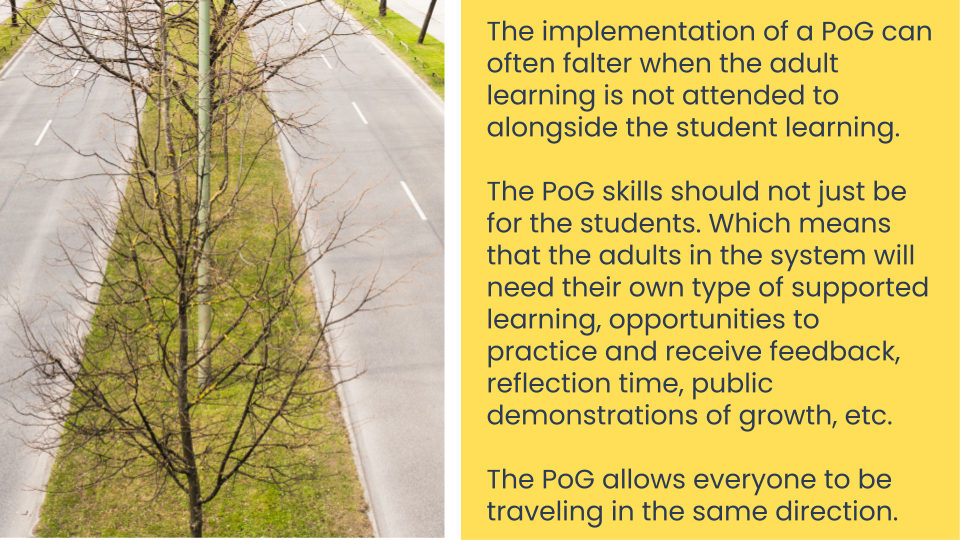
This disconnect presents a significant hurdle to truly embedding a "Portrait of a Graduate" into the fabric of a school or district. Without intentional opportunities for adults to learn, reflect, and practice these skills, the portrait risks becoming a mere decorative element, a list on a website or a poster in the hallway. Conversely, when every member of the school community, from the newest student to the most seasoned administrator, is visibly engaged in the same learning journey, a profound sense of coherence and a robust culture of shared purpose can emerge.
The Unspoken Expectation: Adults as Learners First
A crucial first step in launching or revitalizing a "Portrait of a Graduate" initiative is to dedicate time for adults to internalize the language, explore their personal connection to the target skills, and even undertake their own versions of student-facing projects. This hands-on experience allows educators to identify authentic opportunities for integrating these skills within their existing curricula and instructional materials.
Educators require explicit instruction on how to weave these competencies into their teaching. They need to see models of mini-lessons, unit plans, and assessments that are designed with the "Portrait" at their core. Ultimately, they deserve the chance to be learners of these skills first, before being expected to serve as experts for their students. This foundational learning, coupled with ongoing support, is essential for sustained fluency and successful integration.
A System-Wide Commitment: Living the Portrait at Every Level
In one district's journey, the vision for their "Portrait of a Graduate" extended beyond students to encompass the entire community. The belief was that if students were to develop critical thinking, effective communication, meaningful collaboration, and self-directed learning, then the adults within the system must also have opportunities to cultivate and embody these same skills.
Initially, this principle was more of a guiding value than a concrete strategy. However, as implementation progressed, a persistent question arose: Were adult professional learning structures mirroring the very experiences they aimed to provide for students? Were leaders and educators being offered genuine space to reflect on their own development, grapple with complex challenges, and receive feedback for revision? The feedback cycles consistently highlighted the importance of adults actively developing their own "Portrait of a Graduate" competencies.
The realization was stark: expecting students to engage deeply in critical thinking is an uphill battle if adults are not modeling that same level of critical engagement. Similarly, fostering a willingness in students to embrace productive struggle is difficult if adult learning environments do not actively demonstrate it. This understanding propelled a more intentional focus on what is being termed "parallel pedagogy," a concept that, once named, allowed for deeper exploration and development.
From Theory to Practice: Adult Learner Profiles Take Shape
At one elementary school, a Character Education Coach spearheaded an initiative to help both staff and students understand themselves better as learners through the creation of "Portrait of a Graduate Learner Profiles." During a faculty meeting, educators were invited to craft their own profiles, reflecting on their strengths in relation to the "Portrait" competencies.
One educator shared, "This experience reinforced how I can be a role model for my students and demonstrates how I utilize the competency [effective communicator] in my daily life." Others found that developing their profiles highlighted their individuality as learners, underscoring the fact that everyone, like their students, learns in unique ways. These profiles were then displayed throughout the building, sending a clear and powerful message: the "Portrait" is not solely for students; it belongs to everyone.
The true value lies not just in the finished product but in the process itself. By articulating their strengths and aspirations within a shared competency language, adults are firsthand experiencing what it means to engage with the "Portrait" before asking students to do the same. As one second-grade educator reflected, the process "enhanced the way I view the Portrait of a Graduate competencies by diving deeper into my background and how I am an effective communicator outside and inside the classroom."
The Self-Directed Learner: A Catalyst for Systemic Growth
As the focus shifts to the "self-directed learner" competency, parallel pedagogy becomes even more indispensable. This competency was chosen as the next phase because feedback from leaders and educators consistently pointed to it as a critical leverage point for deeper student learning. Self-direction empowers students to monitor their progress, apply feedback effectively, and understand the underlying purpose of their educational journey, moving them from passive participants to active owners of their growth.
This same transformative shift must occur for adults. If the expectation is for students to set goals, track their progress, and reflect on their development, then adult systems must actively create opportunities for leaders and educators to engage in these very practices. This spring, professional learning sessions are being designed not only to build understanding of the self-directed learner competency but to actively practice it.
The emerging understanding is clear: parallel pedagogy is not an optional add-on to a "Portrait of a Graduate" initiative; it is a fundamental requirement for its success. When adults actively practice the competencies alongside their students, the language of the "Portrait" becomes shared, expectations feel authentic, and coherence across the entire system is significantly strengthened.
Integrating the Portrait into the Daily Work of Adults
The impact of the "Portrait of a Graduate" cannot be confined to classroom walls alone. For it to truly shape students' educational experiences, it must also influence how adults learn, collaborate, and grow professionally. This means the principles of the "Portrait" should be evident in how professional learning is designed, how meetings are led, how feedback is delivered, and how individuals reflect on their own development.
The ultimate goal transcends the mere implementation of a framework; it is about cultivating a shared understanding of learning and growth that permeates the entire district. This holistic approach ensures that the "Portrait" is not just an aspiration but a lived reality for every member of the educational community.
Practical Pathways to Parallel Pedagogy
For educators and leaders considering how to implement parallel pedagogy as a powerful lever for "Portrait of a Graduate" initiatives, several practical strategies can be explored:
- PoG Learning Outcomes for Lessons: Administrators can model the connection between "Portrait" skills and learning moments during professional development sessions or staff meetings. Identify an authentic "Portrait" skill relevant to a specific task or activity, explicitly place it on the agenda, and invite participants to engage in a reflective practice. This process can then be directly replicated by teachers in their classrooms.
-
Reflection is for Everybody: Engage adults in accessible, brief, and impactful reflective activities related to the "Portrait" that they can easily adapt for their students the following day.
- Strength/Growth Skill: Ask adults to identify a "Portrait" skill in which they feel particularly strong and one in which they see the most potential for growth, exploring how this growth could benefit their lives.
- PoG Post-It: At the conclusion of a meeting or lesson, have participants write on a sticky note which "Portrait" skill, sub-skill, or "I can" statement they utilized to perform at their best, along with a brief explanation. These can then be placed on a corresponding "Portrait" poster. This provides facilitators with an immediate visual representation of skill application and a concrete understanding of how learners engaged with the experience.
- PoG Props: In pairs or trios, ask participants to identify a "Portrait" skill, sub-skill, or "I can" statement they observed a partner using powerfully and discuss how it positively impacted the activity, meeting, or lesson.
- PoG Public Demonstrations: Similar to the example of adult learner profiles, have educators create their own versions of assignments or projects that are intended for students. By navigating the process themselves, teachers can uncover invaluable insights into what students might need. When educators then share their own completed products with their students, the relationship-building potential is immense, significantly boosting student willingness to engage in their own learning processes.
The journey of embedding a "Portrait of a Graduate" is an ongoing evolution, and embracing parallel pedagogy offers a powerful pathway to ensure these essential skills are not just understood but truly lived by every member of the learning community.




 Explore AI Teaching Tools
Comments (0)
Please login to comment
No comments yet
Be the first to comment on this article