
Reversing the Math Gap: Strategies to Empower Girls' Academic Success
The landscape of academic achievement has seen a significant shift, particularly in mathematics.While recent years have brought concerning trends regarding the gender gap in math scores, understanding these dynamics is the first step toward fostering a more equitable and successful learning environment for all students.
This article delves into the complexities of this evolving educational challenge, exploring the factors that may have contributed to the widening disparity and, more importantly, offering actionable insights and strategies to help girls regain and surpass their previous academic standing in math.
The Shifting Sands of Math Performance: A Pre and Post-Pandemic Analysis
For years, the narrative surrounding girls and math was one of progress and convergence.Studies indicated a positive trajectory, with girls not only closing the long-standing gender gap but, in many instances, achieving higher average scores than their male counterparts.
This was a monumental achievement, particularly in a subject that serves as a crucial gateway to lucrative and impactful careers in science, technology, engineering, and mathematics (STEM).
However, the global pandemic acted as a significant disruptor, and the subsequent years have revealed a stark reversal of these hard-won gains.
The Pre-Pandemic Promise: Girls Leading the Way
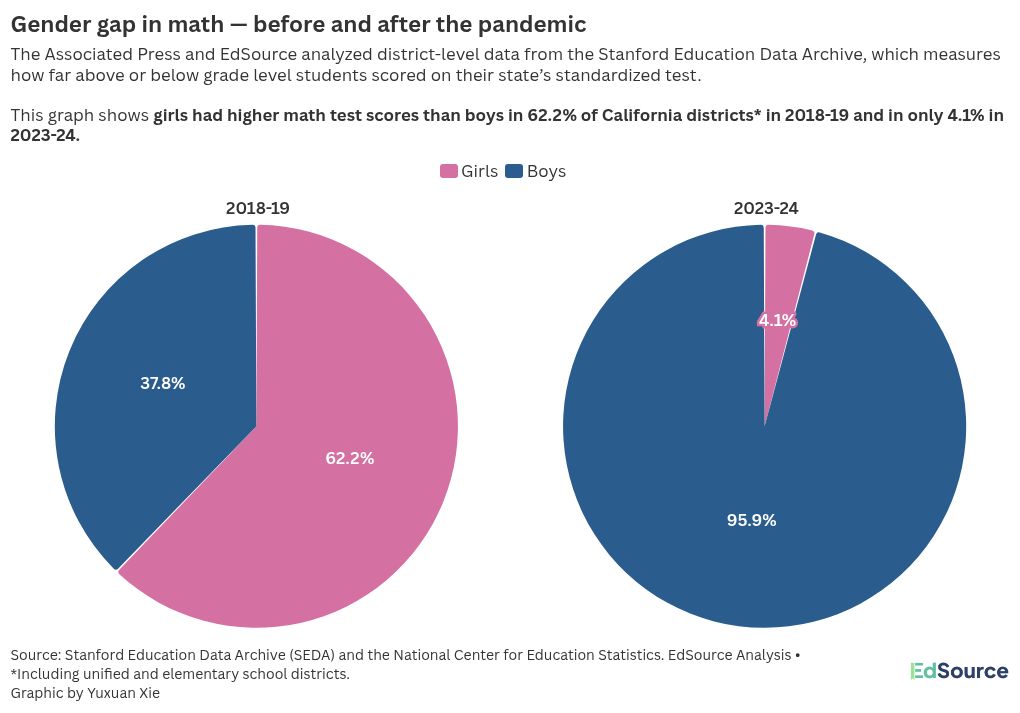
In the period leading up to the pandemic, data from numerous school districts across the nation painted a promising picture.Research shows that in a significant percentage of California districts, for example, girls were outperforming boys in math assessments during the 2018-2019 academic year.
This trend wasn't isolated; national analyses suggested that girls were not only improving their math scores but were also surpassing boys' performance on average.
This convergence was a testament to evolving pedagogical approaches and a growing recognition of girls' capabilities in traditionally male-dominated fields.
The emphasis was shifting towards more conceptual understanding and problem-solving, fostering an environment where diverse learning styles could thrive.
The Pandemic's Impact: A Widening Divide
The onset of the pandemic and the subsequent shift to remote learning, followed by the intense pressure to catch up, appear to have disproportionately affected girls' math performance.While math scores saw a general decline across the board, studies indicate that girls' scores experienced a more precipitous drop.
This decline has persisted, leading to a situation where, by the 2023-2024 academic year, boys were outscoring girls in math in a substantial majority of districts nationwide.
This dramatic reversal, occurring in nearly nine out of ten districts, has raised significant concerns among educators and researchers.
It's important to note that while school closures were a hallmark of the pandemic, research suggests that these closures alone do not definitively explain the widening gender gap.
The factors at play are likely more nuanced and interconnected.
Data Insights: A Closer Look at the Numbers
Analyzing data from over 5,000 school districts across 33 states, spanning 15 years, provides a clearer picture of this trend.The Stanford Education Data Archive, for instance, has highlighted that in California, the percentage of districts where girls held higher math scores plummeted from 62% in 2018-2019 to a mere 4% by 2023-2024.
This illustrates a widespread shift in academic outcomes.
Specific district-level data reveals the extent of this change.
For example, in the Lake Tahoe Unified School District, girls' math scores saw a substantial relative decline, while boys' scores showed a marked improvement.
Similarly, Los Angeles Unified School District and Greenfield Union Elementary School District experienced significant drops in girls' math scores compared to boys' performance.
While these numbers are concerning, it's crucial to acknowledge that pockets of positive progress exist, demonstrating that targeted interventions can yield encouraging results.
Unpacking the Contributing Factors: Beyond the Pandemic's Shadow
While the pandemic undoubtedly served as a catalyst for change, experts are still working to definitively pinpoint all the factors contributing to the widening gender gap in math.The situation is complex, involving a confluence of societal, psychological, and educational influences.
Mental Health and Emotional Well-being: A Critical Link
Studies indicate that girls reported higher levels of anxiety and depression during the pandemic.This heightened emotional distress, coupled with increased caretaking responsibilities that some girls may have taken on, could have significantly impacted their ability to focus on and engage with academic material, particularly in subjects like math.
School leaders have observed this firsthand, noting a decline in student mental health, especially among girls, which ultimately affects attendance and academic performance.
Addressing these mental health challenges is increasingly seen as a prerequisite for academic recovery and future success.
Shifting Pedagogical Approaches: The Double-Edged Sword
In the years preceding the pandemic, many educational institutions were moving away from rote memorization and towards more conceptual, inquiry-based math instruction.This approach, which emphasizes understanding multiple pathways to solutions and encouraging open-ended discussions, had shown promise in engaging a broader range of learners, including marginalized groups.
However, the return to in-person learning post-pandemic created immense pressure on educators to "catch up." This often led to a de-emphasis on the very pedagogical styles that had been beneficial, as teachers felt they lacked the time for the nuanced, inclusive discussions that had previously supported diverse student needs.
The fear of falling behind may have inadvertently led to a less inclusive classroom environment, potentially impacting girls who thrived in those more open spaces.
Re-emergence of Old Biases and Stereotypes
The disruption caused by the pandemic may have also led to a regression in societal attitudes and educational practices.When faced with stress and uncertainty, there's a tendency to revert to familiar, albeit potentially outdated, patterns.
This could include the re-emergence of negative gender stereotypes about girls' abilities in STEM fields.
These subtle, and sometimes not-so-subtle, biases can create an environment where girls feel less confident or capable in math, even if their actual abilities are strong.
Increased Attention on Boys' Behavior
Another theory suggests that an increase in reported behavioral issues among boys during and after the pandemic may have led to them receiving more focused attention from teachers.While addressing behavioral challenges is crucial, if it inadvertently diverts attention away from supporting girls' academic progress in math, it could contribute to the widening gap.
Enrollment Trends in Advanced Math
Research indicates a concerning drop in girls' enrollment in advanced math courses, such as eighth-grade algebra, in California.While boys' enrollment in these courses remained relatively steady, girls saw a decline.
This suggests that fewer girls are pursuing the foundational coursework necessary for higher-level STEM engagement, potentially impacting their future academic and career pathways.
Strategies for Rebuilding and Empowering: A Path Forward
The challenges are significant, but not insurmountable.By implementing targeted strategies, educators, parents, and communities can work together to help girls not only recover lost ground but also excel in mathematics.
Prioritizing Mental Health Support
Creating a supportive and nurturing school environment is paramount.This includes:
- Integrating mental health professionals and resources within schools.
- Providing training for educators to recognize and respond to signs of anxiety and depression.
- Fostering open communication about emotional well-being.
- Implementing mindfulness and stress-reduction techniques in the classroom.
Re-embracing Inclusive start teaching on Mentofy">teaching Methodologies
The pedagogical approaches that were showing promise before the pandemic can and should be revitalized.This means:
- Encouraging collaborative learning and group problem-solving.
- Valuing diverse approaches to solving mathematical problems.
- Creating opportunities for students to articulate their thinking and engage in mathematical discourse.
- Ensuring that curriculum design is culturally responsive and relevant to all students.
Combating Gender Stereotypes and Bias
Actively challenging and dismantling negative stereotypes is essential.This can be achieved through:
- Promoting diverse role models in STEM fields.
- Using inclusive language and examples in math instruction.
- Educating students about unconscious bias.
- Encouraging critical thinking about media portrayals of gender and STEM.
Targeted Academic Interventions
Identifying students who are struggling and providing timely support is crucial.This includes:
- Implementing early warning systems to detect academic difficulties.
- Offering individualized tutoring and academic support.
- Providing opportunities for students to revisit and reinforce foundational math concepts.
- Ensuring equitable access to advanced math courses.
Fostering a Growth Mindset
Cultivating a belief that mathematical ability can be developed through effort and practice is vital.This involves:
- Celebrating effort and perseverance, not just innate talent.
- Framing mistakes as learning opportunities.
- Encouraging students to embrace challenges and persist through difficulties.
Leveraging Technology for Learning
Platforms like Mentofy offer a wealth of resources to support both students and educators.This can include:
- personalized learning pathways tailored to individual student needs.
- Interactive lessons and engaging practice exercises.
- Data analytics to track student progress and identify areas for intervention.
- professional development opportunities for teachers to enhance their math instruction skills.
Conclusion: Building a Brighter Future for Girls in Math
The recent trends in math scores present a complex challenge, but they also offer a critical opportunity for reflection and reform.The progress made in closing the gender gap before the pandemic demonstrates that equitable achievement is possible.
By understanding the multifaceted factors that have contributed to the recent widening of this gap, and by proactively implementing evidence-based strategies focused on mental well-being, inclusive pedagogy, and combating bias, we can empower girls to thrive in mathematics.
The journey ahead requires a collective commitment from educators, policymakers, parents, and students themselves.
At Mentofy, we are dedicated to providing the tools and resources necessary to support this vital endeavor, ensuring that every student has the opportunity to reach their full potential in math and beyond.
The future success of our global community depends on nurturing the talents of all its members, and that starts with ensuring equitable access to quality education in foundational subjects like math.







 Explore AI Teaching Tools
Comments (0)
Please login to comment
No comments yet
Be the first to comment on this article