
New Mexico's Bold Leap: A Nation's First Universal Child Care Program Faces Its Toughest Test
When Jessica and Adrian Garcia welcomed their son in 2023, the familiar scramble for affordable child care began. Living in the scenic mountain town of Ruidoso, the couple, juggling careers as a university employee and a police officer, found themselves piecing together a patchwork of care. Two days a week at a local daycare cost them $300 monthly, a significant sum they could barely afford, supplemented by occasional help from Jessica's mother.
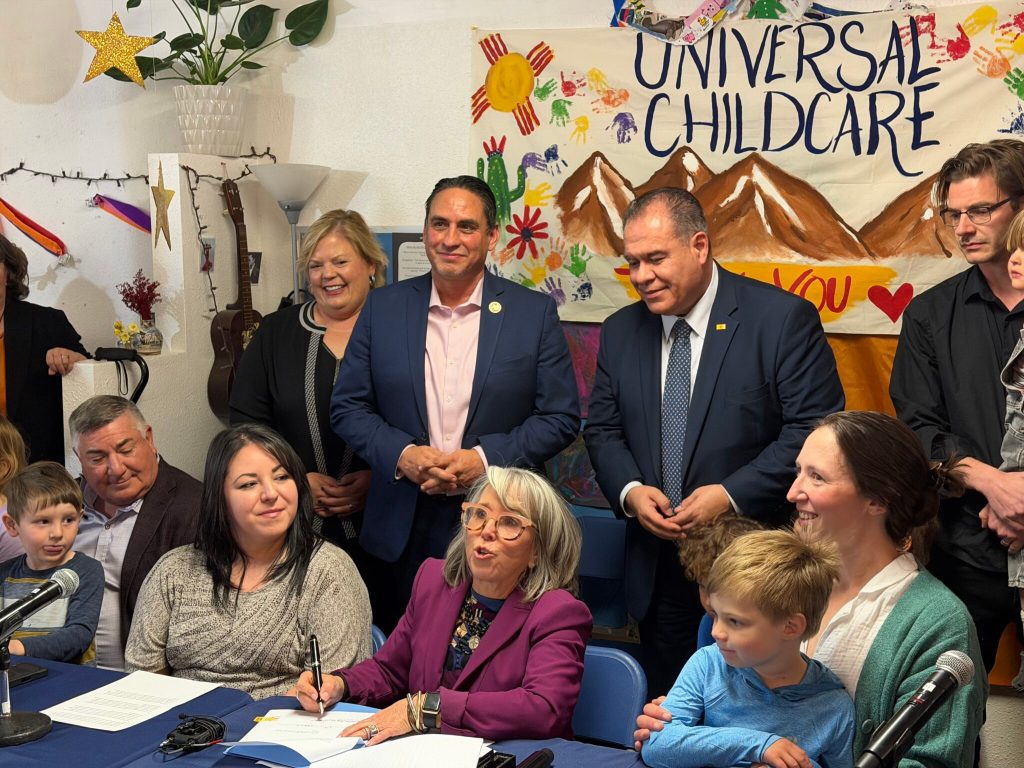
Adrian's demanding graveyard shifts required constant negotiation with his employer, often forcing last-minute schedule changes that cascaded through the family's support network. The pressure mounted when Jessica's job presented an ultimatum: consistent full-time hours or a demotion and loss of crucial health insurance benefits. Their precarious situation shifted dramatically last November when New Mexico became the first state in the nation to offer free, universal child care for children up to age 13, regardless of family income.
“It was just a big blessing to us,” Jessica shared, her voice reflecting the profound relief of enrolling her son in full-time care. This state-led initiative, a monumental undertaking, is now navigating the complex terrain of ensuring quality and fair compensation for its early childhood workforce, a critical yet often overlooked sector.
The Dawn of Universal Access: A Lifeline for Families
New Mexico's groundbreaking announcement in September, spearheaded by Governor Michelle Lujan Grisham, promised a seismic shift in how families access and afford child care. The governor articulated a vision where child care is not a luxury but a cornerstone of family stability, workforce participation, and the state's economic future.
The program's eligibility criteria have evolved, with families earning up to 600 percent of the federal poverty line now qualifying for completely free care. For a family of four, this translates to an annual income of $198,000. This expansive reach aims to alleviate the financial burden that has long plagued countless households, allowing parents to pursue their careers with greater security.
Families can choose from a diverse array of care settings, including traditional centers, in-home providers, and faith-based organizations. This flexibility is designed to meet the varied needs of different communities and family structures across the state. The projected annual savings for participating families are substantial, estimated at $12,000, a figure that can dramatically alter household budgets.
Beyond Access: Tackling the Workforce Crisis
While the expansion of universal child care has garnered significant attention, the state's parallel efforts to address the chronically underpaid and undervalued early childhood workforce are equally crucial, though less publicized. As the state now shoulders the responsibility for early education through this universal program, it has also stepped into the role of setting child care wages.
This unprecedented responsibility forces New Mexico to confront complex questions about how to value experience versus education, how to financially incentivize quality improvements in child care settings, and how to move beyond a market-driven system that has historically resulted in poverty wages for providers and exorbitant costs for families.
The hope is that New Mexico's experience can serve as a blueprint for other regions grappling with similar challenges. Cities like New York are already exploring similar pathways, with ambitious plans to expand free child care slots, but they face the daunting reality of needing thousands of new early childhood educators to realize their goals.
Forging a Fairer Future: The Wage Scale Initiative
New Mexico has committed $60 million to bolster wages for its child care workforce, a significant investment aimed at attracting and retaining qualified professionals. A dedicated working group is currently developing a comprehensive "wage scale and career lattice framework."
This framework is intended to recognize and reward experience, educational attainment, and the quality of care provided. Experts believe that such a structured approach is essential for building a sustainable and high-quality early childhood education system. The conversation is shifting, with a growing understanding that government intervention is necessary to ensure adequate compensation and professional development in this vital sector.
Voices from the Front Lines: Navigating the New Landscape
Child care providers and advocates within New Mexico offer a spectrum of perspectives on the state's ambitious undertaking. Barbara Luna Tedrow, owner of A Gold Star Academy in Farmington, has witnessed firsthand the evolution of child care needs in a region heavily influenced by the oil and gas industry.
Her business, which began over 25 years ago, has grown to serve 700 children across five branches, with significant expansion in recent years. Tedrow emphasizes the symbiotic relationship between child care availability and local economic development, particularly in supporting the workforce in industries like oil and gas. She provides her employees with comprehensive benefits, including medical, vision, dental insurance, and a 401(k) program, which represent a substantial investment on top of salaries.
However, Tedrow expresses concern about the long-term sustainability of these benefits if state reimbursement rates fluctuate or if minimum wage increases are not matched by corresponding increases in state funding. "We're dependent on the state for wages, benefits and everything else to run a high-quality child care center," she stated, highlighting the delicate balance providers must strike.
Mirna Polendo, director of Imagination Station, a Christian preschool in Ruidoso, adapted her program to meet the new state requirements. To qualify for enhanced reimbursement rates, she extended operating hours and increased teacher wages to $17 an hour. These adjustments have allowed her center to receive more substantial state funding for each child enrolled.
The state's reimbursement rates for infants, toddlers, and preschoolers now exceed what private tuition previously covered. Polendo notes that further increases in reimbursement are possible if her center meets specific quality benchmarks, which include raising staff wages to $18 an hour. This threshold, however, is nearing the limit of what she can afford to pay while maintaining financial viability.
Olga Grays, a home daycare provider in Las Cruces, has dedicated two decades to early childhood education. Her licensed home daycare, adorned with vibrant papel picado and child-friendly play structures, fosters a personal connection with families that she cherishes. Grays often accommodates extended hours, opening as early as 4 a.m. and closing as late as 11 p.m. to support working parents.
To accept state subsidies, Grays must pay her employees $16 an hour. She has opted not to pursue the additional state funding tied to certain quality metrics, preferring to focus her energy on direct child care services rather than administrative tasks. This decision, however, leaves her staff vulnerable to higher-paying opportunities elsewhere.
Grays advocates for a wage system that prioritizes years of experience and educational qualifications over a sole focus on facility-based quality measures. This approach, she believes, would offer a more stable and equitable path for early childhood educators.
A Decade in the Making: The Power of Advocacy
The journey to establishing New Mexico's universal child care program has been a long and arduous one, spanning over a decade of persistent advocacy. Jacob Vigil, chief legislative officer for New Mexico Voices for Children, emphasizes that this achievement is the result of a broad-based coalition that understood and championed the critical importance of early childhood development.
The collaborative efforts of diverse groups have coalesced around a shared message, underscoring the profound impact of investing in the youngest members of society. While the work ahead is undoubtedly complex, the progress made thus far represents a significant victory for families and a bold step towards a more equitable future for child care in the United States.






 Explore AI Teaching Tools
Comments (0)
Please login to comment
No comments yet
Be the first to comment on this article