
From Virginia Suburbs to Global Classrooms: A First-Generation Student's Uncharted Journey
For millions of young Americans, the path to higher education is a well-trodden one, guided by parental experience and institutional support. But for a significant portion, particularly first-generation college students, the journey is far more complex, often marked by uncertainty and a steep learning curve. Laura Orozco, a recent master's graduate, embodies this reality, her story a testament to navigating the unknown and ultimately discovering a world far beyond her initial expectations.
When Orozco, born and raised in Virginia, reached her junior year of high school, the prospect of college applications felt distant, almost abstract. Her parents, immigrants from Guatemala and Paraguay, had never attended university themselves, and thus, the expectation for Orozco to follow suit was never explicitly communicated. It was a silent, pervasive assumption within her school environment that everyone was destined for higher education, a push without a clear roadmap.
The Invisible Divide: Navigating College Without a Family Blueprint
The college application process can feel vastly different depending on a student's background. For those with parents who have navigated university admissions, the process is often accompanied by a wealth of shared knowledge and readily available resources. For students like Orozco, whose parents lacked this firsthand experience, the landscape was far less defined.
Orozco grew up in a community where many peers had parents in fields like government contracting or the military, professions that often came with an implicit understanding of the importance of advanced degrees. These students were frequently encouraged to take advanced placement courses and received guidance on crafting college essays, advantages that Orozco and others in similar situations did not have.
The absence of parental guidance in this complex process isn't a reflection of a lack of parental desire, but rather the inherent difficulty of advising on an experience one has never personally undertaken. This often places the onus on schools to proactively reach out, a responsibility that, according to many students' accounts, is not always met.
“At my school, no one really told you what to do,” Orozco recalls. “I heard my other friends take AP classes, and I’m just like, ‘Oh, I didn’t even think about that.’ It was just interesting later on, realizing that there’s so much I did not know, and I lived in my little bubble.” This sense of isolation within a seemingly universal experience highlights a critical gap in educational support systems.
Beyond the Bubble: A Master's Degree and a World of Opportunities
Fast forward to the present, and Orozco has not only burst that "little bubble" but has achieved a significant academic milestone. She earned her bachelor's degrees in homeland security and political science from Virginia Commonwealth University, a solid foundation that propelled her directly into a master's program in international affairs at George Washington University.
It was during her master's studies that an exchange program offered her an extraordinary opportunity: to study in Taiwan, a journey spanning approximately 7,954 miles from her home. This experience, she reflects, was one of the most impactful decisions she has ever made, fundamentally reshaping her perspective and future trajectory.
The initial aspiration for Orozco was to become a lawyer. Her parents, concerned about career prospects, advised against a history major, deeming its professional outlook to be limited. This led Orozco to explore other fields, eventually discovering political science, a subject that, at the time, simply "seemed interesting."
“My parents didn’t really understand it,” Orozco explains. “They just heard ‘political’ and were like, ‘Okay, it’s something politics, government, cool. You can be a government worker.’” While this provided a degree of parental approval, it also underscored the disconnect between her burgeoning academic interests and her family's understanding of the professional world.
The Application Maze: Seeking Guidance in Uncharted Territory
Orozco's college application experience can be characterized as somewhat chaotic. It involved constant discussions with her parents about her future career path, coupled with a notable lack of direction from school counselors. She found herself needing to actively seek out information that many of her peers seemed to possess inherently, information that others might assume a seventeen-year-old would naturally know.
This assumption that students know when and how to seek help is a significant hurdle for many first-generation college students. They often face the fundamental challenge of not knowing what they don't know. Orozco's situation is far from unique; research indicates that a substantial 72% of first-generation college students had not taken any college preparatory courses, compared to 43% of students whose parents had some college education.
Instead of receiving proactive guidance from educational institutions, many families are left to navigate the complex college application process independently. Orozco herself had to rely on friends and their parents for support. Her father actively sought out resources, finding an advisor who assisted Latino students with college applications, while her mother enlisted a friend to help Orozco craft her college essays.
Further studies corroborate this reliance on informal networks. More than 70% of respondents in one survey turned to siblings, cousins, or other family members who had attended college for assistance. This highlights the critical role of peer and extended family support in bridging the knowledge gap.
“Don’t be afraid to ask for help,” is Orozco's simple yet profound advice to other first-generation college students navigating the application process today. “No one’s asking you to sign the contract right now or pay that deposit. It’s literally just seeking information to see if it’s something you want to do.” This encouragement emphasizes the importance of proactive information gathering without the pressure of immediate commitment.
A Global Perspective: From US Policy to East Asian Studies
One certainty for Orozco was a desire to experience life beyond her immediate surroundings. Her undergraduate journey began to shape her future academic path, with a Latin American government and politics class during her sophomore year sparking an interest that would later lead her to pursue international affairs.
However, it was a US foreign policy course in her junior year that truly ignited her fascination with East Asia. "My professor was really focused on Chinese foreign policy, so he made us read a couple of articles, and then he tied it into the US,” she explains. This academic exposure laid the groundwork for her future interests.
The following summer, an internship at the US Department of State solidified her commitment to public service and international affairs, providing invaluable real-world experience. This internship served as a pivotal moment, directing her academic and professional focus.
As she progressed to graduate school, Orozco found herself researching the expansive reach of China's Belt and Road Initiative across Latin America. When the opportunity arose to study abroad, her research interests aligned perfectly with available programs. While options in Mexico and Argentina were considered, Orozco felt her Spanish proficiency was not yet at the level required for rigorous academic study in those settings.
The Taiwan Opportunity: An English-Taught Exchange Program
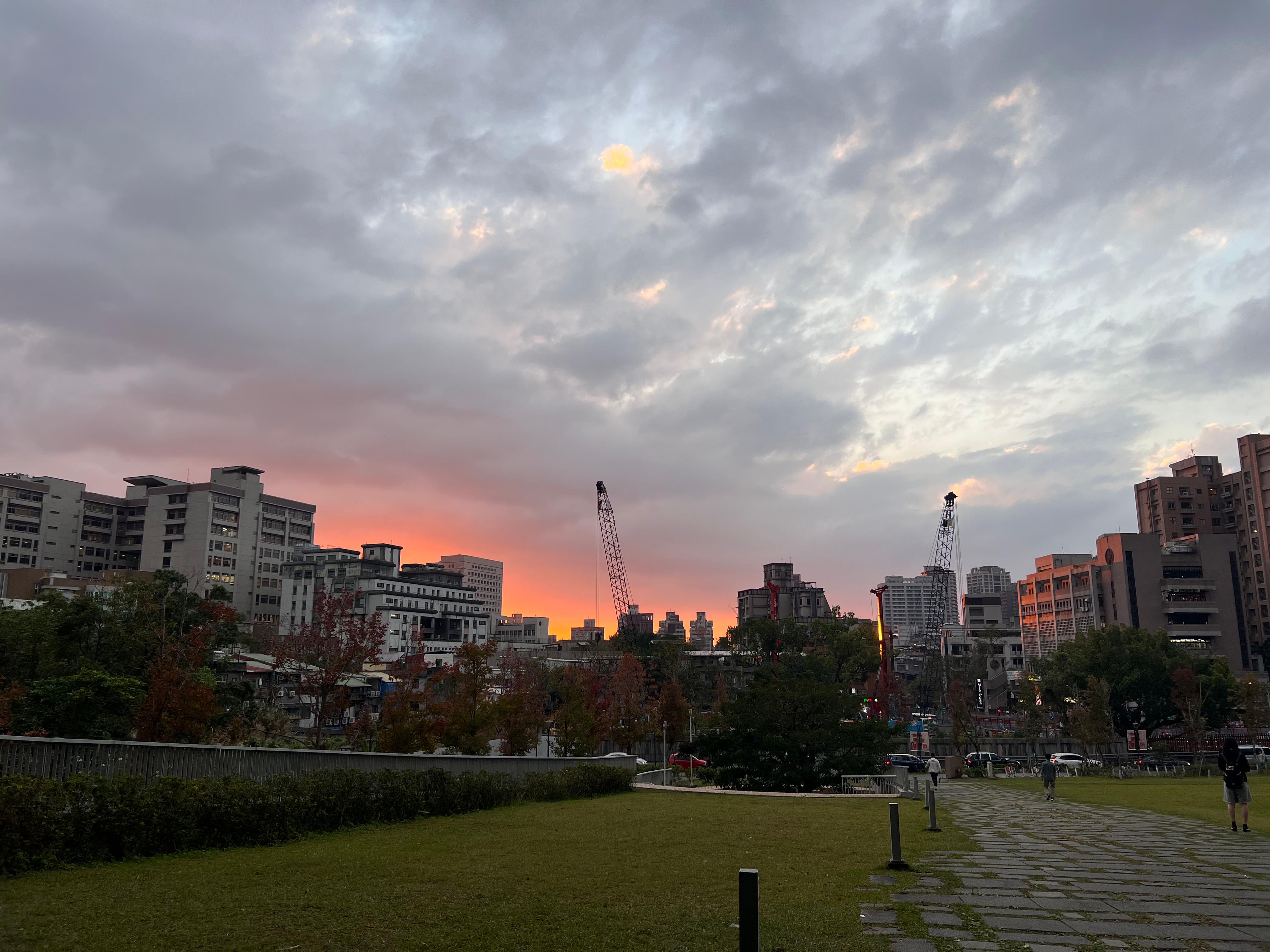
Then came a golden opportunity: Taiwan. In her third semester of graduate school, Orozco embarked on an exchange program at National Chengchi University in Taipei. This program was conducted entirely in English, making it an accessible yet deeply immersive experience.
National Chengchi University is consistently ranked among Taiwan's top ten institutions, renowned for its strong programs in the humanities, social sciences, and international politics. Orozco found a stimulating academic environment with a diverse faculty comprising both foreign and Taiwanese professors.
Taipei itself is celebrated as a vibrant melting pot, and the availability of free Mandarin courses presented Orozco with an ideal chance to broaden her linguistic and cultural horizons. She recognized the immense value of such an experience, stating, “I’ve travelled to both of my parents’ countries, but I just knew that there’s just way more out there. I was like, ‘This can’t be it.’”
“Slowly, throughout high school, it just opened my mind a little bit to the fact that there’s more out there, that’s not my little town,” she adds. “The learning of cultures and languages is what stuck out to me; the diversity of things.” This growing awareness fueled her desire for international exposure.
Embracing Independence: Culture Shock and Self-Discovery
Studying in Taiwan marked Orozco's first true experience with profound independence. The cultural adjustments, though sometimes subtle, were significant. The adoption of a 24-hour time format, for instance, led to her being late for her first day of class.
She encountered new customs and sights, like seeing yellow watermelons for the first time, a simple yet memorable observation. Navigating daily life often involved gestures and signs to overcome language barriers, forcing her to adapt and communicate in novel ways. These are experiences that are difficult to replicate when living under the familiar roof of one's parents.
The natural beauty of Taiwan left a lasting impression on Orozco. She found herself developing new hobbies and interests, activities she felt she might never have pursued without the dedicated time for reflection. "My whole purpose was just to be a student — learning more about yourself in your own comfortable space, but it was uncomfortable at the same time,” she reflects.
This period of intense learning and personal growth, situated thousands of miles from home, underscores the transformative power of international education, particularly for students who are charting their own course through the complexities of higher education and beyond. Orozco's journey, from a Virginia high schooler with little guidance to a globally-minded graduate, serves as an inspiring example of resilience and the boundless possibilities that await those who dare to explore the unknown.




 Explore AI Teaching Tools
Comments (0)
Please login to comment
No comments yet
Be the first to comment on this article